Daily The Patriot

The politics of hatred and agitation

Link copied!

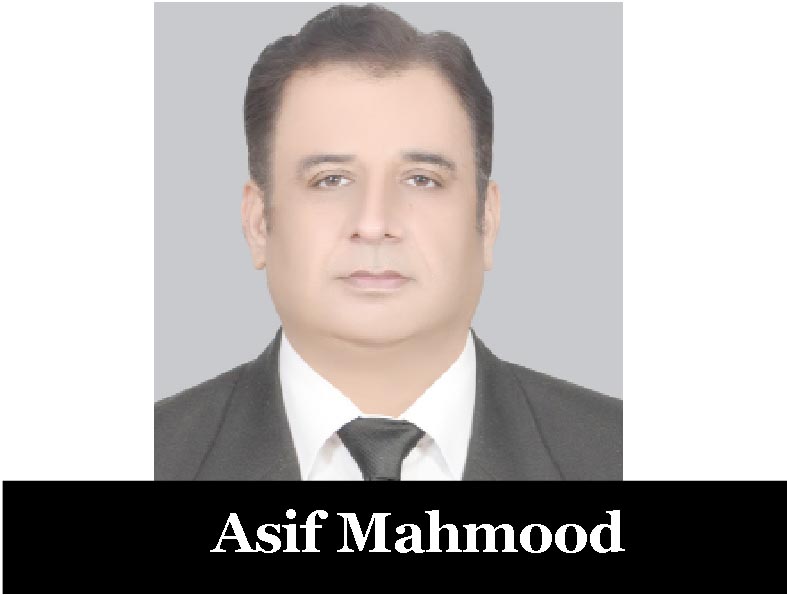
Asif Mahmood
The same drama is repeated every few months. A mob marches towards Islamabad. The life in twin city stands paralyzed. The question is: why? How long? Are the citizens of capital city and Rawalpindi destined to witness this nonsense?
As a citizen of Pakistan, one is also compelled to ask a fundamental question: what exactly does Pakistan Tehreek e Insaf want to achieve through its current political course? Time and again, we see a pattern where protest politics becomes the preferred mode of action, with groups moving from Khyber Pakhtunkhwa towards Islamabad and Rawalpindi, bringing administrative and daily life to a standstill. The cost of such disruptions is borne by ordinary citizens, whose mobility, work, and education are directly affected. Roads are blocked, routines are shattered, and public inconvenience becomes a recurring consequence of political mobilisation.
At the same time, serious questions arise about governance priorities in KP. When a party holds provincial power, its primary responsibility is to focus on service delivery, stability, and public welfare within its jurisdiction. Yet, the repeated absence from governance duties and continuous engagement in street mobilisation raises concerns about priorities of PTI government. Whether in Karachi, Lahore, or other parts of the country, the focus appears to shift frequently towards protest led politics rather than administrative performance. This creates an environment where governance takes a back seat while political confrontation dominates the agenda.
In parallel, the role within the legislative framework also comes under scrutiny. When elected representatives disengage from parliamentary processes, avoid committee work, and show limited participation in the formal business of the house, it raises legitimate questions about the purpose of representation. Parliamentary systems are designed to function through committees, debates, and institutional participation, not through permanent boycott or selective engagement. If the legislative platform is not being utilised effectively, then the question naturally arises about the role and responsibility of those occupying these seats.
From a broader security and governance perspective, the situation in Khyber Pakhtunkhwa itself demands focused attention. The province continues to face serious security challenges, including terrorism threats and cross border militancy. In such a context, the expectation is stronger governance, administrative control, and institutional coordination. However, when political energy is consistently directed towards agitation elsewhere, it diverts attention from pressing local responsibilities.
Ultimately, a society cannot function on repeated cycles of shutdowns, protests, and confrontational politics. Citizens send their children to schools expecting normalcy, not disruption. Public life requires continuity, stability, and predictability. At this stage, it becomes essential to clearly define the boundaries of political action and ensure that democratic expression does not translate into perpetual disruption of daily life. A sustainable political system cannot be built on constant street mobilization, there must be some oasis of sanity. This is not politics.

Leave a Reply

Your email address will not be published. Required fields are marked *

The politics of hatred and agitation

Link copied!

Asif Mahmood
The same drama is repeated every few months. A mob marches towards Islamabad. The life in twin city stands paralyzed. The question is: why? How long? Are the citizens of capital city and Rawalpindi destined to witness this nonsense?
As a citizen of Pakistan, one is also compelled to ask a fundamental question: what exactly does Pakistan Tehreek e Insaf want to achieve through its current political course? Time and again, we see a pattern where protest politics becomes the preferred mode of action, with groups moving from Khyber Pakhtunkhwa towards Islamabad and Rawalpindi, bringing administrative and daily life to a standstill. The cost of such disruptions is borne by ordinary citizens, whose mobility, work, and education are directly affected. Roads are blocked, routines are shattered, and public inconvenience becomes a recurring consequence of political mobilisation.
At the same time, serious questions arise about governance priorities in KP. When a party holds provincial power, its primary responsibility is to focus on service delivery, stability, and public welfare within its jurisdiction. Yet, the repeated absence from governance duties and continuous engagement in street mobilisation raises concerns about priorities of PTI government. Whether in Karachi, Lahore, or other parts of the country, the focus appears to shift frequently towards protest led politics rather than administrative performance. This creates an environment where governance takes a back seat while political confrontation dominates the agenda.
In parallel, the role within the legislative framework also comes under scrutiny. When elected representatives disengage from parliamentary processes, avoid committee work, and show limited participation in the formal business of the house, it raises legitimate questions about the purpose of representation. Parliamentary systems are designed to function through committees, debates, and institutional participation, not through permanent boycott or selective engagement. If the legislative platform is not being utilised effectively, then the question naturally arises about the role and responsibility of those occupying these seats.
From a broader security and governance perspective, the situation in Khyber Pakhtunkhwa itself demands focused attention. The province continues to face serious security challenges, including terrorism threats and cross border militancy. In such a context, the expectation is stronger governance, administrative control, and institutional coordination. However, when political energy is consistently directed towards agitation elsewhere, it diverts attention from pressing local responsibilities.
Ultimately, a society cannot function on repeated cycles of shutdowns, protests, and confrontational politics. Citizens send their children to schools expecting normalcy, not disruption. Public life requires continuity, stability, and predictability. At this stage, it becomes essential to clearly define the boundaries of political action and ensure that democratic expression does not translate into perpetual disruption of daily life. A sustainable political system cannot be built on constant street mobilization, there must be some oasis of sanity. This is not politics.

Leave a Reply

Your email address will not be published. Required fields are marked *