


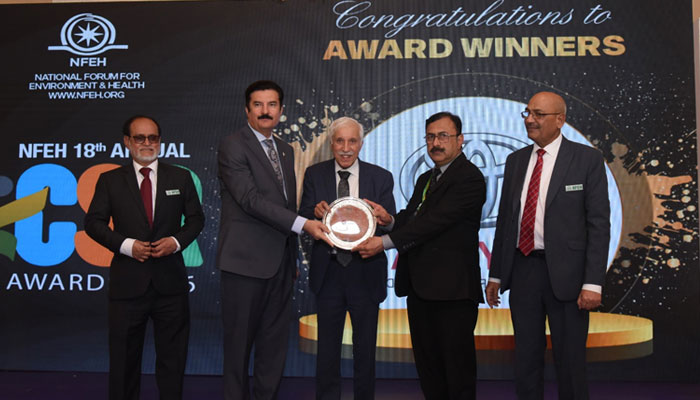
Karachi: The premature removal of former Sindh Solid Waste Management Board (SSWMB) Managing Director Tariq Ali Nizamani has sparked widespread discussion over institutional continuity and the future direction of the Board. Under the Sindh Solid Waste Management Act, 2021, the Managing Director is appointed for an initial term of four years, with the Government empowered to remove the office holder before the completion of the term only under specified conditions. According to the Act, the position is intended to provide leadership continuity for implementing long-term institutional reforms. Against this legal framework, employees and observers have questioned the rationale behind Nizamani’s removal before the completion of his tenure, particularly when SSWMB was receiving recognition for its operational improvements. During his leadership, the Board introduced technology-driven reforms, strengthened landfill management, improved complaint redressal systems, expanded environmental initiatives, and enhanced public awareness campaigns. The organization’s performance was publicly appreciated by Prime Minister Shehbaz Sharif, Sindh Local Government Minister Syed Nasir Hussain Shah, and SSWMB Chairman Barrister Murtaza Wahab, who acknowledged the Board’s sanitation operations on different occasions.
Employees and observers claim that the board’s performance has witnessed a noticeable decline since the change in leadership. They point to increasing public complaints regarding sanitation services, waste collection, and operational efficiency. Local media has also continued to report concerns over waste management and cleanliness in different parts of Karachi, fueling debate over the organization’s current performance.
The controversy has deepened with the recent termination of 29 daily-wage employees. According to an official notification issued by SSWMB, the workers were removed following the recommendations of a verification committee. However, the affected employees reject the decision, maintaining that they performed their duties honestly and efficiently and that the action was neither fair nor transparent.
The dismissed workers argue that instead of strengthening service delivery and addressing operational challenges, the organization has chosen to remove financially vulnerable employees whose livelihoods depend entirely on their daily wages. They say the decision has left dozens of families facing severe economic hardship.
Labour rights advocates believe that employment decisions in public institutions should be based on transparent procedures, objective performance assessments, and equal treatment. They stress that due process is essential to protect both institutional credibility and employees’ confidence in the system.
The recent developments have prompted calls for an independent review of the circumstances surrounding the former MD’s removal, the organization’s current performance, and the termination of the 29 daily-wage workers. Stakeholders argue that restoring public confidence requires transparency, accountability, and decisions based on merit rather than uncertainty or perceived administrative considerations.