


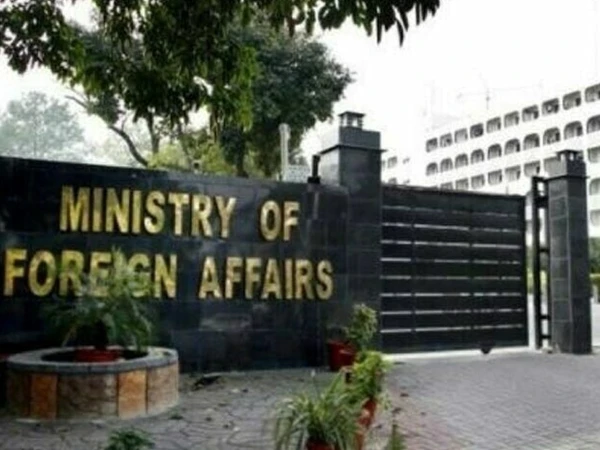
ISLAMABAD: Pakistan said on Thursday it was working to secure the release of 10 of its citizens held in Somalia through contacts with relevant parties, including the Chinese owner of a vessel linked to the incident.
At a weekly briefing, Foreign Office spokesperson Tahir Andrabi said efforts were under way to resolve the matter but acknowledged that the Pakistani nationals had not yet been released.
“Unfortunately, the release of Pakistani citizens has not yet been possible,” Andrabi said during his weekly press briefing, adding that Pakistan was engaged in communications aimed at ensuring the safety and eventual recovery of its nationals.
He said Pakistan was in contact with the relevant parties through facilitation channels linked to the Chinese owner of the ship, and noted that Pakistan’s ambassador in Djibouti had also held discussions with the vessel’s owner.
“We do not want the lives of our citizens to be put at risk in any way,” the spokesperson said, adding that Islamabad wanted negotiations to ensure that essential supplies could be delivered to the crew during the standoff.
Andrabi said the Somali government had been kept informed of Pakistan’s diplomatic efforts, adding that Islamabad would continue to act as a facilitator and would not be discouraged by obstacles in the negotiation process.
The spokesperson said Pakistan condemned attacks on Kuwait and Bahrain and reiterated support for state sovereignty and regional stability.
He also said Pakistan was facing “terrorism emanating from Afghan soil” and maintained that it retained the right to take lawful measures to protect its citizens.
On labour rights, Andrabi said Pakistan had a “clean record” and that labour laws were being fully implemented to protect workers across the country.
The spokesperson reiterated Pakistan’s support for the Palestinian cause and a two-state solution, while also raising concerns over reported Indian water diversion from the Chenab River and developments related to the Salal Dam.
He said such Indian measures were inconsistent with existing agreements and the Indus Waters Treaty, warning that the use of water as a political tool could have implications for regional stability and Pakistan’s food security.
He said that any unilateral activity regarding river management without prior intimation to Pakistan constituted a violation of established arrangements, while reiterating that Jammu and Kashmir remains an internationally recognised dispute.
Pakistan’s diplomatic engagements over the past weeks had been “particularly active,” including high-level visits to China, meetings in the United States and engagements with the European Union, he added.