Daily The Patriot

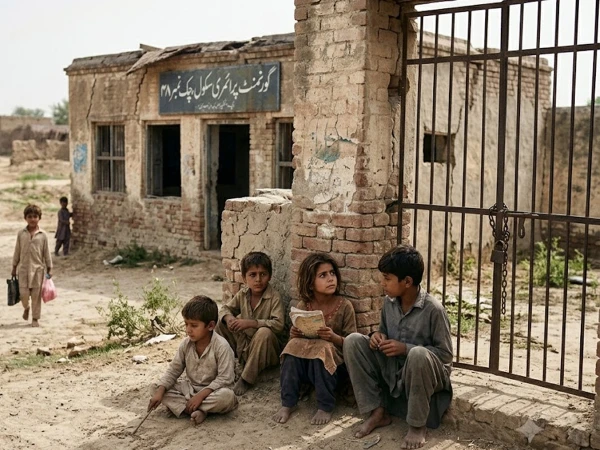
Education crisis in the country; 25 million children unable to go to school

Link copied!

According to the latest policy report of the Civil Services Academy, more than 25 million children in Pakistan have been unable to reach the school threshold for decades, the main reason for which is poor governance and insufficient funds.

According to a private TV report, it has been 2 years since the federal government imposed an education emergency, however, due to structural problems and disorganized administrative structure, it has not been possible to achieve educational goals.

The Civil Services Academy report has clarified that there is a serious lack of implementation of the roadmaps prepared under the National Education Action Plan 2026.

Data from the Pakistan Institute of Education shows that poverty, rapid population growth and low investment in education have made this crisis serious for decades. From 1990 to 2010, educational infrastructure could not develop in line with population growth, which led to the growth of private educational institutions.

The policy groups of the Pakistan Administrative Service Campus have made a comparative assessment of the education system across the country in their report.

According to the report, 25.1 million to 26 million children are deprived of education in Pakistan, due to which the dream of providing free education under Article 25-A of the Constitution is still unfulfilled.

Punjab is at the forefront of this crisis, where the number of out-of-school children is between 9.6 million and 14 million. Here, 6.4 million children have never set foot in school, while 3.16 million have left school incompletely, which is a major challenge to enroll as well as retain children in school.

According to the report, different provinces are facing different challenges; Sindh is struggling with the collapse of the system after primary, Khyber Pakhtunkhwa is struggling with insurgency and geographical difficulties, and Balochistan is struggling with weak institutions and dysfunctional schools. Despite the improvement in the situation in the federal territories, educational inequality at the internal level remains a major problem.

Leave a Reply

Your email address will not be published. Required fields are marked *

Education crisis in the country; 25 million children unable to go to school

Link copied!

According to the latest policy report of the Civil Services Academy, more than 25 million children in Pakistan have been unable to reach the school threshold for decades, the main reason for which is poor governance and insufficient funds.

According to a private TV report, it has been 2 years since the federal government imposed an education emergency, however, due to structural problems and disorganized administrative structure, it has not been possible to achieve educational goals.

The Civil Services Academy report has clarified that there is a serious lack of implementation of the roadmaps prepared under the National Education Action Plan 2026.

Data from the Pakistan Institute of Education shows that poverty, rapid population growth and low investment in education have made this crisis serious for decades. From 1990 to 2010, educational infrastructure could not develop in line with population growth, which led to the growth of private educational institutions.

The policy groups of the Pakistan Administrative Service Campus have made a comparative assessment of the education system across the country in their report.

According to the report, 25.1 million to 26 million children are deprived of education in Pakistan, due to which the dream of providing free education under Article 25-A of the Constitution is still unfulfilled.

Punjab is at the forefront of this crisis, where the number of out-of-school children is between 9.6 million and 14 million. Here, 6.4 million children have never set foot in school, while 3.16 million have left school incompletely, which is a major challenge to enroll as well as retain children in school.

According to the report, different provinces are facing different challenges; Sindh is struggling with the collapse of the system after primary, Khyber Pakhtunkhwa is struggling with insurgency and geographical difficulties, and Balochistan is struggling with weak institutions and dysfunctional schools. Despite the improvement in the situation in the federal territories, educational inequality at the internal level remains a major problem.

Leave a Reply

Your email address will not be published. Required fields are marked *