


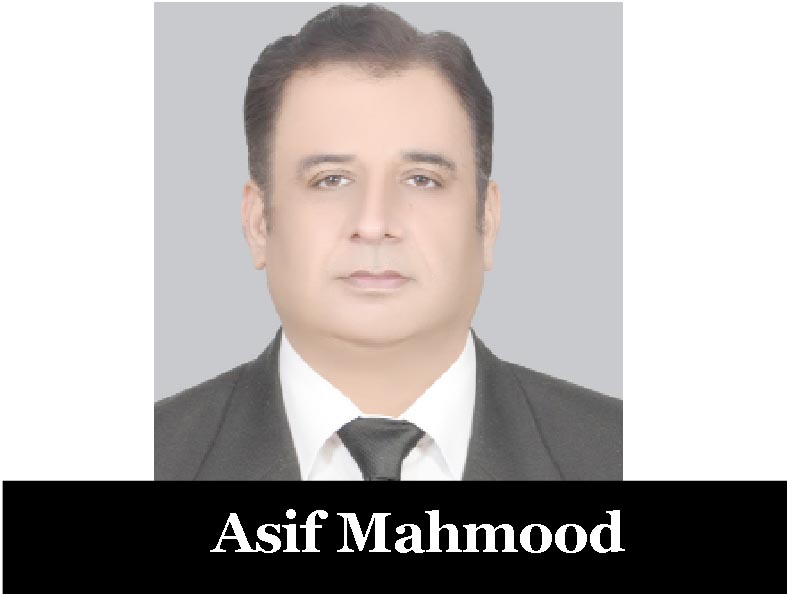
Asif Mahmood
At the United Nations, India’s attempt to brand Pakistan as “Terroristan” was not only a breach of diplomatic etiquette but also a shameful act that exposed New Delhi’s real state of mind. Such language, unbecoming of a country that calls itself the world’s largest democracy, reflected nothing but frustration. Diplomatic forums are meant for dialogue, reason, and statesmanship, not for cheap sloganeering and undignified remarks.
By stooping to this level, India revealed its growing insecurity in the face of Pakistan’s resilience and international credibility. A confident nation does not resort to bazaar-like taunts. A secure country does not make a mockery of itself in front of the world community. India did exactly that, and the whole world noticed.
The reasons for this frustration are no secret. India today stands increasingly isolated both in its own neighborhood and beyond. Its record of sponsoring terrorism abroad has been exposed. Its hand in violent acts has come under global scrutiny. Canada, a country that has long maintained cautious diplomatic language, openly accused India of carrying out assassinations on its soil. The United States, which has often been projected as a natural ally of India, has also uncovered Indian operatives involved in terror plots. These are not allegations coming from Pakistan or from within the Muslim world. These are accusations from Western states that once gave India the benefit of the doubt. Such exposures have punctured the carefully crafted image that New Delhi tried to build for years. The mask has slipped, and the world is beginning to see India for what it has become.
In the region too, India finds itself in an awkward and lonely position. Its aggressive policies against its neighbors have created distrust. Instead of building partnerships, India has chosen confrontation. Instead of cooperation, it has opted for hegemony. This has cost it respect and goodwill. While India tries to intimidate, it only ends up isolating itself further.
Pakistan, by contrast, is moving in the opposite direction. Far from being marginalized, Pakistan is gradually reclaiming its rightful space on the world stage. Its credibility is rising, and its alliances are strengthening. A landmark defense agreement with Saudi Arabia is proof of this growing trust. Saudi Arabia is not only one of the most influential Muslim states but also a central player in global diplomacy. For Pakistan to forge such an agreement reflects a recognition of its importance and reliability. At the same time, Pakistan’s leadership is gaining respect in Western capitals. In the United States, even Donald Trump publicly praised Pakistan’s Prime Minister and Army Chief, acknowledging their role and stature. Such recognition matters in international politics. It reflects the fact that Pakistan is being heard, respected, and valued.
The contrast between the two countries could not be sharper. India resorts to cheap insults at global platforms, only to expose its own frustration. Pakistan, on the other hand, continues to strengthen its reputation and win respect. Words cannot change reality. The reality today is that India’s standing is slipping while Pakistan is rising as a credible and confident nation. The world can see this shift clearly, and no amount of stupid slogans from New Delhi can hide it.