


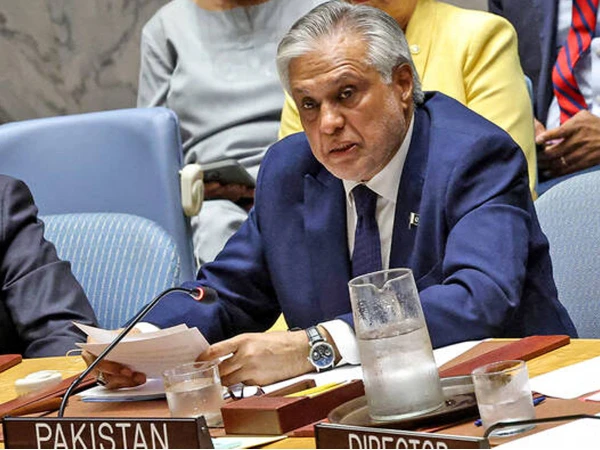
Deputy Prime Minister and Foreign Minister Ishaq Dar has emphasized that rising global conflicts pose serious threats to world peace and stressed the importance of negotiations and diplomacy in resolving disputes.
Speaking at a seminar here Islamabad Conclave 2025 titled “Reimagining South Asia: Security, Economy, Climate, Connectivity,” on Wednesday, Dar highlighted a range of economic, environmental, and security challenges facing South Asia.
Dar described climate change as one of the most pressing issues of our time, warning that rising temperatures, floods, and other environmental disasters are having devastating effects on regional economies. He also pointed out that South Asia faces persistent challenges such as poverty, illiteracy, and sudden natural calamities, which require coordinated regional responses.
The deputy prime minister highlighted security concerns, noting that the regional landscape is increasingly complex. “Pakistan supports diplomacy and dialogue for resolving conflicts,” he said, citing the near escalation between Pakistan and India in May as a potentially dangerous situation.
Dar also criticised India’s unilateral suspension of the Indus Waters Treaty and condemned Israel’s actions in Palestine and Gaza, which he described as a humanitarian crisis. The unresolved issue of Kashmir, he added, continues to threaten regional peace.
Ishaq Dar further stressed that South Asia, as the most populous region in the world, must address its problems with seriousness. He underlined that regional cooperation and connectivity are essential for achieving sustainable development and shared prosperity.
The deputy prime minister called for removing artificial obstacles in the ways of SAARC and enabling it to start re-functioning.
He said the SAARC remains our first choice as an instrument of regional cooperation.
Dar, who also holds the portfilio of foreign minister, said Pakistan envisions a South Asia where connectivity replaces divisions, economies grow in synergy, disputes are resolved peacefully in accordance with international legitimacy and where peace is maintained with dignity and honour.
He said Pakistan remains ready to work with all willing partners to help South Asia reach its immense potential.
He emphasised that there is need to re-imagine South Asia and identify pathways to the peace, progress and prosperity of our peoples. Challenges of regional security, economic fragility and climate crisis cannot be effectively tackled in an environment of political fragmentation and fractured regional architecture, he added.
He stressed that our national development needs and regional priorities cannot and should not be held hostage to anyone’s rigidity.
Referring to the May conflict, Dar said Pakistan demonstrated both resolve and capability to thwart aggression and reinforce deterrence. “Sustainable peace in South Asia requires more than maintaining strategic stability. The just and lasting solution of Jammu and Kashmir dispute remains indispensable,” the deputy prime minister continued.
As regards climate change, he said regional cooperation in water management, climate adaptation and resilient agricultural policies are absolutely essential. Investments in renewable energy, climate smart farming and disaster preparedness will be critical for sustainable development and build resilient communities across South Asia.
He said Pakistan seeks a just, equitable and inclusive world order. “We have opposed bloc politics and zero sum approaches and consistently stressed the imperative of cooperation rather than confrontation.”
He said Pakistan has steadfastly championed multilateralism based on international law, the UN charter and reformed multilateral institutions. He said Pakistan has underscored the indispensability of dialogue and diplomacy, a peaceful settlement of disputes and of international cooperation and solidarity.
FM concluded by urging South Asian nations to engage constructively in dialogue and strengthen diplomatic channels, emphasizing that collective efforts are crucial to tackle climate change, food insecurity, and socioeconomic challenges while maintaining peace and stability in the region.