Daily The Patriot

With the arrival of Ambassador Dr. Oumer Hussein Oba, Pakistan-Ethiopia ties enter a strategic new era of economic and diplomatic cooperation.

Link copied!

By: Nawabzada Shah Ali
(Diplomatic Correspondent)

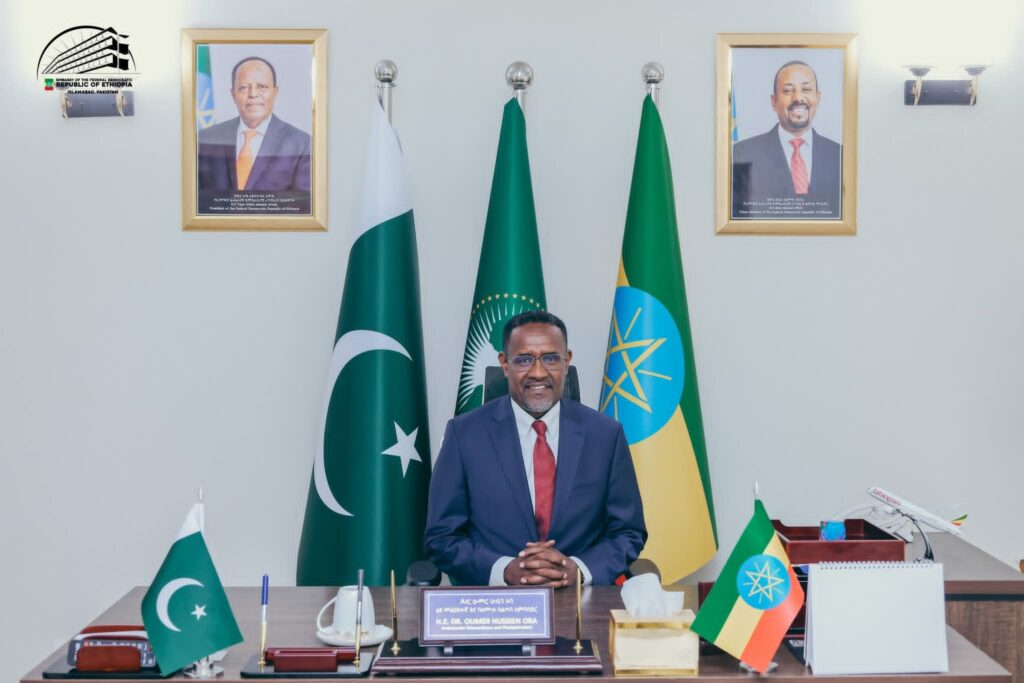
H.E. Ambassador Dr. Oumer Hussein Oba formally assumed charge of the Ethiopian Embassy in Islamabad. The arrival of Dr. Oumer marks a strategic pivot in Ethiopia’s foreign policy toward Pakistan. He is not merely a career diplomat; he is a seasoned statesman, an economic reformer, and a former high-ranking cabinet minister. His presence signals that Ethiopia is ready to transform historic ties into a robust economic partnership, moving beyond ceremonial friendship toward a future of shared prosperity.
A Background Steeped in Reform and Governance
To understand the potential of Dr. Oumer’s tenure, one must look at his remarkable trajectory within the Ethiopian government. Before his diplomatic assignment, Dr. Oumer served as Ethiopia’s Minister of Agriculture, a role of immense responsibility in a nation where agriculture is the backbone of the economy. During his tenure, he led a nationwide drive toward modernization and food security. These experiences resonate deeply with Pakistan’s own agrarian challenges, providing a unique common ground for bilateral cooperation in seed technology, irrigation, and livestock management.
His leadership as the Director General of the Ethiopian Revenues and Customs Authority further polished his expertise in international trade, tariffs, and cross-border commerce. With an academic background in Economics and an MBA from London, Dr. Oumer brings a “technocratic” edge to his diplomacy. He speaks the language of markets, GDP growth, and industrial synergy.
A Blueprint for Success
Prior to his appointment in Pakistan, Dr. Oumer Hussein Oba served as the Ambassador of Ethiopia to the United Arab Emirates (UAE). His tenure in Abu Dhabi was marked by exceptional economic diplomacy. He was instrumental in securing billions of dollars in investment pledges and formalizing over 17 cooperation agreements in sectors ranging from energy to labor logistics.
His experience in the UAE, a global trade hub, has provided him with a deep understanding of how modern economies interconnect. He witnessed firsthand how “direct links” catalyze trade, and he is now applying that same blueprint to Pak-Ethiopia relations. His familiarity with the Gulf’s investment patterns makes him an ideal bridge for “triangular cooperation” between Pakistan, the UAE, and Ethiopia.
Dr. Oumer’s primary mission in Islamabad has been to dismantle the “information gap.” One of his most significant early victories was facilitating the resumption of Ethiopian Airlines flights to Karachi. By establishing this direct aerial corridor, he effectively bridged the geographical divide. This move was a masterstroke in “economic diplomacy,” as it immediately opened doors for trade delegations, tourists, and students to move freely between the two regions, turning Ethiopia into the primary transit point for Pakistanis entering the African continent.
Leveraging his background as a former Customs chief, Dr. Oumer is uniquely positioned to help harmonize trade regulations between Islamabad and Addis Ababa. He is a strong advocate for a Preferential Trade Agreement (PTA) that could reduce tariffs on Pakistani surgical instruments and textiles while easing the import of Ethiopian agricultural products. Under his watch, bilateral trade is projected to exceed $500 million in the near future.
Both Pakistan and Ethiopia are on the frontlines of the global climate crisis. Dr. Oumer’s expertise in agriculture makes him a natural proponent of “Climate Diplomacy.” He envisions a future where the two nations share expertise on drought-resistant crops and reforestation. Ethiopia’s success in planting billions of trees under its “Green Legacy” initiative offers a blueprint that mirrors Pakistan’s own environmental goals.
As an influential member of the African Union, Ethiopia plays a key role in regional stability. Under Dr. Oumer’s guidance, there is significant potential for increased cooperation in defense production. Pakistan’s advanced defense industry, particularly in aviation and small arms, could find a reliable partner in the Ethiopian National Defense Force, fostering a relationship based on mutual security interests in the Indian Ocean region.
Ethiopia is currently undergoing a massive digital transformation. Dr. Oumer’s technocratic approach suggests he will encourage B2B linkages in the tech sector, allowing Pakistani IT firms and fintech startups to explore the vast, untapped digital market of Ethiopia’s 120 million people.
Beyond trade, Dr. Oumer has focused on the “human touch.” Whether it is hosting traditional Ethiopian coffee ceremonies or engaging with Pakistani youth at universities, he is building a cultural bridge. He understands that for a relationship to be sustainable, it must move beyond government boardrooms and into the hearts of the people.
A Shared Destiny
The future of bilateral relations looks exceptionally bright. Dr. Oumer is keen on establishing a Bilateral Joint Ministerial Commission to institutionalize cooperation. He envisions a future where Pakistan uses Ethiopia as a base to reach the 1.4 billion consumers of the African Continental Free Trade Area (AfCFTA), while Ethiopia views Pakistan as its gateway to the markets of Central Asia and the CPEC corridor.
Conclusion
Dr. Oumer Hussein Oba is an envoy with a mission. His background as a reformer, his diplomatic success in the UAE, and his passion for South-South cooperation make him the ideal architect for this new chapter. It is evident that Pakistan has found a true friend in the “Envoy of the Habesha.” If the momentum he has initiated continues, this partnership is destined to become a cornerstone of 21st-century Afro-Asian solidarity.

Leave a Reply

Your email address will not be published. Required fields are marked *

With the arrival of Ambassador Dr. Oumer Hussein Oba, Pakistan-Ethiopia ties enter a strategic new era of economic and diplomatic cooperation.

Link copied!

By: Nawabzada Shah Ali
(Diplomatic Correspondent)

H.E. Ambassador Dr. Oumer Hussein Oba formally assumed charge of the Ethiopian Embassy in Islamabad. The arrival of Dr. Oumer marks a strategic pivot in Ethiopia’s foreign policy toward Pakistan. He is not merely a career diplomat; he is a seasoned statesman, an economic reformer, and a former high-ranking cabinet minister. His presence signals that Ethiopia is ready to transform historic ties into a robust economic partnership, moving beyond ceremonial friendship toward a future of shared prosperity.
A Background Steeped in Reform and Governance
To understand the potential of Dr. Oumer’s tenure, one must look at his remarkable trajectory within the Ethiopian government. Before his diplomatic assignment, Dr. Oumer served as Ethiopia’s Minister of Agriculture, a role of immense responsibility in a nation where agriculture is the backbone of the economy. During his tenure, he led a nationwide drive toward modernization and food security. These experiences resonate deeply with Pakistan’s own agrarian challenges, providing a unique common ground for bilateral cooperation in seed technology, irrigation, and livestock management.
His leadership as the Director General of the Ethiopian Revenues and Customs Authority further polished his expertise in international trade, tariffs, and cross-border commerce. With an academic background in Economics and an MBA from London, Dr. Oumer brings a “technocratic” edge to his diplomacy. He speaks the language of markets, GDP growth, and industrial synergy.
A Blueprint for Success
Prior to his appointment in Pakistan, Dr. Oumer Hussein Oba served as the Ambassador of Ethiopia to the United Arab Emirates (UAE). His tenure in Abu Dhabi was marked by exceptional economic diplomacy. He was instrumental in securing billions of dollars in investment pledges and formalizing over 17 cooperation agreements in sectors ranging from energy to labor logistics.
His experience in the UAE, a global trade hub, has provided him with a deep understanding of how modern economies interconnect. He witnessed firsthand how “direct links” catalyze trade, and he is now applying that same blueprint to Pak-Ethiopia relations. His familiarity with the Gulf’s investment patterns makes him an ideal bridge for “triangular cooperation” between Pakistan, the UAE, and Ethiopia.
Dr. Oumer’s primary mission in Islamabad has been to dismantle the “information gap.” One of his most significant early victories was facilitating the resumption of Ethiopian Airlines flights to Karachi. By establishing this direct aerial corridor, he effectively bridged the geographical divide. This move was a masterstroke in “economic diplomacy,” as it immediately opened doors for trade delegations, tourists, and students to move freely between the two regions, turning Ethiopia into the primary transit point for Pakistanis entering the African continent.
Leveraging his background as a former Customs chief, Dr. Oumer is uniquely positioned to help harmonize trade regulations between Islamabad and Addis Ababa. He is a strong advocate for a Preferential Trade Agreement (PTA) that could reduce tariffs on Pakistani surgical instruments and textiles while easing the import of Ethiopian agricultural products. Under his watch, bilateral trade is projected to exceed $500 million in the near future.
Both Pakistan and Ethiopia are on the frontlines of the global climate crisis. Dr. Oumer’s expertise in agriculture makes him a natural proponent of “Climate Diplomacy.” He envisions a future where the two nations share expertise on drought-resistant crops and reforestation. Ethiopia’s success in planting billions of trees under its “Green Legacy” initiative offers a blueprint that mirrors Pakistan’s own environmental goals.
As an influential member of the African Union, Ethiopia plays a key role in regional stability. Under Dr. Oumer’s guidance, there is significant potential for increased cooperation in defense production. Pakistan’s advanced defense industry, particularly in aviation and small arms, could find a reliable partner in the Ethiopian National Defense Force, fostering a relationship based on mutual security interests in the Indian Ocean region.
Ethiopia is currently undergoing a massive digital transformation. Dr. Oumer’s technocratic approach suggests he will encourage B2B linkages in the tech sector, allowing Pakistani IT firms and fintech startups to explore the vast, untapped digital market of Ethiopia’s 120 million people.
Beyond trade, Dr. Oumer has focused on the “human touch.” Whether it is hosting traditional Ethiopian coffee ceremonies or engaging with Pakistani youth at universities, he is building a cultural bridge. He understands that for a relationship to be sustainable, it must move beyond government boardrooms and into the hearts of the people.
A Shared Destiny
The future of bilateral relations looks exceptionally bright. Dr. Oumer is keen on establishing a Bilateral Joint Ministerial Commission to institutionalize cooperation. He envisions a future where Pakistan uses Ethiopia as a base to reach the 1.4 billion consumers of the African Continental Free Trade Area (AfCFTA), while Ethiopia views Pakistan as its gateway to the markets of Central Asia and the CPEC corridor.
Conclusion
Dr. Oumer Hussein Oba is an envoy with a mission. His background as a reformer, his diplomatic success in the UAE, and his passion for South-South cooperation make him the ideal architect for this new chapter. It is evident that Pakistan has found a true friend in the “Envoy of the Habesha.” If the momentum he has initiated continues, this partnership is destined to become a cornerstone of 21st-century Afro-Asian solidarity.

Leave a Reply

Your email address will not be published. Required fields are marked *