Daily The Patriot

Will Chinese technology be able to reveal the secrets of Einstein's brain?

Link copied!

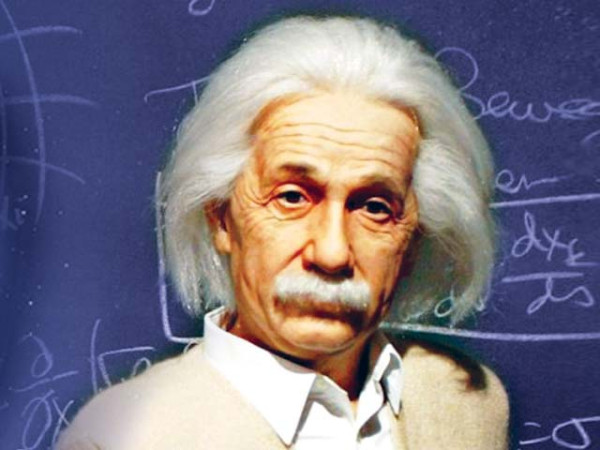
The brain of the world’s great scientist and theoretical physicist Albert Einstein was preserved after his death in 1955. Over time, many rumors and scientific curiosities have arisen about it. Now, once again, the question is being raised whether modern science will be able to unravel the mysteries of this mysterious brain?

Chinese scientists have recently introduced a revolutionary technology that has proven effective in studying old biological samples. Using this method, experts analyzed cancer cells that had been preserved in unsuitable conditions for almost a decade, and surprisingly, valuable information could be obtained from it.

Although experts admit that old samples are more likely to suffer from chemical damage and breakage, the modern RNA mapping technology Stereo-seq V2 developed by Chinese researchers has opened new doors of possibilities. Thanks to this technology, it is hoped that one day it will be possible to study Einstein’s brain and trace the cellular basis of intelligence.

Li Yang, a researcher affiliated with BGI-Research and co-author of the paper, says that if he gets the opportunity to analyze Einstein’s brain, he will definitely take advantage of it. However, he also clarified that this will be a difficult step because the preservation techniques of that time were not very advanced and this increases the possibility of damage to the samples.

It should be remembered that Einstein’s brain was divided into 240 sections after his death and preserved on microscope slides. In the past, studying such old samples has proven difficult, because their genetic structure weakens over time.

This new research also holds out the hope that analyzing old cancer samples with weak genetic structure will also make it possible to identify cancer centers, immune responses, cell death and tumor subtypes. In this way, science can not only find new ways to treat diseases, but also come closer to unlocking hidden secrets such as human intelligence.

Leave a Reply

Your email address will not be published. Required fields are marked *

Will Chinese technology be able to reveal the secrets of Einstein's brain?

Link copied!

The brain of the world’s great scientist and theoretical physicist Albert Einstein was preserved after his death in 1955. Over time, many rumors and scientific curiosities have arisen about it. Now, once again, the question is being raised whether modern science will be able to unravel the mysteries of this mysterious brain?

Chinese scientists have recently introduced a revolutionary technology that has proven effective in studying old biological samples. Using this method, experts analyzed cancer cells that had been preserved in unsuitable conditions for almost a decade, and surprisingly, valuable information could be obtained from it.

Although experts admit that old samples are more likely to suffer from chemical damage and breakage, the modern RNA mapping technology Stereo-seq V2 developed by Chinese researchers has opened new doors of possibilities. Thanks to this technology, it is hoped that one day it will be possible to study Einstein’s brain and trace the cellular basis of intelligence.

Li Yang, a researcher affiliated with BGI-Research and co-author of the paper, says that if he gets the opportunity to analyze Einstein’s brain, he will definitely take advantage of it. However, he also clarified that this will be a difficult step because the preservation techniques of that time were not very advanced and this increases the possibility of damage to the samples.

It should be remembered that Einstein’s brain was divided into 240 sections after his death and preserved on microscope slides. In the past, studying such old samples has proven difficult, because their genetic structure weakens over time.

This new research also holds out the hope that analyzing old cancer samples with weak genetic structure will also make it possible to identify cancer centers, immune responses, cell death and tumor subtypes. In this way, science can not only find new ways to treat diseases, but also come closer to unlocking hidden secrets such as human intelligence.

Leave a Reply

Your email address will not be published. Required fields are marked *