Daily The Patriot

They are all talking about provinces but implementation is not happening: SK Niazi

Link copied!

Political leaders debate provincial demands, Karachi’s civic issues, resource distribution and the need for consultation

By Staff Reporter

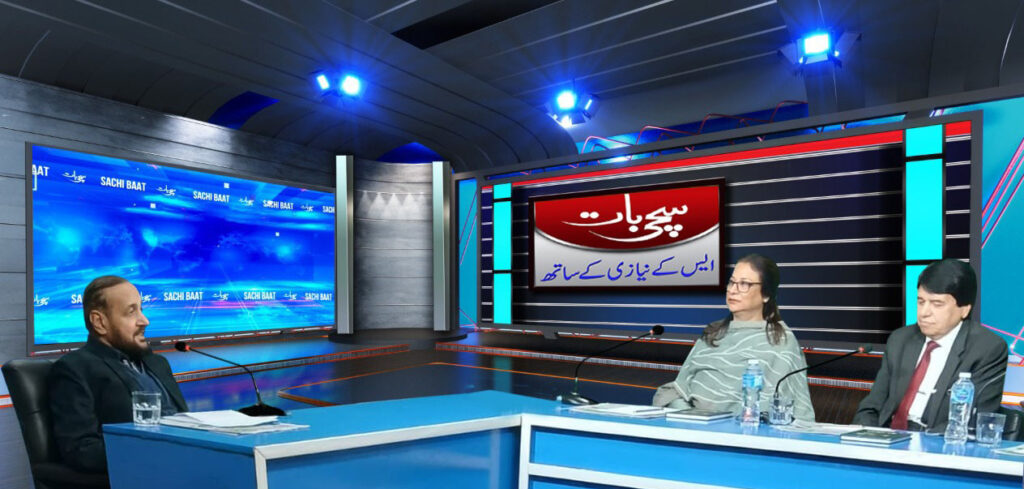
ISLAMABAD: Editor-in-Chief Pakistan Group of Newspapers and Chairman Roze News SK Niazi, while speaking in his renowned talk show Sachi Baat, said discussions on the establishment of new provinces were taking place across the country, but practical implementation remained absent. He said political parties held differing views on the issue and stressed that the debate should not be given a political colour at the expense of economic development. He maintained that new provinces should be established where necessary, particularly in view of the distances and administrative challenges faced by people in Balochistan, SK Niazi said political consensus was essential and that the process must comply with the Constitution and law. He noted that different opinions were emerging about the establishment of provinces in 2028 and said the underlying reasons for the ongoing debate should be examined. He emphasized that all matters must be taken forward through constitutional and legal procedures.
Supreme Court Advocate Talat Abbas Khan said the debate on new provinces should continue until the issue was resolved, as it was an important public matter. He called for a clear procedure for establishing provinces and said the decision must reflect constitutional requirements and public opinion. If a referendum was proposed, its procedure should also be discussed, while all legal, administrative and public-interest aspects should be considered.

MNA MQM Sofia Saeed said MQM and other political parties supported the establishment of new provinces, questioning the delay in creating a South Punjab province. She said the demand had previously been raised by the PPP and called on the party, as the majority party in Sindh, to clarify its position. She stressed that Karachi belonged to all Pakistanis and could not be associated with any single ethnic or linguistic group. MQM, she said, represented people of different nationalities and did not support the expulsion of any community from the city, Sofia Saeed highlighted Karachi’s civic problems, including poor sanitation, water shortages and reliance on expensive tankers. She alleged that corruption affected the water supply and municipal services, saying residents faced difficulties obtaining water through regular connections. She also questioned the development record of Sindh after 18 years of PPP rule, arguing that the construction of buildings and educational institutions alone did not ensure a better quality of life. Elected representatives, she said, must answer for the basic facilities provided to citizens across Karachi, Hyderabad, Sukkur and other urban and rural areas.
She further called for transparency and consultation on the provinces issue, saying the public should be informed about discussions between the PPP and PML-N. Sofia Saeed said the President, Prime Minister and other relevant leaders should be taken into confidence before final decisions were discussed. She maintained that the main difference concerned the procedure and constitutional process, not the number of provinces, and said the debate should not be linked to fears of violence.

PPP leader Qadir Mandokhel said the PPP was undertaking development work in Karachi and referred to a special project for the city that had been approved but remained unimplemented after one and a half to two years. He said Karachi’s population, constituencies and political representation needed to be considered while discussing its administrative future. He questioned MQM’s demands and asked what the proposed province would be called and what its administrative status would be.
Qadir Mandokhel said the PPP had governed Sindh for 18 years and questioned why new provinces had not been established during that period if the party had received a public mandate. He said the Constitution already provided a procedure for creating provinces and called for its implementation. He added that the public’s immediate concerns were poverty, unemployment and economic hardship rather than the creation of provinces alone.
He said the PPP supported new provinces in accordance with the Constitution, but the process required a two-thirds majority and parliamentary approval. The National Assembly and other relevant constitutional requirements would have to be fulfilled, and the final decision rested with Parliament.

MNA PML-N Shahbaz Babar said discussions about new provinces were largely confined to the media and that the matter would move forward when a bill was formally presented in Parliament. He stressed that the bill’s contents, proposed boundaries and implications should be made clear to the public, including which areas would be included. He said decisions could not be made overnight and required regular procedures, consultation and factual consideration.
Shahbaz Babar said media discussions helped bring public concerns to light and supported open, constructive debate on national issues. He emphasized that public opinion should be considered in parliamentary decisions and that the establishment of provinces would require consultation with coalition partners. He added that the President, Prime Minister and other important leaders must be taken into confidence before detailed discussions and a final decision could take place.

Leave a Reply

Your email address will not be published. Required fields are marked *