


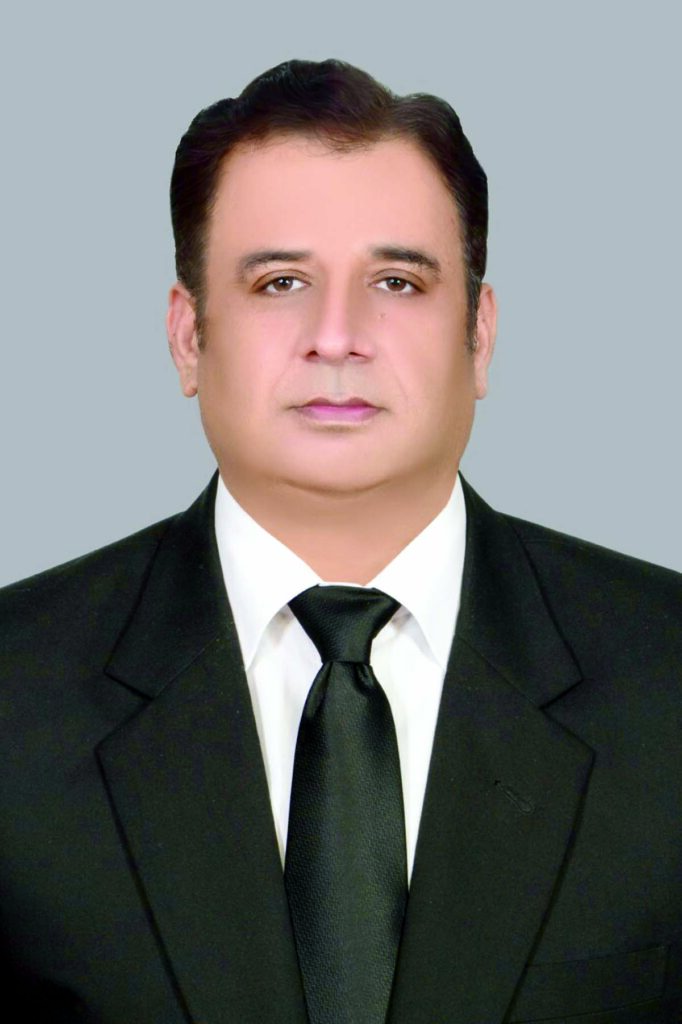
Asif Mahmood
Whenever there is talk of creating new provinces or administrative units, the Pakistan Peoples Party rolls up its sleeves. Why? Is it love for Sindh, or love for the financial possibilities Sindh has acquired after the 18th Amendment?
The PPP’s problem is hardly a secret. It is a party of a fading era. Urbanisation and the PPP cannot go together. The party is steadily shrinking into remote rural areas. It may call itself democratic and progressive, but its real power still rests on the feudal order, which is slowly dying its natural death. The party has virtually disappeared from urban Sindh. As awareness grows, its style of politics increasingly belongs to the past. Today, it survives largely through feudal influence in traditional rural constituencies.
Asif Zardari understood this reality in time. He built a financial fortress around his increasingly limited political space in Sindh, and the fortress was called the 18th Amendment. The logic was simple: if there was little room left for power at the centre, then Sindh’s financial interests had to be protected in the name of provincial autonomy.
New provinces or empowered administrative units create a breach in that fortress. That is why they are resisted. This is not love for Sindh. It is love for the financial arrangement built in Sindh’s name. If it were really love for Sindh, Sindh would not be in this condition.
In the last 16 years, Sindh has received nearly Rs. 17 trillion from the federal government through the NFC Awards. Let us leave the technical details aside and ask a simple question: where did the money go?
What major development has transformed Sindh? What great public achievement can be pointed to? Name two or four.
The money reaching Karachi from the federation was visible to everyone. Where did it disappear afterwards? How many first-class hospitals were built? How many quality educational institutions were established? And did Karachi receive its fair share?
What a remarkable achievement: thousands of billions have been received, yet Karachi still struggles for drinking water. Even a major road cannot be completed; some have remained dug up for years.
There is a familiar story about Mulla Nasruddin. He brought home two kilograms of meat and asked his wife to cook it. She cooked it, ate it herself, and served him lentils and vegetables. When he asked about the meat, she said the cat had eaten it.
Mulla Nasruddin caught the cat and put it on the scales. It weighed exactly two kilograms. He said: “If this is the cat, where is the meat? And if this is the meat, where is the cat?”
Sindh’s government deserves to be put on the scales in exactly the same way: if this is Sindh, where did the Rs. 17 trillion go?
According to UNICEF, 7.4 million school-age children in Sindh are out of school. Fifty-four percent leave school after primary education. Sindh’s own Education Minister, Sardar Ali Shah, says one reason is the shortage of middle and secondary schools.
So how many more thousand billions are needed to build enough schools?
Among the schools that do exist, 68 percent have no electricity, 58 percent have no toilets, 37 percent have no clean drinking water, and 49 percent have no boundary walls.
Again: if this is Sindh, where are the Rs. 17 trillion?
According to Sindh’s own Education Secretary, 40 percent of teachers are “ghost teachers” drawing salaries without teaching. Some are reportedly sitting in Dubai, serving someone else while being paid from Sindh.
What exactly has all that money been funding.
The situation is worse in healthcare. Poor people often have no proper doctor to turn to and are forced to rely on quacks. Children are contracting AIDS through reused syringes. In those hopeless eyes, one question remains: where did the Rs. 17 trillion meant for us go?
Now suppose new administrative units are created, or new provinces, or effective local governments. Suppose development funds no longer have to pass through the provincial government but are distributed directly to the districts, with each district told exactly how much it has received for development. What is wrong with that?
There is no loss to Sindh in such a system. The loss is to those who have built a financial fortress around themselves in the name of Sindh.
That is why local governments are so unpopular here. The royal families can see power slipping away from their hands.
Authority must be devolved all the way down. Kashmore to Karachi is a 13-hour journey. Dera Bugti to Quetta takes 15 hours. And Mianwali to Lahore is hardly a journey across the galaxy. In the modern age, such vast administrative gimmic is irrational.
Powers and resources must reach the lowest level. If someone’s dining table is threatened, so be it. Let these elite dining tables be cleared, and let us think about the ordinary citizen, who spends his life digging wells simply to find enough water to quench his thirst.