Daily The Patriot

Scientists succeed in developing important cancer drug in tobacco plant

Link copied!

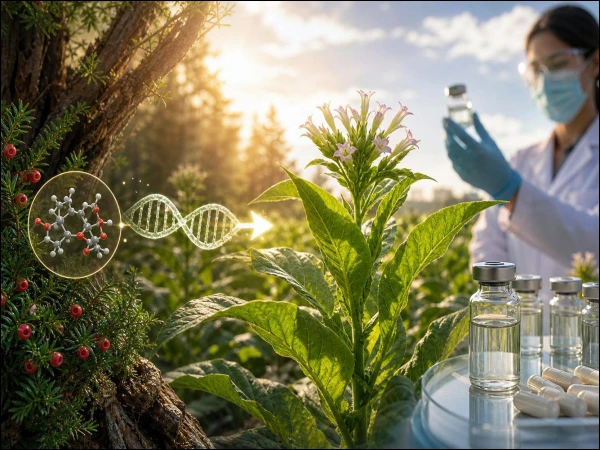
Scientists have developed a complete biological process for the production of paclitaxel, a key cancer drug, using a specific tobacco plant.

This breakthrough in the production of the drug, also known as Taxol, could pave the way for reducing dependence on natural sources, especially yew trees, in the future.

According to research published in the scientific journal Nature Chemical Biology on November 23, researchers led by University of Copenhagen scientist Soterios Kampranis, in collaboration with scientists from the University of Athens and the University of Faiyum, have successfully developed a complete biological process for the production of paclitaxel in Nicotiana benthamiana, a type of tobacco.

Paclitaxel is an important drug used in the treatment of cancer, but its complex chemical structure and limited natural availability make it difficult to produce. Scientists had previously proposed to complete the various stages of the drug’s production using biological methods, but the new study claims to have successfully synthesized and confirmed the entire process for the first time.

During the study, experts examined the various steps involved in the drug’s production, the activities of enzymes, and the chemical compounds formed in between. These compounds were separated and their structures were also confirmed using nuclear magnetic resonance (NMR) techniques, which helped in understanding different parts of the biological process.

According to the researchers, the process of producing paclitaxel is not limited to any one part of the plant, but its various stages are completed in multiple parts of the cell. These include plastids, endoplasmic reticulum, cytoplasm, and peroxisomes. The transfer of intermediate chemical compounds between these cellular parts is also necessary for this process to be successful.

A major achievement of this research is a significant increase in drug production. Scientists have used specific genetic and biological methods to increase the yield of paclitaxel by more than 500-fold. The process yielded 61.05 micrograms of the drug from one gram of dried plant, which is close to the amount obtained from the bark of a yew tree.

Experts say the breakthrough is a significant step towards providing an alternative biological source for the drug. However, further research and testing will be needed before the method can be made viable for large-scale commercial production and drug delivery.

Leave a Reply

Your email address will not be published. Required fields are marked *