


Speakers Highlight Economic Challenges, Constitutional Requirements, Local Government Reforms and Public Welfare
By Staff Reporter
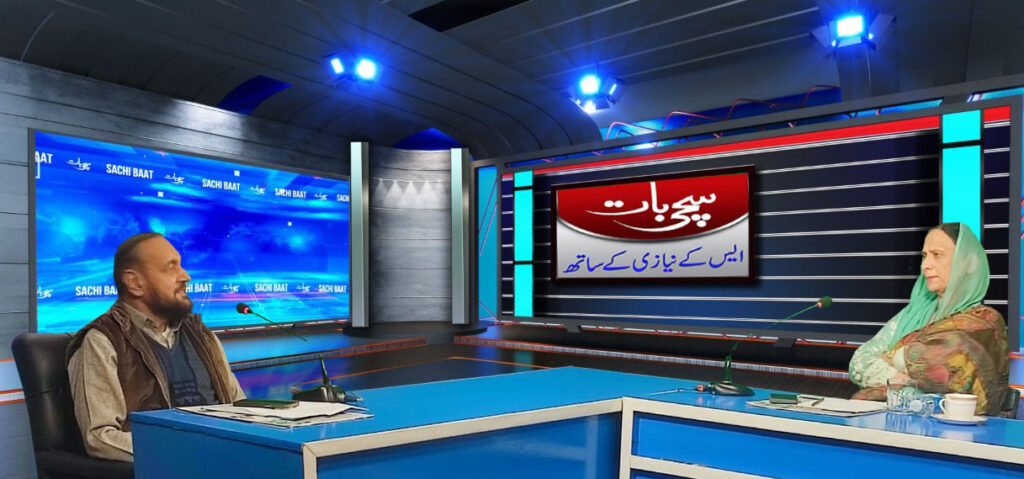
ISLAMABAD: Editor-in-Chief Pakistan Group of Newspapers and Chairman Roze News SK Niazi, while speaking in his renowned talk show Sachi Baat, said discussions on the establishment of new provinces were continuing across the country. He maintained that provinces should be formed where necessary, but public problems must remain the priority, particularly in view of the country’s economic conditions. He said people in Balochistan were facing difficulties and stressed that corruption should be reduced if it could not be eliminated completely, said the establishment of new provinces required consensus on their number and the procedure for their creation. He highlighted the importance of President Asif Ali Zardari’s views and said he could help resolve the matter through consultation and understanding. Bilawal Bhutto Zardari should also take part in discussions on the issue. He further stressed that political differences should be set aside when addressing concerns about the PTI founder’s health, and that the best possible medical facilities should be provided if required.
MNA PPP Shahida Rahmani said creating new provinces alone would not resolve the country’s challenges, as Pakistan was facing serious economic difficulties, corruption and administrative weaknesses. She stressed the need for fair distribution of resources, highlighting the difference between the Rs1,100 billion allocated for Lahore and Rs158 billion for other provinces. She said the constitutional procedure must be followed, while the views and representation of the people concerned should be considered. A referendum could also be held to seek public opinion.
Shahida Rahmani emphasized the restoration of local government systems and the transfer of powers to grassroots levels, saying public issues could not be resolved without effective local administration. She called for action against corruption in government institutions, including the FBR, and pointed out that the salaried class was carrying a significant tax burden. She also highlighted education challenges, noting that millions of children remained out of school, while students from government schools were achieving success in international competitions.
She said Sindh contributed significantly to the country’s energy resources, producing more than 70 percent of its gas and supplying it to other provinces, while also generating electricity for other areas. However, she stressed that Sindh should receive its rightful share of gas, electricity and basic facilities. She also referred to development projects in the province, including roads, an airport and a water-recycling project in SITE Industrial Area, where industrial water was being treated for reuse. She added that Karachi served people from across Pakistan and required better water supply arrangements, infrastructure and development funding.
Parliamentary Secretary MQM Sabeen Ghauri said Pakistan’s economic challenges should be discussed alongside the proposal for new provinces. She stated that MQM had advocated the creation of new provinces for 40 years and supported the devolution of administrative and financial powers to grassroots levels. She said Islamabad should have its own assembly and resources, adding that every province should be empowered to manage its resources and make decisions according to local needs.
Sabeen Ghauri said public problems persisted despite the 18th Amendment and budget allocations, particularly in education and the delivery of basic services. She stressed that building hospitals and institutions was not enough; they also needed effective management and proper funding. She highlighted corruption, financial irregularities and mismanagement in government departments, while calling for improvements in Karachi’s law and order, water supply, infrastructure and business environment.
She further said that the local government system had not adequately addressed public problems and that a better administrative structure was necessary. The discussion on new provinces, she maintained, should be guided by public interest rather than political opposition, with political parties demonstrating consensus on national issues and respecting differences of opinion.
PTI leader Ali Bukhari supported the formation of new provinces, pointing to Punjab’s large population and the need for administrative reforms. He said constitutional and legal procedures, including relevant legislation and the establishment of provincial governments and assemblies, were necessary for creating new provinces. He also stressed that local governments must be established to resolve public issues effectively.
Ali Bukhari described Karachi as a major economic and commercial centre whose development was linked to the country’s overall progress. He called for serious consultations among political parties and practical measures to address the city’s problems, including infrastructure and basic facilities. He also emphasized the need to address the concerns of South Punjab, Balochistan and other regions, ensuring equal attention to the development and rights of all provinces.
He said political differences should not prevent national progress and stressed respect for the democratic rights of political workers, the independence of the judiciary and freedom of the media. He also called for the implementation of court decisions and orders, while maintaining that public problems required practical action rather than promises.