Daily The Patriot

Multi-country forum urges action against terrorism from Afghan soil

Link copied!

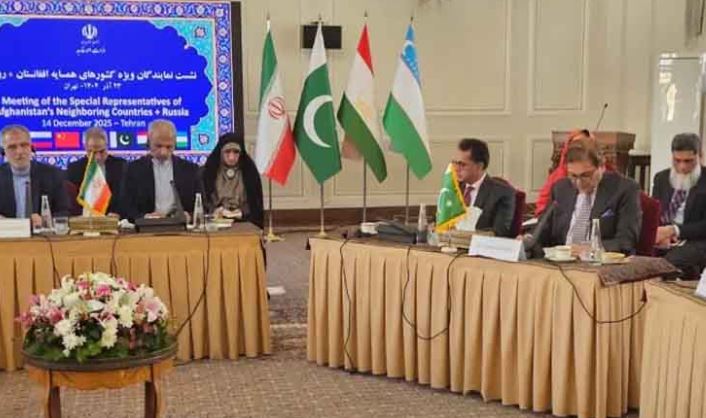
 Pakistan has called on the Afghan Taliban to eliminate all militant groups operating from their territory, while Iran emphasised the importance of regional collaboration instead of foreign intervention during a multinational meeting on Afghanistan held in Tehran on Sunday.

The remarks were made at a gathering of Special Representatives for Afghanistan from neighbouring countries, along with Russia. Although the Taliban were invited to attend, they declined, as confirmed by both Iranian and Taliban officials.

The high-level meeting in Tehran brought together envoys from Pakistan, China, Russia, Tajikistan, Uzbekistan and Turkmenistan to deliberate on shared security challenges and approaches towards engaging Afghanistan’s de facto authorities.

Pakistan’s Special Representative for Afghanistan, Mohammad Sadiq, underscored Islamabad’s serious concerns over terrorism originating from Afghan soil. He said the persistent threat posed by militant groups remains a major challenge for the entire region.

Sadiq stressed that Afghanistan’s stability and economic potential depend on it being free of terrorist elements, which would help build trust among neighbouring states. He said the de facto authorities must take concrete steps to ease the suffering of the Afghan people, starting with the complete removal of all terrorist groups without discrimination.

Later, in a post on X, he said the Afghan people have endured enough hardships and deserve a better future. He added that only an Afghanistan that does not shelter militants can encourage meaningful regional engagement and unlock opportunities for economic connectivity.

The regional forum was originally launched by Pakistan in September 2021, shortly after the Taliban took control of Kabul following the withdrawal of US and Nato forces. Iran later hosted the second foreign ministers’ meeting in October 2021. However, the forum has struggled to achieve tangible outcomes.

Pakistan’s former ambassador to Afghanistan, Mansoor Khan, said the group was initially meant to take collective decisions, including the possibility of coordinated recognition of the Taliban government. He added that Pakistan had hoped neighbouring countries would adopt a unified stance on issues such as counter-terrorism, political inclusivity, girls’ education, and human and women’s rights.

On the sidelines, Ambassador Sadiq also met Iranian Foreign Minister Abbas Araghchi. According to Pakistan’s ambassador to Iran, Muhammad Muddasir Tipu, Sadiq expressed optimism that the discussions would contribute to regional peace. Araghchi, he said, reaffirmed Iran’s commitment to further strengthening ties with Pakistan.

Addressing the meeting, Araghchi argued that Afghanistan’s long-term stability depends on its integration into regional political and economic frameworks rather than external involvement. He said past experiences have shown that imposed solutions and decisions made outside the region have failed to bring lasting stability.

He highlighted the crucial role of neighbouring countries as the most reliable stakeholders in addressing Afghanistan’s challenges and pointed to the country’s strategic position linking Central, West and South Asia. He noted that Afghanistan has the potential to become a key hub for trade, energy transit and regional connectivity.

Leave a Reply

Your email address will not be published. Required fields are marked *

Multi-country forum urges action against terrorism from Afghan soil

Link copied!

 Pakistan has called on the Afghan Taliban to eliminate all militant groups operating from their territory, while Iran emphasised the importance of regional collaboration instead of foreign intervention during a multinational meeting on Afghanistan held in Tehran on Sunday.

The remarks were made at a gathering of Special Representatives for Afghanistan from neighbouring countries, along with Russia. Although the Taliban were invited to attend, they declined, as confirmed by both Iranian and Taliban officials.

The high-level meeting in Tehran brought together envoys from Pakistan, China, Russia, Tajikistan, Uzbekistan and Turkmenistan to deliberate on shared security challenges and approaches towards engaging Afghanistan’s de facto authorities.

Pakistan’s Special Representative for Afghanistan, Mohammad Sadiq, underscored Islamabad’s serious concerns over terrorism originating from Afghan soil. He said the persistent threat posed by militant groups remains a major challenge for the entire region.

Sadiq stressed that Afghanistan’s stability and economic potential depend on it being free of terrorist elements, which would help build trust among neighbouring states. He said the de facto authorities must take concrete steps to ease the suffering of the Afghan people, starting with the complete removal of all terrorist groups without discrimination.

Later, in a post on X, he said the Afghan people have endured enough hardships and deserve a better future. He added that only an Afghanistan that does not shelter militants can encourage meaningful regional engagement and unlock opportunities for economic connectivity.

The regional forum was originally launched by Pakistan in September 2021, shortly after the Taliban took control of Kabul following the withdrawal of US and Nato forces. Iran later hosted the second foreign ministers’ meeting in October 2021. However, the forum has struggled to achieve tangible outcomes.

Pakistan’s former ambassador to Afghanistan, Mansoor Khan, said the group was initially meant to take collective decisions, including the possibility of coordinated recognition of the Taliban government. He added that Pakistan had hoped neighbouring countries would adopt a unified stance on issues such as counter-terrorism, political inclusivity, girls’ education, and human and women’s rights.

On the sidelines, Ambassador Sadiq also met Iranian Foreign Minister Abbas Araghchi. According to Pakistan’s ambassador to Iran, Muhammad Muddasir Tipu, Sadiq expressed optimism that the discussions would contribute to regional peace. Araghchi, he said, reaffirmed Iran’s commitment to further strengthening ties with Pakistan.

Addressing the meeting, Araghchi argued that Afghanistan’s long-term stability depends on its integration into regional political and economic frameworks rather than external involvement. He said past experiences have shown that imposed solutions and decisions made outside the region have failed to bring lasting stability.

He highlighted the crucial role of neighbouring countries as the most reliable stakeholders in addressing Afghanistan’s challenges and pointed to the country’s strategic position linking Central, West and South Asia. He noted that Afghanistan has the potential to become a key hub for trade, energy transit and regional connectivity.

Leave a Reply

Your email address will not be published. Required fields are marked *