


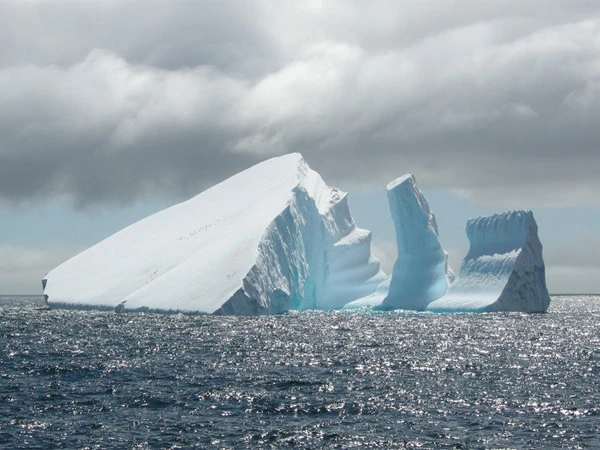
Researchers have revealed that the number of icebergs passing through the From Strait (a sea route between Greenland and Svalbard) has increased by almost five times since the early 2000s.
Scientists say the main reason for this extraordinary increase is the rapid melting of glaciers in northeastern Greenland and parts of the Russian Arctic, which are breaking up large ice shelves.
While the increasing number of icebergs is a clear sign of the Earth’s warming climate, experts say the changes taking place below the sea level are even more surprising.
When these icebergs travel through Arctic waters, they also carry with them thousands of years of old rocks, stones and soil that are trapped in the ice. When these icebergs melt, all this material falls to the sea floor.
As a result, new hard surfaces are created on the ocean floor where marine life begins to flourish.
Sponges, corals and other organisms are settling on these new rocks. Thus, new aquatic ecosystems are being created in places that previously consisted only of mud and barren seabeds.
Scientists call these rocks ‘dropstones’. These are the rocks and rocky materials that glaciers bring with them and leave on the ocean floor when icebergs melt, where they provide new shelters and foundations for marine life.
Research has shown that climate change is not only affecting existing environments but is also creating entirely new environments and ecosystems in some places.