Daily The Patriot

Lack of growth in business activities in the country is worrying: SK Niazi

Link copied!

Political leaders raise questions over economic policies, education, public welfare and provincial governance, while discussions also focus on cricket and regional cooperation.

By Staff Reporter
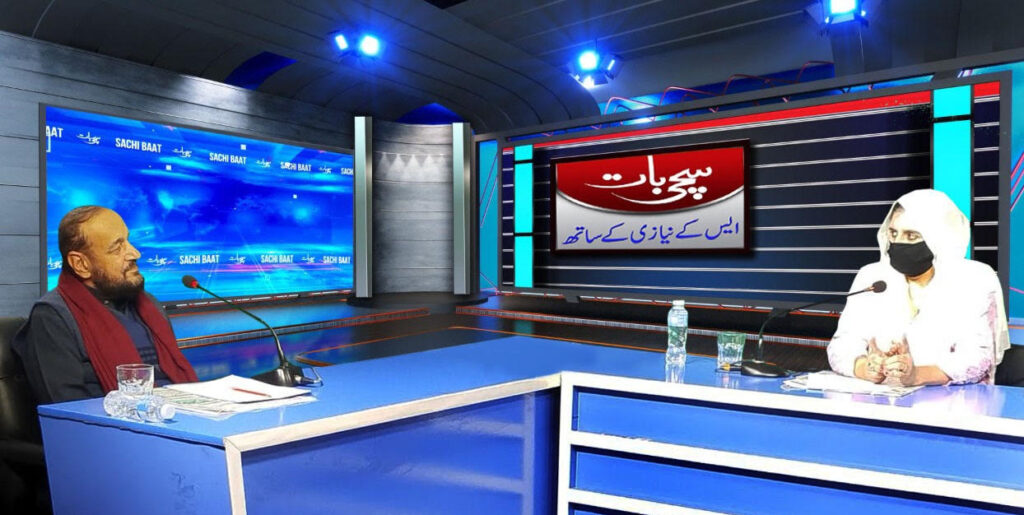
ISLAMABAD: Editor-in-Chief Pakistan Group of Newspapers and Chairman Roze News SK Niazi, while speaking in his renowned talk show Sachi Baat, discussed the performance of Pakistan’s cricket team, economic challenges, the establishment of new provinces and the need for urgent measures to address public problems. SK Niazi expressed his personal regard for former Army Chief General (retd) Abdul Waheed Kakar, describing him as a very good man. He praised Pakistan’s victory against England and the national cricket team’s performance, while acknowledging the memorable 1992 World Cup victory. He said Mohsin Naqvi had achieved success in cricket and could play an important role in the establishment of new provinces. He also recalled the cricketing achievements of the PTI founder. Highlighting economic challenges, SK Niazi expressed concern over rising interest rates, unemployment, corruption, declining business activity and the departure of businesspeople from Pakistan. He said the lack of investment was worsening economic difficulties, affecting the real estate sector and creating serious problems for ordinary citizens. Calling for urgent economic measures, he appealed to Prime Minister Shehbaz Sharif to take important decisions to provide relief to the public. He also reiterated that interest was prohibited in Islam and said the country needed to move towards an interest-free system.
MNA PML-N Ghazala Anjum said protecting citizens and establishing peace were the responsibilities of the provincial government, stressing that decisions must be taken in accordance with the Constitution. She maintained that negotiations should remain open despite political differences and said invitations for talks had not received a positive response.
Questioning the performance of the Khyber Pakhtunkhwa government, she cited an increase in provincial debt from Rs150 billion to Rs951 billion, according to the opposition’s claim, and demanded transparency regarding development expenditure. She also raised questions about the province’s share under the National Finance Commission (NFC), particularly between 2019 and 2021, and called for a review of the previous record.
Ghazala Anjum highlighted shortcomings in health and education, including the shortage of hospitals in Peshawar and the number of children out of school. She said millions of children remained outside the education system and stressed that practical facilities were more important than development announcements. She also called for better school buildings, improved university standards, facilities for teachers and students, and transparency in recruitment, including Class IV jobs.
On economic matters, she said increased investment could help improve the situation but acknowledged that the government had yet to achieve the desired economic recovery. She stressed that Pakistan could not progress in isolation and that national policies needed to balance Islamic principles with global requirements. She also highlighted delays in divorce and khula cases, saying women should receive timely justice and should not be forced to surrender their rights because of prolonged court proceedings. She praised efforts aimed at promoting regional peace.
Leader of Tehreek-e-Insaf Ali Bukhari criticised the government’s economic performance since 2022, expressing concern over inflation, unemployment, the closure of textile mills, declining investment and low spending on education. He questioned the government’s reliance on revenue from petrol, electricity and gas, arguing that high energy costs and the burden of taxes were affecting businesses and ordinary citizens.
He also questioned claims of economic improvement, asking where the benefits could be seen in the purchasing power of the public. He called for transparency in foreign investment, government expenditure and development projects, stressing that public resources should be used in the national interest, particularly for children’s education and future.
Ali Bukhari said the performance of Punjab and Khyber Pakhtunkhwa should be assessed through comparable statistics rather than announcements alone. He called for comparisons of hospitals, doctors, schools and basic health facilities in proportion to population, and questioned what practical steps had been taken to bring out-of-school children into classrooms.
On public welfare, he questioned the decision to export sugar despite rising domestic prices and called for measures to reduce the burden on consumers. He also criticised the tax system, saying reforms were necessary to support exports, transport and business activity. Referring to Pakistan’s repeated engagement with the International Monetary Fund since 1958, he called for a review of the economic policies of successive governments and urged greater domestic production and exports to reduce dependence on foreign loans.
Commenting on cricket, Ali Bukhari welcomed Pakistan’s victory against England but said sporting success should not become part of political disputes. He urged parliamentarians to use responsible language and assess the team’s performance in light of actual results. He also paid tribute to the country’s martyrs, describing their sacrifices as essential to national security and stressing that their families deserved recognition.
Defence Analyst Air Vice Marshal (retd) Ijaz Mahmood discussed Pakistan’s domestic and regional situation, describing efforts to promote lasting peace as commendable. He expressed hope that Pakistan’s initiatives for regional stability would succeed.
He also highlighted the significance of a meeting involving the Saudi defence minister, the Turkish intelligence chief and Pakistani leadership, saying cooperation among Pakistan, Saudi Arabia and Türkiye could influence regional developments. However, he maintained that any decision to support or ratify a proposed trilateral defence agreement should follow a careful review of its implications and potential benefits by the relevant authorities.

Leave a Reply

Your email address will not be published. Required fields are marked *