Asif Mahmood
The issue is neither Qasim Khan and Suleman Khan, nor their right to freedom of expression, nor even the interview itself. The real question is: should a sports channel conduct an interview of this nature, concerning the host country’s internal political and criminal affairs, during an international cricket match?
Does this come within the scope of its broadcasting rights? What professional rules govern a sports broadcaster? Is it free to take a sports broadcast and turn it into a platform for current affairs and political commentary? Can the sporting arena be used for political intervention? And what happened to the old principle that politics should be kept out of sport?
There is also the question of the visiting team. What rights does a visiting team have when it travels to another country for an international match? Is it simply at the mercy of the host broadcaster? And are we now prepared to accept that if someone wants to twist the arm of a visiting country, he can do so even during the intervals of its matches?
Had this interview been part of the channel’s regular news programming, there would have been no issue. A news channel can interview whoever it wishes within the limits of its own editorial policy and applicable law. But when a broadcaster acquires the rights to televise a sporting event, those rights come with a certain professional responsibility. The coverage is supposed to be about the sport. Political current affairs are a different matter.
We have seen how seriously such boundaries are taken when it comes to players and spectators. British cricketer Usman Khawaja, for example, was stopped from taking the field with a symbolic message relating to Palestine. Political banners are not allowed in sporting arenas. Even Palestinian flags have faced restrictions inside stadiums. If players cannot use the ground for political expression, and spectators cannot bring political symbols into it, why should the broadcaster be free to do exactly that through the television screen?
When broadcasting rights are granted for sport, do they also grant a licence to pursue a political agenda?
And then there is the question of money. Was this interview by Sky News broadcast purely out of humanitarian concern, or was it paid content? In societies where there is no such thing as a free lunch, it would be reasonable to ask whether a commercial arrangement was involved.
If it was paid content, the question becomes even more serious. Can a broadcaster use airtime purchased or allocated for a sporting event to conduct an activity unrelated to sport, earn money from it, and at the same time intervene in the internal affairs of the visiting country?
The broadcasting arrangement between the host and visiting sides also needs to be understood. When a team travels abroad to play, is it entirely at the mercy of the host country’s broadcasters? Or are the rights and responsibilities of the broadcaster defined by an agreement between the relevant parties?
I am not talking about every television channel in the host country. I am talking about the broadcaster that has acquired the rights to show the match between the two teams.
There are two sides to the match. Both have their sensitivities. Both have their own limits and red lines. And sport itself has certain conventions and ethics. A broadcaster cannot simply pretend that none of these considerations exist.
Take the principle to its logical conclusion. Suppose Bangladesh is playing India tomorrow. Would you interview Sheikh Hasina during the match? If India and Pakistan are playing, would Pakistan start interviewing Sikh political figures? Would it invite the wife of Yasin Malik and put her on air? Or would it decide to run a documentary on the brutality of the RSS and the naked Hindu majoritarianism of the BJP?
Would that be considered acceptable?
And what would happen if, at the end of a football match, a player began speaking about the rights of Palestinians? Would Western broadcasters and sporting authorities simply say that he was exercising his freedom of expression?
We know the answer.
On questions such as Kashmir and Palestine, and on the racism associated with Hindutva and Zionism, there are often limits to what others are allowed to say and where they are allowed to say it. Yet those who claim to speak in the name of human rights seem to assume a rather different freedom for themselves. They can speak about the internal affairs of others even when the occasion has nothing to do with politics.
This is the arrogance of the White Man’s Burden: the assumption that whatever the West does is legitimate because it is the West doing it. The assumption that it has the authority to decide what constitutes human rights, what constitutes acceptable speech, and when the rules may be set aside. The rest of the world, apparently, is expected to listen.
The position of Pakistan Tehreek-e-Insaf is a separate matter. Its politics has increasingly become so centred on Imran Khan that, for many of its supporters, little else seems to matter. If Khan is not there, the rest of the country appears almost irrelevant. That is a political obsession, and it is not the issue under discussion here.
The issue is what happens when a foreign broadcaster enters the political arena of the host country under the cover of a sporting event.
At that point, perhaps we should put partisan loyalties aside and simply think as Pakistanis.
Does Western civilisation have the right to twist the arm of anyone, anywhere, whenever it wishes? Sometimes in the name of human rights, sometimes in the name of sport, and sometimes through the power of a television broadcast?
And if, one day, someone decides to answer in kind, will that freedom be tolerated as well?
Interviewing Imran Khan’s Sons during a Cricket Match: A Few Questions
Published: August 29, 2026


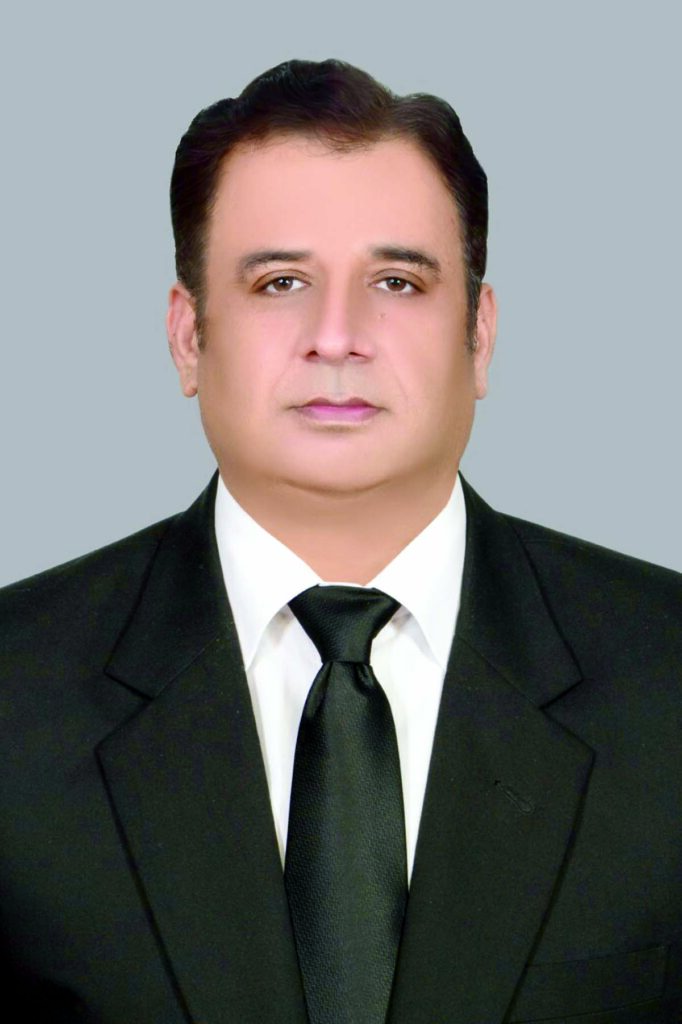
Asif Mahmood
The issue is neither Qasim Khan and Suleman Khan, nor their right to freedom of expression, nor even the interview itself. The real question is: should a sports channel conduct an interview of this nature, concerning the host country’s internal political and criminal affairs, during an international cricket match?
Does this come within the scope of its broadcasting rights? What professional rules govern a sports broadcaster? Is it free to take a sports broadcast and turn it into a platform for current affairs and political commentary? Can the sporting arena be used for political intervention? And what happened to the old principle that politics should be kept out of sport?
There is also the question of the visiting team. What rights does a visiting team have when it travels to another country for an international match? Is it simply at the mercy of the host broadcaster? And are we now prepared to accept that if someone wants to twist the arm of a visiting country, he can do so even during the intervals of its matches?
Had this interview been part of the channel’s regular news programming, there would have been no issue. A news channel can interview whoever it wishes within the limits of its own editorial policy and applicable law. But when a broadcaster acquires the rights to televise a sporting event, those rights come with a certain professional responsibility. The coverage is supposed to be about the sport. Political current affairs are a different matter.
We have seen how seriously such boundaries are taken when it comes to players and spectators. British cricketer Usman Khawaja, for example, was stopped from taking the field with a symbolic message relating to Palestine. Political banners are not allowed in sporting arenas. Even Palestinian flags have faced restrictions inside stadiums. If players cannot use the ground for political expression, and spectators cannot bring political symbols into it, why should the broadcaster be free to do exactly that through the television screen?
When broadcasting rights are granted for sport, do they also grant a licence to pursue a political agenda?
And then there is the question of money. Was this interview by Sky News broadcast purely out of humanitarian concern, or was it paid content? In societies where there is no such thing as a free lunch, it would be reasonable to ask whether a commercial arrangement was involved.
If it was paid content, the question becomes even more serious. Can a broadcaster use airtime purchased or allocated for a sporting event to conduct an activity unrelated to sport, earn money from it, and at the same time intervene in the internal affairs of the visiting country?
The broadcasting arrangement between the host and visiting sides also needs to be understood. When a team travels abroad to play, is it entirely at the mercy of the host country’s broadcasters? Or are the rights and responsibilities of the broadcaster defined by an agreement between the relevant parties?
I am not talking about every television channel in the host country. I am talking about the broadcaster that has acquired the rights to show the match between the two teams.
There are two sides to the match. Both have their sensitivities. Both have their own limits and red lines. And sport itself has certain conventions and ethics. A broadcaster cannot simply pretend that none of these considerations exist.
Take the principle to its logical conclusion. Suppose Bangladesh is playing India tomorrow. Would you interview Sheikh Hasina during the match? If India and Pakistan are playing, would Pakistan start interviewing Sikh political figures? Would it invite the wife of Yasin Malik and put her on air? Or would it decide to run a documentary on the brutality of the RSS and the naked Hindu majoritarianism of the BJP?
Would that be considered acceptable?
And what would happen if, at the end of a football match, a player began speaking about the rights of Palestinians? Would Western broadcasters and sporting authorities simply say that he was exercising his freedom of expression?
We know the answer.
On questions such as Kashmir and Palestine, and on the racism associated with Hindutva and Zionism, there are often limits to what others are allowed to say and where they are allowed to say it. Yet those who claim to speak in the name of human rights seem to assume a rather different freedom for themselves. They can speak about the internal affairs of others even when the occasion has nothing to do with politics.
This is the arrogance of the White Man’s Burden: the assumption that whatever the West does is legitimate because it is the West doing it. The assumption that it has the authority to decide what constitutes human rights, what constitutes acceptable speech, and when the rules may be set aside. The rest of the world, apparently, is expected to listen.
The position of Pakistan Tehreek-e-Insaf is a separate matter. Its politics has increasingly become so centred on Imran Khan that, for many of its supporters, little else seems to matter. If Khan is not there, the rest of the country appears almost irrelevant. That is a political obsession, and it is not the issue under discussion here.
The issue is what happens when a foreign broadcaster enters the political arena of the host country under the cover of a sporting event.
At that point, perhaps we should put partisan loyalties aside and simply think as Pakistanis.
Does Western civilisation have the right to twist the arm of anyone, anywhere, whenever it wishes? Sometimes in the name of human rights, sometimes in the name of sport, and sometimes through the power of a television broadcast?
And if, one day, someone decides to answer in kind, will that freedom be tolerated as well?