


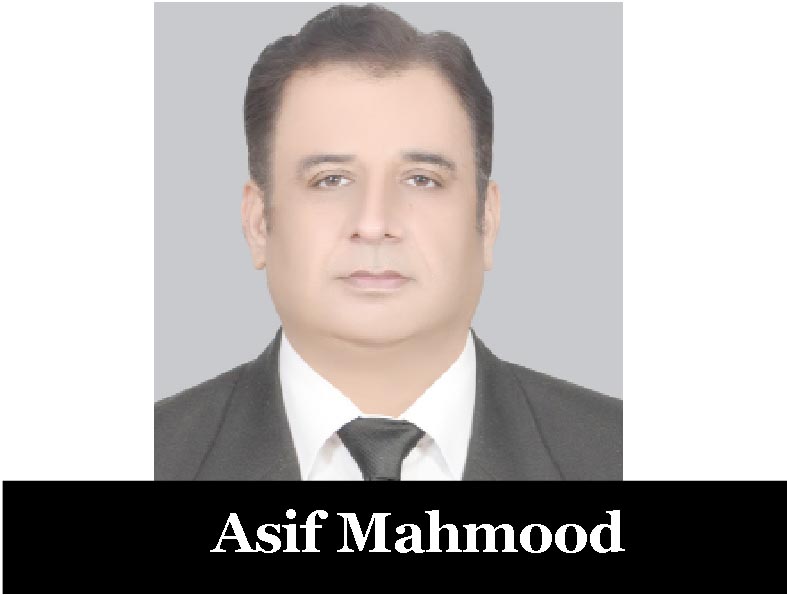
Asif Mahmood
Hindutva has become a tangible geopolitical force that is steadily eroding regional stability. From Pakistan’s western frontiers, where Indian backed proxies are engaged in fomenting terrorism inside Pakistani territory, to the political landscape of Bangladesh, a discernible pattern is emerging, one that reflects an expansionist mindset unwilling to tolerate independent centers of power within the region.
It is now widely established that India employs proxies and hybrid tactics to destabilize Pakistan’s internal security environment, a reality that extends beyond mere allegation into a consistent pattern observed over time. The same playbook is now visibly unfolding in Bangladesh. A coordinated disinformation campaign, driven by Indian intelligence networks in collaboration with the Awami League, has sought to distort the reality of the 2024 student uprising by falsely framing it as a foreign orchestrated coup. This deliberate narrative engineering is aimed at undermining the legitimacy of an indigenous political movement while manufacturing suspicion and division within Bangladesh’s state institutions.
More concerning is the increasing reliance on technological manipulation. AI generated deepfakes and fabricated reports targeting General Waker Uz Zaman, the Chief of Army Staff of Bangladesh, have been circulated with the intent to sow discord within the ranks of the Bangladesh Army. These reports falsely allege that he is facilitating Pakistani naval access, a claim designed not only to create mistrust within Bangladesh’s military establishment but also to inflame nationalist anxieties.
Bangladesh’s own military media wing has pushed back against this narrative. ISPR Bangladesh has openly accused segments of the Indian media of running disinformation campaigns aimed at portraying Pakistan as a subversive force within Bangladesh’s security structure. This is not merely a media war; it is a calculated attempt to shape strategic alignments in South Asia by weaponizing perception.
The political dimension of this crisis further complicates matters. Despite being sentenced to death by Bangladesh’s International Crimes Tribunal, Sheikh Hasina continues to receive protection in India, raising serious questions about New Delhi’s commitment to bilateral agreements, particularly the 2013 Extradition Treaty. Her continued presence in India has become a symbol of political interference, reinforcing the perception that Bangladesh’s sovereignty is being undermined.
The situation escalated further during the February 2026 general elections in Bangladesh. Utilizing Indian digital platforms, Sheikh Hasina launched a campaign rejecting the legitimacy of the electoral process, labeling it as pre planned rigging and calling for the resignation of the interim government. Such actions not only intensified political polarization within Bangladesh but also deepened concerns regarding external influence in shaping the country’s internal discourse.
At a broader level, India’s strategic calculus appears to be driven by a desire to prevent any meaningful rapprochement between Dhaka and Islamabad. Economic or security cooperation between Bangladesh and Pakistan is increasingly viewed as a challenge to India’s regional dominance. Consequently, propaganda campaigns are being deployed to delegitimize such engagement and to discourage Bangladesh from pursuing an independent foreign policy trajectory.
What is unfolding in South Asia demands clarity rather than caution. The pattern of Indian backed destabilization, the systematic use of disinformation, and the ideological drive of Hindutva rooted fascism have collectively emerged as a direct threat to the sovereignty and territorial integrity of regional states. It is not merely a matter of perception or misunderstanding. It is a question of confronting an expansionist doctrine that thrives on coercion, manipulation, and political subversion. Lasting peace in the region will remain unattainable unless these practices are decisively challenged and brought to an end.