


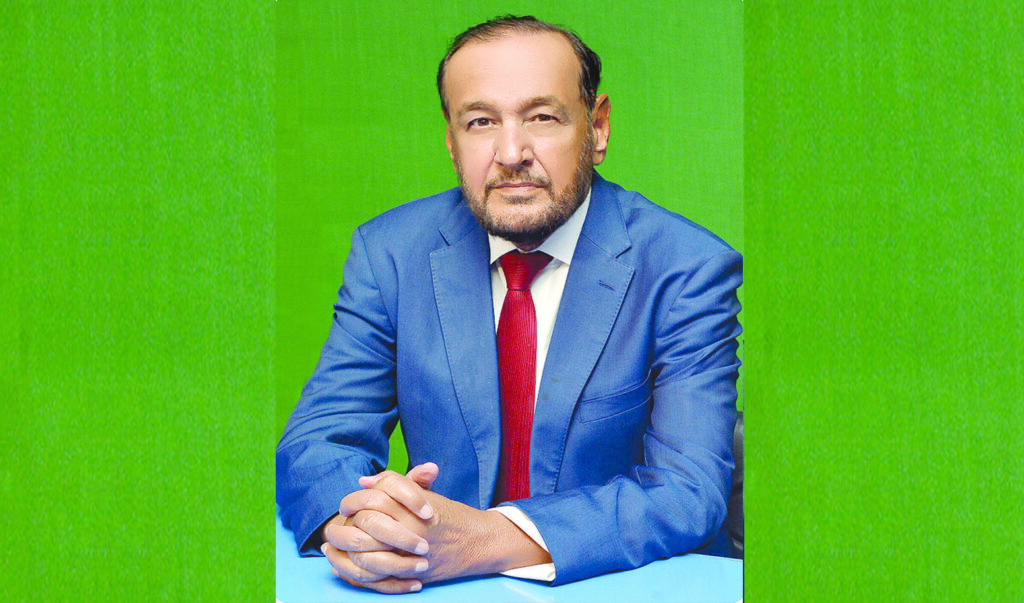
By Sardar khan Niazi.
Reading the details of the Supreme Court’s performance over the past year, published in Daily Pakistan and The Patriot, left me with a sense of genuine satisfaction. The office of the Supreme Court carries immense stature. It is not an institution meant to become a subject of news tickers or the noise of television talk shows. As one of the most respected institutions in any society, its responsibilities and its real work stand far above all this noise.
I was pleased to learn that, under the leadership of the Honourable Chief Justice, Mr. Justice Yahya Afridi, the Supreme Court is moving steadily towards its actual purpose. Free from the pursuit of publicity and personal recognition, the judiciary appears focused on its larger mission, and the results are beginning to show. The details that have been published are certainly encouraging.
A closer look at these figures reveals that the Supreme Court has not made the disposal of cases the sole measure of its success. Instead, it has launched a comprehensive reform programme aimed at improving the entire justice system. An 86-point Reform Action Plan was introduced for this purpose. Of these, 64 initiatives have been completed, 11 are in progress, while work remains to be done on the remaining 11.
One of the most significant outcomes of this programme has been the reduction in the backlog of pending cases. In November 2024, there were 60,304 pending cases before the Supreme Court. By September 2026, this number had fallen to 31,927, representing a reduction of approximately 47 per cent. This is no small achievement. Given the enormous backlog in our courts and the years people often spend waiting for justice, these figures carry particular significance.
One clarification is important here. Following the constitutional amendment, 22,213 cases were transferred to the Federal Constitutional Court. However, even if this transfer is considered separately, the Supreme Court disposed of 6,998 more cases than the number of new cases instituted between November 2024 and September 2026. This gives a fair indication of the improvement in its performance.
In the financial year 2023-24, the Supreme Court disposed of 16,620 cases. The following financial year, this figure rose to 25,989, an increase of approximately 56 per cent. These numbers clearly indicate that the pace of case disposal has improved considerably.
Another important aspect of this reform process is the priority being given to older cases. In appeals against death sentences, hearings have progressed beyond cases filed in 2015, and cases instituted in 2026 are now also being taken up. The same progress can be seen in post-arrest bail matters, where the list that began with cases from 2009 has now reached those filed in 2026. In family cases, too, after taking up matters dating back to 2010, the Court is now reaching cases filed in 2026. This means that people who have been waiting for justice for years are not being left behind.
Special attention is being given to cases involving personal liberty, family rights, tax disputes and service matters, among other areas. The formation of dedicated benches, early hearings and better case scheduling are all intended to reduce delays. It is important for a court to recognise that the conclusion of a case is not merely the end of a judicial proceeding. Behind that case may be a citizen’s life, livelihood, freedom or family.
The use of technology is another important dimension of these reforms. According to the report, more than 45,131 cases have been electronically filed, over 264,000 judicial judgments have been digitised, and more than 34,883 certified copies have been issued. The Supreme Court Rules 2025 have introduced a new framework for electronic filing, digital records and virtual hearings. These changes are the need of the hour. If a litigant no longer has to visit the court repeatedly just to submit an application or obtain a copy of a judgment, that too is an important part of access to justice.
The establishment of a Public Facilitation Centre is another noteworthy step towards making judicial services more accessible. It provides guidance and assistance to litigants in court-related matters. Equally important is the plan to establish a call centre offering free legal advice and assistance to people who cannot afford private legal services. The establishment of an Overseas Litigants Facilitation Cell for Pakistanis living abroad is also part of the same approach.
It is worth noting that these reforms have not been confined to the Supreme Court alone. Efforts are being made to improve the wider judicial system through the National Judicial Policy Making Committee. The proposal to prescribe time limits ranging from two to 24 months for 17 priority categories of cases is another step in this direction.
Figures relating to the performance of the district judiciary have also been made public. Between September 2025 and July 2026, district courts disposed of 1,467,675 cases falling within the prescribed time limits. During the same period, Model Criminal Courts decided 91,071 cases, while Model Civil Courts disposed of 42,386. The National Judicial Analytics Dashboard is being used to monitor this performance.
In principle, approval has also been granted for a unified national e-filing and electronic judicial record system. Under the proposed arrangement, every case will be assigned a Universal Case Identification Number, allowing it to be tracked through different levels of the judiciary using the same number. The initial phase is proposed to begin with family cases. If successfully implemented, this system could make it considerably easier for litigants to follow their cases and keep track of their progress.
There is also a human dimension to these reforms that deserves attention. Efforts are being made to create a more women-friendly judicial environment. According to the report, special facilities for women have been provided at 398 locations across different judicial jurisdictions. Plans are also under consideration to establish modern Women Facilitation Centres equipped with waiting areas, childcare facilities, separate washrooms and mediation rooms.
To promote transparency and accountability within the institution, an Anti-Corruption Helpline has been established. Complaints relating to bribery, corruption and misconduct by court staff can be lodged through this facility. Measures to improve financial management, procurement, internal audits and performance monitoring are also part of these efforts.
Going through all these details brings one thought to mind: the real success of an institution lies not in the noise surrounding it, but in the work it does. The greatness of the judiciary does not lie in responding to people in daily political debates or making headlines. It lies in delivering justice to the citizen who has been standing at the court’s door for years.
The Supreme Court holds an extraordinary position precisely because the expectations attached to it are equally extraordinary. People want courts to make the process easier for them, decide cases without undue delay, ensure transparency in judicial proceedings and make justice accessible to everyone, rather than allowing it to remain within the reach of only those who can afford it.
Of course, much remains to be done. The real test of these reforms will be their consistent implementation and the results they deliver. The figures are encouraging,
I am pleased to see the Supreme Court making progress in this direction. Watching the judiciary focus on its actual responsibilities is a welcome experience. When institutions perform their duties without being distracted by publicity or the pursuit of recognition, their work speaks for itself. That is precisely what one expects from the Supreme Court, and the details now emerging reinforce that expectation.
On this occasion, I extend my heartfelt congratulations to the Honourable Chief Justice.
Hats off to the Supreme Court.