


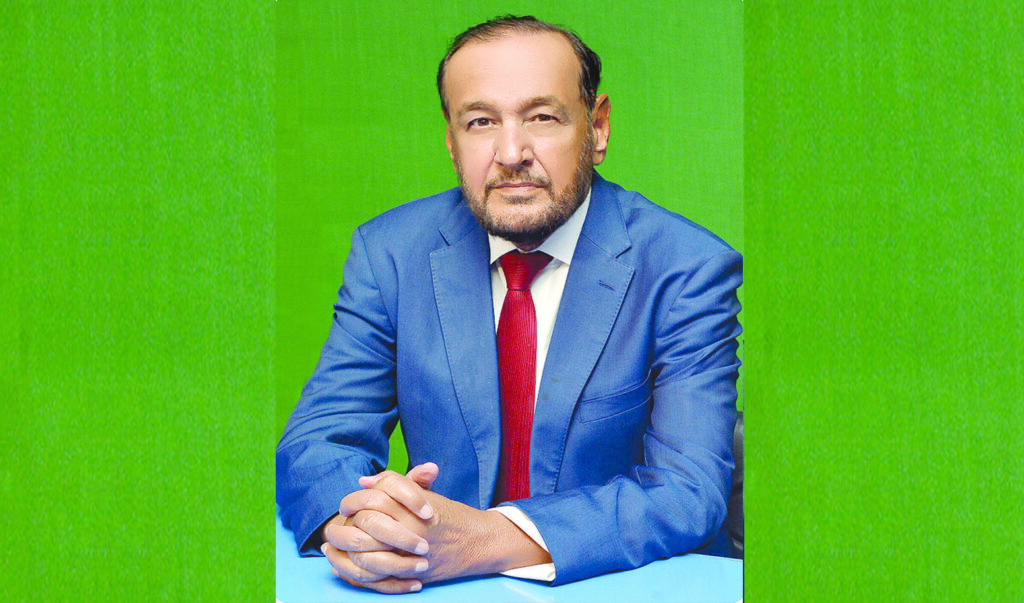
By Sardar Khan Niazi
Pakistan’s failure to achieve annual development spending targets raises serious questions about the country’s planning priorities, administrative capacity and commitment to economic development. Year after year, ambitious development programs are announced, substantial allocations are made, and promises of improved infrastructure and public services are repeated. Yet, when it comes to actual implementation, spending frequently falls short. The result is a widening gap between budgetary commitments and the realities experienced by ordinary citizens. Development expenditure is not merely an accounting exercise. It is an investment in the country’s future productive capacity. Roads, schools, hospitals, irrigation networks, energy infrastructure and water supply schemes are essential foundations of economic and social progress. When allocated funds remain unutilized, projects are delayed, costs rise and the expected benefits to communities and businesses are postponed. Public-sector projects generate employment, create demand for construction materials, support local businesses and improve connectivity. They can also encourage private investment by reducing the cost of doing business. When these projects are delayed or abandoned, the economy loses an important source of growth and job creation. One of the central problems lies in the disconnect between budget formulation and implementation. Development budgets are often prepared with ambitious targets without adequately considering the administrative, financial and technical capacity required to execute projects within the fiscal year. Bureaucratic delays, lengthy procurement procedures, land acquisition disputes, weak project preparation and frequent administrative changes all contribute to slow execution. In some cases, projects enter the budget without completing essential feasibility studies or securing the necessary approvals. Others face delays because of funding releases, coordination failures between federal and provincial departments, or disagreements over responsibilities. Fiscal constraints also play a role. The government must balance development spending against debt servicing, defense, subsidies and other recurrent obligations. This approach may offer short-term fiscal relief, but it can impose substantial long-term economic costs. The quality of development spending is equally important. Increasing expenditure alone cannot guarantee better outcomes. Projects must be selected on the basis of economic and social returns rather than political visibility. A well-planned investment in primary healthcare, education, agricultural productivity or urban water management may produce greater long-term benefits than an expensive project conceived without a clear assessment of public need. There is also a need to strengthen coordination between federal and provincial governments. In areas such as transport, water management, energy and public health, fragmented planning can undermine the effectiveness of individual projects. A coordinated development strategy would reduce duplication, improve resource allocation and ensure that investments complement one another. Most importantly, development expenditure must be protected from short-term political and fiscal uncertainty. A smaller portfolio of well-executed projects can deliver greater benefits than an extensive list of schemes that remain incomplete. Pakistan’s development challenge is not simply a shortage of financial resources. It is also a problem of converting available resources into productive assets and improved public services. Every unutilized rupee represents a missed opportunity to improve a school, equip a hospital, expand an irrigation network or strengthen the infrastructure needed for economic activity. The government must recognize that development spending is not a discretionary favor to be undertaken when fiscal circumstances permit. It is a central instrument of economic transformation and social welfare. Persistent underspending, therefore, should not be treated as a routine administrative shortcoming. It demands serious institutional attention. Pakistan cannot achieve sustainable economic growth through stabilization measures alone. Fiscal discipline must go hand in hand with productive public investment. Unless the country improves its capacity to plan, finance and execute development projects, annual budget announcements will continue to create expectations that implementation fails to fulfil. The real measure of a development budget is not how much money is allocated, but how effectively that money changes people’s lives.