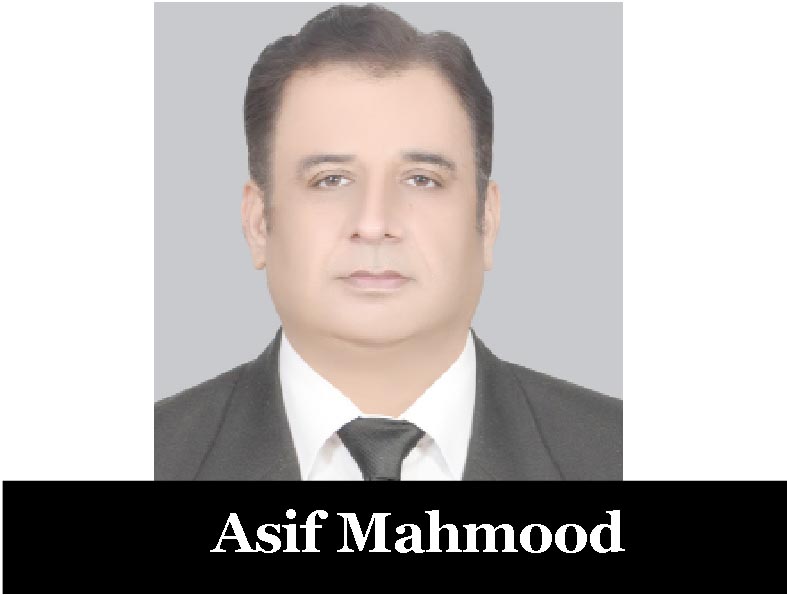
Asif Mahmood
In our context, budgets are usually seen through two familiar lenses. One is to view them as a supporter of the government, and the other is to view them as an opponent. In the first case, every budget is declared excellent; in the second, every budget is labelled oppressive. What is needed is to move beyond political bias and look at the budget simply as Pakistanis. When we do that, a number of basic and important questions begin to emerge. Unless these questions are addressed, any discussion on the budget remains incomplete.
The first question is this: we are an agricultural country, but can we really improve our economy and produce a meaningful budget without making agriculture our top priority? Agriculture is not just a sector; it is an entire economic system. It includes not only the food basket but also a complete agro industrial structure. If we fail to focus on it, if we cannot industrialise our agricultural potential, and if we end up importing wheat and sugar while spending valuable foreign exchange on it, then how can a sound budget ever be expected?
The second question concerns industrialisation. We are not able to industrialise effectively. Industry is shrinking. Electricity has become expensive, and we are producing very little that can be exported to earn foreign exchange. In reality, we are becoming a consumer market that buys from abroad and keeps losing dollars in the process. Can a country that functions primarily as a consumer economy present a strong budget? Where industrialisation does not exist, how realistic is it to expect a healthy fiscal framework?
What are our exports? What is our policy direction? What are our targets? Dollars cannot be earned without exports. Do we intend to rely only on remittances from overseas Pakistanis and foreign loans, or are we willing to learn how to earn through exports? Without a coherent export strategy, how can a strong budget be prepared? A shortage of dollars makes a strong budget impossible.
The third question relates to pre budget consultation. A budget is not simply the arrangement of figures to complete a financial year. It is a comprehensive policy exercise linked to risks, possibilities and expectations. The question is whether any meaningful dialogue takes place before the budget with stakeholders and economic experts at any level.
At the same time, is there any serious discussion about how the Iran–US conflict may be affecting different sectors of our economy, what challenges it is creating, how we can manage losses, and what alternatives exist? From chambers of commerce to media and parliament, is there any substantive debate on what this conflict means for Pakistan economically, and what opportunities may emerge if peace prevails? And are we prepared to benefit from those opportunities?
It must be remembered that the economy is not driven by government alone. The private sector plays a central role. Are our investors and traders prepared to respond to changing regional conditions? Is anyone guiding them about emerging opportunities in different sectors? Without a coordinated policy framework, how can the economy stabilise and how can a strong budget be expected?
The fourth question concerns the financial imbalance created between the federation and the provinces after the 18th Amendment. Can a better budget be expected without addressing and correcting this imbalance?
The fifth question is whether our current tax system is effective. Every year, finance ministers repeat the same statement about increasing tax targets. The problem is that the tax base does not expand, and the burden falls repeatedly on the salaried class, which is already within the tax net and easy to collect from. In such a situation, how can the economy improve and how can a balanced budget be achieved?
The sixth question is whether the economy can sustain the existing structure of bureaucratic privileges. Around twenty two thousand bureaucrats reportedly hold foreign citizenships. In effect, thousands of decision makers are dual nationals, while a struggling country continues to bear their enormous cost. This structure is not conducive to investment. It creates obstacles rather than facilitation. Without reforming this system, no budget can truly be pro people or pro economy. In fact, administrative expenditure itself has become a burden on the national exchequer. Expenditure has now become a bigger issue than revenue.
The seventh question relates to debt and the IMF. The cost of debt servicing has now exceeded defence spending. In other words, more money goes to loan repayments than to national defence. The situation has become so constrained that even ministers openly admit that while the prime minister may wish to provide relief, the IMF does not allow it. In such circumstances, how realistic is the expectation of a meaningful budget?
The eighth question is whether the budget is treated purely as an economic exercise or also as a political economy exercise. Economics deals with numbers and targets. Political economy, however, also takes into account the impact on people. It avoids placing unnecessary burden on citizens merely to meet fiscal targets.
The situation is such that when solar energy provides relief to people, policy begins to discourage it, because if consumers move off grid, the question arises of how payments will be made to independent power producers. Electricity is already expensive, yet when people turn to alternatives, new policy challenges emerge for the state. It remains to be seen whether solar energy will be further restricted in this budget or given some relief. The budget will ultimately reveal whether economics or political economy takes priority.
There are many more questions, but space does not allow further expansion. The reality, however, is clear. Unless these fundamental issues are addressed beyond the numbers of the budget, every budget will remain much the same.
Budget: The Real Questions
Published: June 16, 2026


Asif Mahmood
In our context, budgets are usually seen through two familiar lenses. One is to view them as a supporter of the government, and the other is to view them as an opponent. In the first case, every budget is declared excellent; in the second, every budget is labelled oppressive. What is needed is to move beyond political bias and look at the budget simply as Pakistanis. When we do that, a number of basic and important questions begin to emerge. Unless these questions are addressed, any discussion on the budget remains incomplete.
The first question is this: we are an agricultural country, but can we really improve our economy and produce a meaningful budget without making agriculture our top priority? Agriculture is not just a sector; it is an entire economic system. It includes not only the food basket but also a complete agro industrial structure. If we fail to focus on it, if we cannot industrialise our agricultural potential, and if we end up importing wheat and sugar while spending valuable foreign exchange on it, then how can a sound budget ever be expected?
The second question concerns industrialisation. We are not able to industrialise effectively. Industry is shrinking. Electricity has become expensive, and we are producing very little that can be exported to earn foreign exchange. In reality, we are becoming a consumer market that buys from abroad and keeps losing dollars in the process. Can a country that functions primarily as a consumer economy present a strong budget? Where industrialisation does not exist, how realistic is it to expect a healthy fiscal framework?
What are our exports? What is our policy direction? What are our targets? Dollars cannot be earned without exports. Do we intend to rely only on remittances from overseas Pakistanis and foreign loans, or are we willing to learn how to earn through exports? Without a coherent export strategy, how can a strong budget be prepared? A shortage of dollars makes a strong budget impossible.
The third question relates to pre budget consultation. A budget is not simply the arrangement of figures to complete a financial year. It is a comprehensive policy exercise linked to risks, possibilities and expectations. The question is whether any meaningful dialogue takes place before the budget with stakeholders and economic experts at any level.
At the same time, is there any serious discussion about how the Iran–US conflict may be affecting different sectors of our economy, what challenges it is creating, how we can manage losses, and what alternatives exist? From chambers of commerce to media and parliament, is there any substantive debate on what this conflict means for Pakistan economically, and what opportunities may emerge if peace prevails? And are we prepared to benefit from those opportunities?
It must be remembered that the economy is not driven by government alone. The private sector plays a central role. Are our investors and traders prepared to respond to changing regional conditions? Is anyone guiding them about emerging opportunities in different sectors? Without a coordinated policy framework, how can the economy stabilise and how can a strong budget be expected?
The fourth question concerns the financial imbalance created between the federation and the provinces after the 18th Amendment. Can a better budget be expected without addressing and correcting this imbalance?
The fifth question is whether our current tax system is effective. Every year, finance ministers repeat the same statement about increasing tax targets. The problem is that the tax base does not expand, and the burden falls repeatedly on the salaried class, which is already within the tax net and easy to collect from. In such a situation, how can the economy improve and how can a balanced budget be achieved?
The sixth question is whether the economy can sustain the existing structure of bureaucratic privileges. Around twenty two thousand bureaucrats reportedly hold foreign citizenships. In effect, thousands of decision makers are dual nationals, while a struggling country continues to bear their enormous cost. This structure is not conducive to investment. It creates obstacles rather than facilitation. Without reforming this system, no budget can truly be pro people or pro economy. In fact, administrative expenditure itself has become a burden on the national exchequer. Expenditure has now become a bigger issue than revenue.
The seventh question relates to debt and the IMF. The cost of debt servicing has now exceeded defence spending. In other words, more money goes to loan repayments than to national defence. The situation has become so constrained that even ministers openly admit that while the prime minister may wish to provide relief, the IMF does not allow it. In such circumstances, how realistic is the expectation of a meaningful budget?
The eighth question is whether the budget is treated purely as an economic exercise or also as a political economy exercise. Economics deals with numbers and targets. Political economy, however, also takes into account the impact on people. It avoids placing unnecessary burden on citizens merely to meet fiscal targets.
The situation is such that when solar energy provides relief to people, policy begins to discourage it, because if consumers move off grid, the question arises of how payments will be made to independent power producers. Electricity is already expensive, yet when people turn to alternatives, new policy challenges emerge for the state. It remains to be seen whether solar energy will be further restricted in this budget or given some relief. The budget will ultimately reveal whether economics or political economy takes priority.
There are many more questions, but space does not allow further expansion. The reality, however, is clear. Unless these fundamental issues are addressed beyond the numbers of the budget, every budget will remain much the same.