Daily The Patriot

An attack on one country will be considered an attack on all three, a trilateral defense agreement between Saudi Arabia, Turkey, and Pakistan

Link copied!

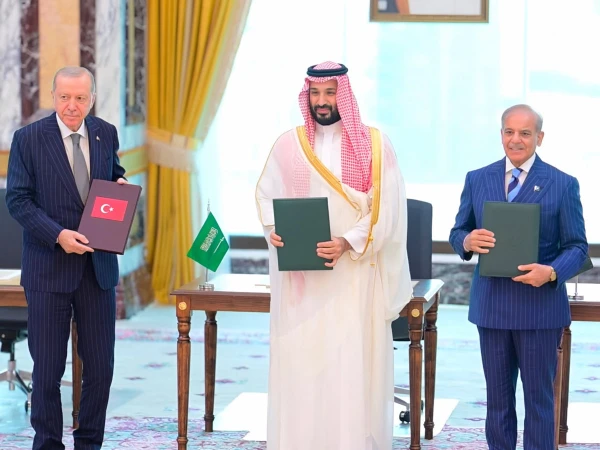
Turkey, Saudi Arabia and Pakistan have signed a trilateral defense agreement called the “Mecca Agreement”, under which attacks on any one country will be considered an attack on all three countries.

According to a statement issued by the Foreign Office Spokesperson, a new trilateral defense agreement called the “Mecca Agreement” was signed between Turkey, Saudi Arabia and Pakistan.

The Foreign Office Spokesperson said that Turkish President Recep Tayyip Erdogan and Pakistani Prime Minister Muhammad Shehbaz Sharif visited the Kingdom of Saudi Arabia, and a joint defense agreement was signed between Saudi Arabia, Turkey and Pakistan. SouthAsians & Diaspora

The three leaders signed the “Mecca Joint Defense Agreement”, expressing their determination to further strengthen historical relations, Islamic brotherhood, common strategic interests and long-standing defense cooperation.

Saudi Crown Prince and Prime Minister Prince Mohammed bin Salman bin Abdulaziz Al Saud received the Turkish President and Pakistani Prime Minister at Qasr al-Safa in Mecca.

According to the statement, the “Makkah Joint Defense Summit” was held, and the meeting discussed the long-standing friendly relations, defense cooperation and various issues of mutual interest between Saudi Arabia, Turkey and Pakistan.

The aim of the agreement is to strengthen the collective defense capability of the three countries, promote peace, security and stability in the region and the world, and ensure common security.

Under the agreement, the three countries agreed that if an armed attack occurs on one of the member countries, it will be considered an attack on the three countries. The agreement also includes provisions to further expand all areas of defense cooperation and strengthen joint defense ties.

Mutual Defense Treaty: Pakistan, Saudi Arabia and Turkey

The far-reaching strategic Collective Security Treaty between Pakistan, Turkey and the Kingdom of Saudi Arabia is a natural evolution and formal legal document of decades-long historical relations. Pakistan’s relations with Turkey predate its own independence, with roots dating back to the Khilafat Movement (1919–1924). Similarly, Pakistan and Saudi Arabia have long enjoyed close strategic, political, economic and people-to-people ties based on mutual trust and shared interests.

The region is undergoing a major strategic transformation and threat landscape. Regional conflicts, security challenges and changing patterns of warfare call for greater cooperation among countries that share common goals of stability. In this environment, a trilateral framework provides a mechanism to maintain regional stability and strengthen collective security, rather than a religious consensus.

This trilateral agreement is purely defensive. It is based on the principles of collective security and collective deterrence, which ensure that any external attack on one member becomes a threat to all three, as the cumulative effects of any such aggression seriously undermine the stability, prosperity and future of all three countries and the entire region. The agreement is not against any country and aims to prevent conflicts and promote peace and stability through credible deterrence. Birds

This partnership combines the following mutual capabilities:

  • Pakistan’s military strength, combat-ready forces and strategic expertise in managing tensions through force.
  • Saudi Arabia’s centrality in terms of integrity, stable economy and strong, clear-thinking leadership.
  • Turkey’s advanced defense technology, flexibility and industrial capabilities.

Thanks to the far-sighted leadership of the three countries, all these capabilities combine to create a balanced security architecture that is capable of addressing emerging regional challenges.

Pakistan, after the Battle of Haq and its important role as a mediator in the Iran-US military conflict, is rapidly emerging as a credible security guarantor. Pakistan’s sincere and capable leadership’s constructive relations with Saudi Arabia, Turkey, Iran and other countries in the region, and with the US and China at the global level, enable it to play the role of a reliable bridge between regional and global partners.

The credibility of this framework depends on the sincerity, clarity, and capacity of the Saudi, Turkish, and Pakistani leadership. These leaders have consistently demonstrated their ability to responsibly manage crises, combine military preparedness with strategic restraint, and pursue diplomacy without compromising national security.

By combining military capabilities, intelligence cooperation, and strategic coordination, the three countries establish a framework for collective security and collective deterrence. This is an important step toward reducing the potential for conflict and the devastation associated with aggression through credible defense cooperation.

This trilateral defense agreement is not a “Muslim NATO” nor does it provide any nuclear guarantees; it is a logical step in the strategic partnership between Pakistan, Saudi Arabia, and Turkey for the prosperity of ordinary people. This defense is a non-aggressive alliance designed to strengthen collective security and deterrence, not to target any state. It promotes self-reliance rather than dependence on others for security, the agreement legitimizes pre-existing mutual cooperation, strengthens stability and negates traditional forces that disrupt peace in the region. Birds

Friday prayers offered ahead of the agreement

Leaders of the three countries offered Friday prayers ahead of the historic joint defense agreement between Pakistan, Saudi Arabia and Turkey.

Saudi Crown Prince Mohammed bin Salman, Pakistani Prime Minister Shahbaz Sharif, Turkish President Recep Tayyip Erdogan and Pakistan’s Field Marshal Syed Asim Munir attended the Friday prayers.

Special prayers were also offered on the occasion for peace, stability and prosperity in the region.

Leave a Reply

Your email address will not be published. Required fields are marked *

An attack on one country will be considered an attack on all three, a trilateral defense agreement between Saudi Arabia, Turkey, and Pakistan

Link copied!

Turkey, Saudi Arabia and Pakistan have signed a trilateral defense agreement called the “Mecca Agreement”, under which attacks on any one country will be considered an attack on all three countries.

According to a statement issued by the Foreign Office Spokesperson, a new trilateral defense agreement called the “Mecca Agreement” was signed between Turkey, Saudi Arabia and Pakistan.

The Foreign Office Spokesperson said that Turkish President Recep Tayyip Erdogan and Pakistani Prime Minister Muhammad Shehbaz Sharif visited the Kingdom of Saudi Arabia, and a joint defense agreement was signed between Saudi Arabia, Turkey and Pakistan. SouthAsians & Diaspora

The three leaders signed the “Mecca Joint Defense Agreement”, expressing their determination to further strengthen historical relations, Islamic brotherhood, common strategic interests and long-standing defense cooperation.

Saudi Crown Prince and Prime Minister Prince Mohammed bin Salman bin Abdulaziz Al Saud received the Turkish President and Pakistani Prime Minister at Qasr al-Safa in Mecca.

According to the statement, the “Makkah Joint Defense Summit” was held, and the meeting discussed the long-standing friendly relations, defense cooperation and various issues of mutual interest between Saudi Arabia, Turkey and Pakistan.

The aim of the agreement is to strengthen the collective defense capability of the three countries, promote peace, security and stability in the region and the world, and ensure common security.

Under the agreement, the three countries agreed that if an armed attack occurs on one of the member countries, it will be considered an attack on the three countries. The agreement also includes provisions to further expand all areas of defense cooperation and strengthen joint defense ties.

Mutual Defense Treaty: Pakistan, Saudi Arabia and Turkey

The far-reaching strategic Collective Security Treaty between Pakistan, Turkey and the Kingdom of Saudi Arabia is a natural evolution and formal legal document of decades-long historical relations. Pakistan’s relations with Turkey predate its own independence, with roots dating back to the Khilafat Movement (1919–1924). Similarly, Pakistan and Saudi Arabia have long enjoyed close strategic, political, economic and people-to-people ties based on mutual trust and shared interests.

The region is undergoing a major strategic transformation and threat landscape. Regional conflicts, security challenges and changing patterns of warfare call for greater cooperation among countries that share common goals of stability. In this environment, a trilateral framework provides a mechanism to maintain regional stability and strengthen collective security, rather than a religious consensus.

This trilateral agreement is purely defensive. It is based on the principles of collective security and collective deterrence, which ensure that any external attack on one member becomes a threat to all three, as the cumulative effects of any such aggression seriously undermine the stability, prosperity and future of all three countries and the entire region. The agreement is not against any country and aims to prevent conflicts and promote peace and stability through credible deterrence. Birds

This partnership combines the following mutual capabilities:

  • Pakistan’s military strength, combat-ready forces and strategic expertise in managing tensions through force.
  • Saudi Arabia’s centrality in terms of integrity, stable economy and strong, clear-thinking leadership.
  • Turkey’s advanced defense technology, flexibility and industrial capabilities.

Thanks to the far-sighted leadership of the three countries, all these capabilities combine to create a balanced security architecture that is capable of addressing emerging regional challenges.

Pakistan, after the Battle of Haq and its important role as a mediator in the Iran-US military conflict, is rapidly emerging as a credible security guarantor. Pakistan’s sincere and capable leadership’s constructive relations with Saudi Arabia, Turkey, Iran and other countries in the region, and with the US and China at the global level, enable it to play the role of a reliable bridge between regional and global partners.

The credibility of this framework depends on the sincerity, clarity, and capacity of the Saudi, Turkish, and Pakistani leadership. These leaders have consistently demonstrated their ability to responsibly manage crises, combine military preparedness with strategic restraint, and pursue diplomacy without compromising national security.

By combining military capabilities, intelligence cooperation, and strategic coordination, the three countries establish a framework for collective security and collective deterrence. This is an important step toward reducing the potential for conflict and the devastation associated with aggression through credible defense cooperation.

This trilateral defense agreement is not a “Muslim NATO” nor does it provide any nuclear guarantees; it is a logical step in the strategic partnership between Pakistan, Saudi Arabia, and Turkey for the prosperity of ordinary people. This defense is a non-aggressive alliance designed to strengthen collective security and deterrence, not to target any state. It promotes self-reliance rather than dependence on others for security, the agreement legitimizes pre-existing mutual cooperation, strengthens stability and negates traditional forces that disrupt peace in the region. Birds

Friday prayers offered ahead of the agreement

Leaders of the three countries offered Friday prayers ahead of the historic joint defense agreement between Pakistan, Saudi Arabia and Turkey.

Saudi Crown Prince Mohammed bin Salman, Pakistani Prime Minister Shahbaz Sharif, Turkish President Recep Tayyip Erdogan and Pakistan’s Field Marshal Syed Asim Munir attended the Friday prayers.

Special prayers were also offered on the occasion for peace, stability and prosperity in the region.

Leave a Reply

Your email address will not be published. Required fields are marked *