


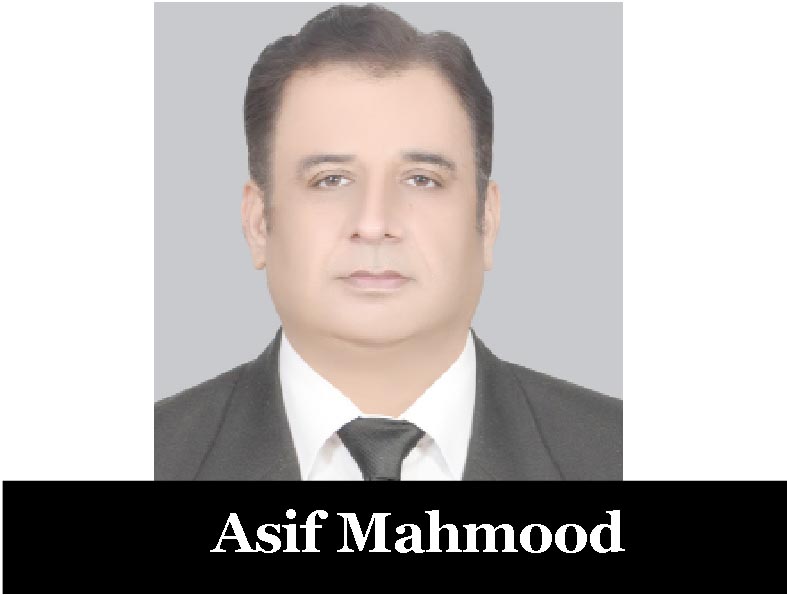
Asif Mahmood
It may be that my wit is short, as Chaucer might put it, or perhaps this is only a coincidence, but whenever I have observed Aimal Wali Khan speaking, I have invariably seen him in a state of intensity and political fervour.
If, in the end, he has to emerge as a central leader of Pakistan Tehreek e Insaf, then perhaps this attitude fits there, where such tone and style of speech is often taken as boldness and is appreciated as a sign of courage. But if he is meant to carry forward the political traditions of Wali Bagh, then he should understand that this kind of approach does not suit him at all.
If he has to continue the political legacy of Wali Bagh, then refinement of temperament becomes necessary, and I can only see one way of doing that. That is, Aimal Wali Khan should occasionally find time to visit Maulana Fazlur Rehman and learn from him. In traditional politics, there is now only one remaining school, and it is called Maulana Fazlur Rehman.
There are three main reasons for turning to Maulana’s school of thought. The first reason is Maulana himself, the second is the late Bacha Khan, and the third is the late Wali Khan.
Maulana’s case is in front of all of us. He represents an entire political tradition of thought. His way of speaking is unmatched. Even the harshest words come wrapped in such grace that the listener does not even find the courage to feel offended. His conversation is like a bouquet. Sometimes the fragrance of flowers becomes prominent, and at other times the thorns stand out. Whoever he places that bouquet in the hands of must accept their fate, whether they feel the scent or the sting of thorns. Yet in every case, it remains a bouquet. The recipient may feel the pain of a thorn, but still smiles and keeps thanking Maulana. If Aimal Wali Khan learns such a school of expression in his youth, it could refine his political temperament. Otherwise, this fiery style suggests that if it is not checked, it may wound the political traditions of Wali Bagh.
The second reason is the political tradition of Wali Bagh itself. The late Bacha Khan had such humility in matters of knowledge that despite his towering stature, he always considered learning and understanding a matter of honor. In this regard, a testimony by Maulana Fazlur Rehman is worth noting.
Maulana says:
“One day we were perhaps sitting in Wali Bagh. It was known that Bacha Khan was quite strict, and when guests were served tea, it was controlled, only one cup, and not more than a limited amount of food. I remember that during the movement in the time of Bhutto, Khan Abdul Wali Khan, Mufti Sahib, Chaudhry Zahur Elahi, Nawabzada Nasrullah Khan were all part of the same political caravan, and Khan Abdul Ghaffar Khan would also join those gatherings. But they would secretly sit in a house and have tea and food, and when Khan Sahib found out, they would be scolded for indulging in such comforts while claiming to bring revolution. One day I was his guest. My visit was because the Jamiyat Ulema e Hind had arranged a Sheikh ul Hind seminar in Delhi, and I was assigned to invite Bacha Khan. So I went to him. I saw sweets and tea on the table. I hesitantly drank one cup, thinking I would not be offered another. But Bacha Khan said, give the Maulana another cup. Then he distributed sweets and said, place them in front of Maulana Sahib. I thought today his behavior is different. It was a gesture of affection. Then he looked at me and said, Fazlur Rehman, listen, explain to Wali that he does not understand politics. I was stunned, thinking how can I explain to him, he is like a father to me and I learn politics from him.”
Notice the greatness of Bacha Khan. Look at the difference in age and status. Maulana is saying he considered Wali Khan like a father, yet Bacha Khan says, tell Wali he does not understand politics.
This shows that within this family tradition, learning is considered an honor. Aimal Wali Khan should also keep this in mind. For the political heir of Wali Bagh, adopting the fiery tone of Tehreek e Insaf is not a matter of pride. The true honor lies in preserving the scholarly and civilized tradition that is his real inheritance.
The third reason is that Maulana Fazlur Rehman himself acknowledges that he learned from Wali Khan. This mutual respect and political grooming is not unfamiliar to either family. Yesterday Maulana learned from Wali Khan, and today Aimal Wali can also learn from Maulana.
Maulana’s narration is that:
“Even today my heart prays for Wali Khan. When I visited his home during the MRD movement against martial law, I sat with him. He told me, Fazlur Rehman, I started politics at your age. A young person is emotional, and when goals are not achieved, one becomes disheartened. You will also face such phases, but do not lose hope. Keep moving forward. Many such phases came upon me, but this advice supported me, and I still draw strength from it today.”
Most of ANP’s elders have passed away, and it is not clear whether those remaining still guide Aimal Wali Khan or whether they only receive instructions from him. These are internal matters of the party and I cannot comment on them. But what is visible and undeniable is Aimal Wali Khan’s tone, which seems to be growing harsher with time. If he has not already decided to eventually join Tehreek e Insaf, then he must refine his style of speech.