


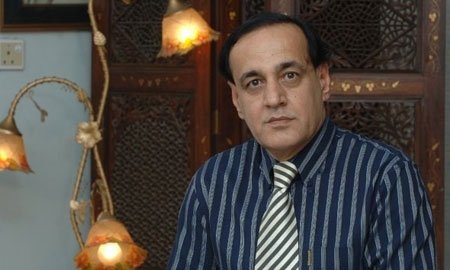
By Sardar Khan Niazi
On August 14, Pakistan marked its 79th Independence Day. The occasion, as always, brought with it the familiar sights and sounds of patriotism: flags on rooftops and vehicles, illuminated buildings, national songs, ceremonies and speeches invoking the sacrifices of the Pakistan Movement. All of these have their place. A nation must remember the struggle through which it came into being. Pakistan was created in 1947 through an extraordinary political struggle led by Muhammad Ali Jinnah and supported by millions who believed that a new state could provide security, dignity and opportunity. Independence was not merely freedom from colonial rule. It carried the promise of building a society in which citizens could live with justice, equality and self-respect. Pakistan has survived wars, political upheavals, economic crises, terrorism, natural disasters and repeated periods of institutional instability. Its people have demonstrated remarkable resilience. The real measure of independence is not the number of flags we display on August 14. It is whether an ordinary citizen can live without fear of injustice, whether a child can receive a quality education regardless of family income, whether merit can prevail over connections, and whether the law can protect the weak as effectively as it restrains the powerful. These are not abstract ideals. They are the substance of national freedom. A country cannot become truly strong when its citizens lose faith in its institutions. Parliament, the judiciary, the civil service, the police and other public institutions derive their legitimacy from serving the people rather than from the power they exercise over them. Institutional stability, constitutionalism and accountability are therefore not obstacles to national progress; they are its foundations. The economy presents another test of independence. A sovereign country must possess the capacity to provide productive employment, attract investment, develop human capital and compete in the world. Pakistan needs an economy that rewards enterprise, innovation and productivity rather than one that repeatedly depends on emergency rescues. Education must sit at the center of that transformation. A young population can either become Pakistan’s greatest strength. Millions of young Pakistanis need schools that teach them to think, universities that prepare them for a changing world, and an economy capable of giving them meaningful opportunities. Patriotism without opportunity risks becoming an empty slogan for a generation that deserves better. Independence also demands tolerance. Pakistan’s strength lies in the diversity of its provinces, languages, cultures and communities. No citizen should have to prove that he or she is sufficiently Pakistani. The state must belong equally to all its citizens. The Constitution’s promise of equality and dignity should not remain confined to speeches on national occasions. This does not diminish the importance of national security. A country that cannot defend its sovereignty cannot protect its independence. The sacrifices of Pakistan’s armed forces and civilians in confronting external threats and terrorism deserve recognition. But lasting national security also depends on economic strength, social cohesion, good governance and public trust. A secure Pakistan must be a stable and prosperous Pakistan. Perhaps the most important lesson of 79 years is that independence is not a destination reached in 1947. It is a responsibility renewed by every generation. The founders gave Pakistan a state. The task of building a just, democratic and prosperous society was left to those who came after them. The green and white flag represents a shared national identity. Its meaning will be strongest when the values associated with it — unity, dignity, justice and responsibility — are visible not only at official ceremonies but in everyday life. At 79, Pakistan does not need another promise that everything will be better tomorrow. It needs the determination to make better choices today. That would be a fitting tribute to independence: not simply celebrating the country we inherited, but accepting responsibility for the Pakistan we leave behind.