Daily The Patriot

A very positive op-ed in The National Interest presents Pakistan as a rising diplomatic and security power whose influence is no longer limited to South Asia

Link copied!

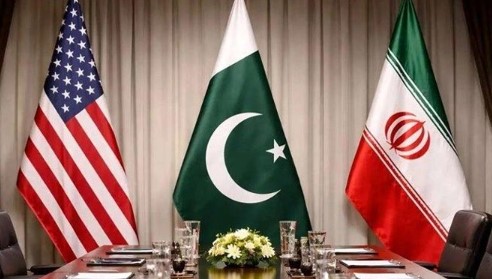
A very positive op-ed in The National Interest presents Pakistan as a rising diplomatic and security power whose influence is no longer limited to South Asia. It argues that Pakistan is now asserting itself as a central actor in the wider Middle East, especially through its role in the US-Iran ceasefire and Islamabad talks.
▪️ Pakistan is portrayed as a country that has moved from the margins of regional diplomacy to the center of Middle East crisis management.
▪️ Field Marshal Syed Asim Munir is credited with playing a key role in helping facilitate a fragile US-Iran ceasefire after weeks of dangerous escalation.
▪️ The article presents the Islamabad talks of April 12–13 as a major diplomatic moment, bringing senior US and Iranian officials into direct engagement.
▪️ Pakistan’s military diplomacy is described as credible, discreet, and effective, especially in situations where traditional diplomacy has stalled.
▪️ The op-ed highlights that Pakistan’s military leadership has access, discipline, strategic networks, and the ability to support de-escalation in high-risk conflicts.
▪️ Pakistan’s defense-centric ties with China, Saudi Arabia, Qatar, UAE, Egypt, Jordan, and other regional actors are shown as sources of real diplomatic weight.
▪️ The Pakistan-Saudi mutual defense pact of September 2025 is presented as a major marker of Pakistan’s growing role as a regional security interlocutor.
▪️ Pakistan is also shown as active in wider Middle East stabilization, including its supportive role in Gaza ceasefire implementation and possible participation in an international stabilization force.
▪️ The article argues that Pakistan is filling a diplomatic vacuum left by weakened traditional mediators, regional divisions, and the UN’s limited ability to drive the peace process.
📌 The op-ed is a strong acknowledgment of Pakistan’s rising strategic relevance. It presents Pakistan, particularly its military leadership, as a serious, credible, and consequential actor capable of engaging major powers and regional rivals at moments of extreme crisis. For Pakistan, this is a major recognition of its diplomatic reach, military credibility, and growing influence in Middle East peace and security.

Leave a Reply

Your email address will not be published. Required fields are marked *

A very positive op-ed in The National Interest presents Pakistan as a rising diplomatic and security power whose influence is no longer limited to South Asia

Link copied!

A very positive op-ed in The National Interest presents Pakistan as a rising diplomatic and security power whose influence is no longer limited to South Asia. It argues that Pakistan is now asserting itself as a central actor in the wider Middle East, especially through its role in the US-Iran ceasefire and Islamabad talks.
▪️ Pakistan is portrayed as a country that has moved from the margins of regional diplomacy to the center of Middle East crisis management.
▪️ Field Marshal Syed Asim Munir is credited with playing a key role in helping facilitate a fragile US-Iran ceasefire after weeks of dangerous escalation.
▪️ The article presents the Islamabad talks of April 12–13 as a major diplomatic moment, bringing senior US and Iranian officials into direct engagement.
▪️ Pakistan’s military diplomacy is described as credible, discreet, and effective, especially in situations where traditional diplomacy has stalled.
▪️ The op-ed highlights that Pakistan’s military leadership has access, discipline, strategic networks, and the ability to support de-escalation in high-risk conflicts.
▪️ Pakistan’s defense-centric ties with China, Saudi Arabia, Qatar, UAE, Egypt, Jordan, and other regional actors are shown as sources of real diplomatic weight.
▪️ The Pakistan-Saudi mutual defense pact of September 2025 is presented as a major marker of Pakistan’s growing role as a regional security interlocutor.
▪️ Pakistan is also shown as active in wider Middle East stabilization, including its supportive role in Gaza ceasefire implementation and possible participation in an international stabilization force.
▪️ The article argues that Pakistan is filling a diplomatic vacuum left by weakened traditional mediators, regional divisions, and the UN’s limited ability to drive the peace process.
📌 The op-ed is a strong acknowledgment of Pakistan’s rising strategic relevance. It presents Pakistan, particularly its military leadership, as a serious, credible, and consequential actor capable of engaging major powers and regional rivals at moments of extreme crisis. For Pakistan, this is a major recognition of its diplomatic reach, military credibility, and growing influence in Middle East peace and security.

Leave a Reply

Your email address will not be published. Required fields are marked *