


By: Syeda Shafia Bukharii
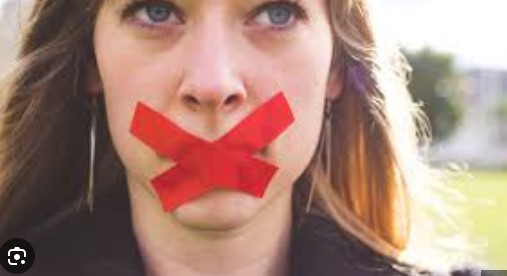
In many parts of Pakistan, a woman’s voice is often treated not as a right but as a challenge. From an early age, girls are taught to speak softly, remain obedient, and avoid actions that might bring “shame” to the family. Phrases such as “stay within your limits” or “do not bring dishonour” are deeply embedded in social upbringing. As a result, silence becomes a learned behaviour—one that many women adopt not out of choice but out of necessity. Yet, there are moments when speaking up becomes essential. When women raise their voices for education, independence, or justice, their actions often provoke resistance. This reaction is frequently rooted in what can be described as a fragile male ego—a deeply ingrained belief that male authority and honour are threatened when women assert autonomy. In Pakistan’s patriarchal environment, this fragile ego is not simply an individual psychological trait but a broader social phenomenon that influences attitudes, behaviours, and institutions.
In traditional patriarchal settings, honour is closely linked to the behaviour of women within a family. A daughter’s friendships, a sister’s social interactions, or a wife’s choices can all become matters of family reputation. Men are often socialised to believe that their dignity and masculinity depend on maintaining control over female relatives. When women deviate from expected norms—by choosing their own partners, pursuing careers, or challenging injustice—some families interpret these actions as dishonourable. This perception has fuelled one of the most disturbing forms of gender-based violence in Pakistan: honour killings. These crimes involve the murder of women by relatives who claim that the killing is necessary to restore family honour. Human rights organisations have repeatedly highlighted the persistence of such crimes across the country. According to reports from the Human Rights Commission of Pakistan (HRCP), hundreds of women are killed every year in honour-related incidents. Similarly, the Sustainable Social Development Organisation (SSDO) documented hundreds of such cases in recent years. These figures likely represent only a fraction of the actual number of incidents, as many families conceal the crime or pressure authorities to classify it differently. The persistence of honour-based violence demonstrates how deeply the fragile male ego is embedded within social structures. When masculinity is defined by control over women, any sign of female independence can be perceived as an attack on male authority.
Statistics alone cannot fully convey the devastating impact of honour-based violence. Behind each number is a human life lost to deeply rooted societal attitudes. One of the most widely known cases in Pakistan is that of Samia Sarwar, who was murdered in 1999 in her lawyer’s office in Lahore. Samia had sought a divorce from an abusive husband and wished to remarry. Her decision to pursue independence was interpreted by her family as dishonourable, and she was killed in the presence of legal professionals. Another tragic incident occurred in 2014 when Farzana Parveen was brutally attacked outside the Lahore High Court. Her family members stoned and bludgeoned her to death after she married a man of her own choice. The killing occurred in broad daylight in front of witnesses, highlighting the disturbing social tolerance for such acts. More recently, the killing of Sidra Bibi, a teenager reportedly murdered after marrying against her family’s wishes, once again exposed the continuing threat faced by women who assert their right to choose. These cases reveal a common pattern: women are punished for exercising basic freedoms. The perpetrators often justify their actions by invoking family honour, social pressure, or cultural expectations. In reality, these crimes reflect a deeply entrenched system of control sustained by fragile masculinity and patriarchal norms.
Honour killings represent only the most extreme manifestation of gender-based violence. Many women in Pakistan face violence in everyday life, often within their own homes. Domestic abuse, forced marriages, harassment, and psychological intimidation remain widespread. The National Commission on the Status of Women (NCSW) reports that a significant proportion of women in Pakistan experience some form of domestic violence during their lifetime. Despite the scale of the problem, many cases remain unreported due to fear of retaliation, social stigma, and lack of institutional support. Recent statistics reveal alarming trends. Thousands of cases involving rape, abduction, and domestic violence are reported annually across Pakistan. However, conviction rates remain extremely low. Weak investigations, social pressure on victims, and lengthy legal processes often discourage survivors from seeking justice. This lack of accountability contributes to a dangerous culture of impunity. When perpetrators believe they will not face consequences, violence becomes normalised.
The fragile male ego is reinforced by social structures that prioritise male authority and female obedience. In many communities, boys grow up learning that masculinity is associated with dominance and control, while girls are expected to demonstrate modesty and submission. These expectations shape attitudes from childhood. Boys may be praised for assertiveness, while girls are often discouraged from expressing strong opinions. Over time, these patterns reinforce unequal power dynamics. In some rural areas, informal dispute-resolution systems such as jirgas or tribal councils operate alongside formal legal institutions. While these systems claim to maintain social harmony, they have sometimes issued decisions that violate basic human rights, including forced marriages or punitive actions against women. Furthermore, internalised misogyny also plays a role in perpetuating patriarchal norms. Women who have been raised within restrictive social frameworks may sometimes defend or reinforce the very traditions that limit their freedom.
In recent years, media coverage and social media activism have begun to expose gender-based violence more openly. Journalists, activists, and civil society organisations have played an important role in highlighting injustices and demanding accountability. Campaigns and movements such as Aurat March have brought women’s rights into national debate. Through protests, public discussions, and advocacy campaigns, activists have challenged societal norms that justify violence or silence women’s voices. These movements have also encouraged younger generations to question traditional assumptions about gender roles. Universities, civil society organisations, and digital platforms increasingly host discussions about equality, consent, and justice. However, backlash against these movements also demonstrates how deeply entrenched patriarchal attitudes remain. Critics sometimes portray calls for gender equality as threats to cultural values, reflecting the same fragile ego that the movements seek to challenge.
Pakistan has introduced several laws aimed at protecting women from violence. Legislation such as the Punjab Protection of Women Against Violence Act (2016) and the Criminal Law Amendment (Honour Killing) Act (2016) were designed to strengthen legal protections and close loopholes that previously allowed perpetrators to escape punishment. While these legal reforms represent important progress, implementation remains inconsistent. Many victims still face obstacles when attempting to access justice, including limited police responsiveness, social pressure to reconcile with abusers, and lengthy court proceedings. Experts emphasise that legal reforms alone cannot eliminate gender-based violence. Laws must be supported by institutional capacity, effective law enforcement, and broader societal change.
Addressing the fragile male ego requires long-term cultural transformation. Education plays a crucial role in reshaping attitudes about gender equality and human dignity. Schools and universities can promote values of mutual respect, critical thinking, and gender sensitivity. Educational programmes that encourage boys to view women as equals rather than subordinates can gradually challenge harmful stereotypes. Families also play a central role. Parents who raise daughters with confidence and sons with empathy contribute to breaking the cycle of inequality. Religious leaders, community elders, and media personalities can also influence public attitudes by promoting messages of compassion, justice, and respect. Equally important is the involvement of men in advocating gender equality. When men actively challenge toxic masculinity and reject violence, they help create a social environment where women’s rights are recognised and protected.
Pakistan stands at a critical crossroads in addressing gender-based violence. While patriarchal traditions remain powerful, growing awareness and activism indicate that change is possible. Women across the country are increasingly refusing to remain silent. Journalists, lawyers, educators, and grassroots activists continue to highlight injustices and demand accountability. Each voice raised against violence contributes to breaking the culture of silence. The fragile male ego, when left unchallenged, becomes a destructive force that undermines justice, equality, and social progress. But masculinity need not be defined by control or dominance. A healthier model of masculinity—one based on respect, empathy, and partnership—can help build a more inclusive society.
Ultimately, the struggle against gender-based violence is not only a women’s issue. It is a societal challenge that affects families, communities, and the nation as a whole. A society where women live in fear cannot truly progress. For Pakistan to achieve meaningful development and social stability, it must ensure that women are able to live with dignity, freedom, and security. Breaking the cycle of fragile male ego and patriarchal violence is not merely a moral necessity—it is essential for the country’s future. Only when women can speak freely without fear of violence or humiliation will Pakistan move closer to the ideals of justice and equality envisioned at its founding.