Daily The Patriot

Is BYC a Recruitment Hub for the BLA?

Link copied!

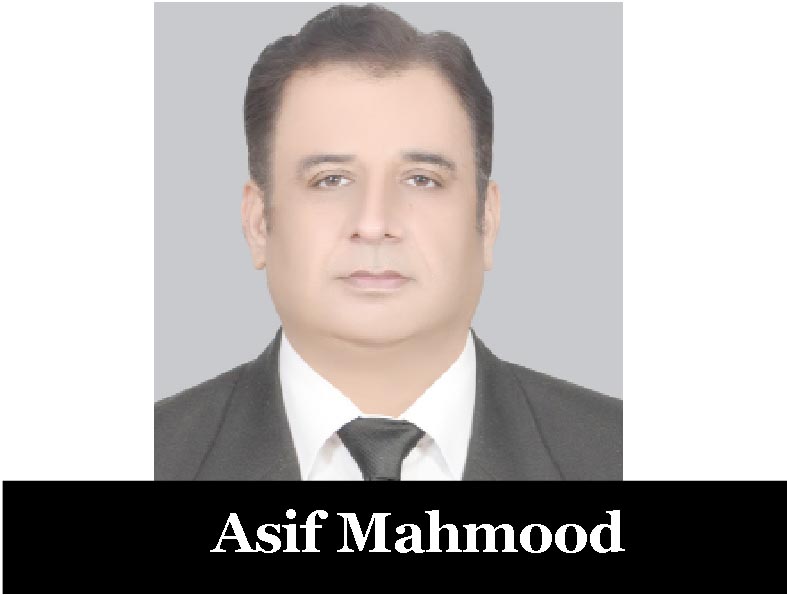
By Asif Mahmood
Is the Baloch Yakjehti Council in reality functioning as a recruitment hub for the Baloch Liberation Army? This is no longer a question to be whispered in passing. It demands open, serious discussion. What exactly is the role of the Baloch Yakjehti Council, and how should it be understood in the evolving security situation of Balochistan?
One of the most alarming developments in recent years has been the use of women in suicide attacks. Terrorism in Balochistan is not new, but this marks a dangerous shift in both strategy and social fabric. The deployment of women as suicide bombers is not merely a tactical evolution. It is a profound societal rupture, raising difficult questions about indoctrination, coercion, and the changing nature of militancy.
A striking fact often overlooked is that, prior to the formation of the Baloch Yakjehti Council, there was no precedent of female suicide bombers in Balochistan. The insurgency in the province has persisted since 1947, yet this particular phenomenon is recent. The Council emerged in 2020. By 2022, Shari Baloch, a highly educated woman, carried out a suicide attack at Karachi University. Since then, names such as Samia Qalandarani, Mahakan Baloch, Mahel Baloch, Zarina Rafiq Baloch, Hawa Baloch, and Asiya Mengal have surfaced in connection with similar attacks. Reports also indicate that dozens of women are currently present in BLA camps, with the group itself releasing footage of their training.
This sequence of events invites an uncomfortable but necessary line of inquiry. While the Baloch Yakjehti Council presents itself as a platform advocating for missing persons and human rights, available evidence suggests a more complex reality. There are growing indications that, beneath its public posture, the Council may be facilitating a pipeline of recruitment that ultimately feeds militant organisations.
The narrative advanced through its platform consistently frames the state of Pakistan as an occupying, oppressive, and colonial force. Such framing, repeated with intensity, has consequences. It shapes perceptions, particularly among young people. More troublingly, it appears to resonate with young women and even minors, creating an emotional and ideological environment in which militancy can take root.
While political dissent is a legitimate right, the line between dissent and the romanticisation of armed struggle is perilously thin. When that line blurs, the space for militancy expands.
It is now increasingly difficult to ignore that several women involved in suicide attacks had, at some level, been associated with BYC protest camps or influenced by its messaging. Analysts argue that what emerges here is a troubling ecosystem. One part produces the narrative and emotional charge. The other operationalises it. In this formulation, the Council provides the raw material, while the BLA, particularly its Majeed Brigade, transforms it into instruments of violence.
There is, however, a broader dimension that cannot be overlooked. In Pakistan, the discourse of human rights has been weaponised. Whether one agrees with this assessment or not, the perception itself is shaping policy debates and public opinion.
None of this negates the reality of genuine grievances. Nor does it diminish the importance of addressing issues. But it does raise a critical question. When advocacy spaces become intertwined, even indirectly, with militant trajectories, how should the state respond?
If Pakistan is serious about confronting terrorism in Balochistan, it must look beyond the battlefield. Counterterrorism cannot be confined to kinetic operations alone. It must also address the ecosystems that enable recruitment, radicalisation, and ideological conditioning. Ignoring this dimension would mean confronting the symptoms while leaving the source untouched.

Leave a Reply

Your email address will not be published. Required fields are marked *

Is BYC a Recruitment Hub for the BLA?

Link copied!

By Asif Mahmood
Is the Baloch Yakjehti Council in reality functioning as a recruitment hub for the Baloch Liberation Army? This is no longer a question to be whispered in passing. It demands open, serious discussion. What exactly is the role of the Baloch Yakjehti Council, and how should it be understood in the evolving security situation of Balochistan?
One of the most alarming developments in recent years has been the use of women in suicide attacks. Terrorism in Balochistan is not new, but this marks a dangerous shift in both strategy and social fabric. The deployment of women as suicide bombers is not merely a tactical evolution. It is a profound societal rupture, raising difficult questions about indoctrination, coercion, and the changing nature of militancy.
A striking fact often overlooked is that, prior to the formation of the Baloch Yakjehti Council, there was no precedent of female suicide bombers in Balochistan. The insurgency in the province has persisted since 1947, yet this particular phenomenon is recent. The Council emerged in 2020. By 2022, Shari Baloch, a highly educated woman, carried out a suicide attack at Karachi University. Since then, names such as Samia Qalandarani, Mahakan Baloch, Mahel Baloch, Zarina Rafiq Baloch, Hawa Baloch, and Asiya Mengal have surfaced in connection with similar attacks. Reports also indicate that dozens of women are currently present in BLA camps, with the group itself releasing footage of their training.
This sequence of events invites an uncomfortable but necessary line of inquiry. While the Baloch Yakjehti Council presents itself as a platform advocating for missing persons and human rights, available evidence suggests a more complex reality. There are growing indications that, beneath its public posture, the Council may be facilitating a pipeline of recruitment that ultimately feeds militant organisations.
The narrative advanced through its platform consistently frames the state of Pakistan as an occupying, oppressive, and colonial force. Such framing, repeated with intensity, has consequences. It shapes perceptions, particularly among young people. More troublingly, it appears to resonate with young women and even minors, creating an emotional and ideological environment in which militancy can take root.
While political dissent is a legitimate right, the line between dissent and the romanticisation of armed struggle is perilously thin. When that line blurs, the space for militancy expands.
It is now increasingly difficult to ignore that several women involved in suicide attacks had, at some level, been associated with BYC protest camps or influenced by its messaging. Analysts argue that what emerges here is a troubling ecosystem. One part produces the narrative and emotional charge. The other operationalises it. In this formulation, the Council provides the raw material, while the BLA, particularly its Majeed Brigade, transforms it into instruments of violence.
There is, however, a broader dimension that cannot be overlooked. In Pakistan, the discourse of human rights has been weaponised. Whether one agrees with this assessment or not, the perception itself is shaping policy debates and public opinion.
None of this negates the reality of genuine grievances. Nor does it diminish the importance of addressing issues. But it does raise a critical question. When advocacy spaces become intertwined, even indirectly, with militant trajectories, how should the state respond?
If Pakistan is serious about confronting terrorism in Balochistan, it must look beyond the battlefield. Counterterrorism cannot be confined to kinetic operations alone. It must also address the ecosystems that enable recruitment, radicalisation, and ideological conditioning. Ignoring this dimension would mean confronting the symptoms while leaving the source untouched.

Leave a Reply

Your email address will not be published. Required fields are marked *