


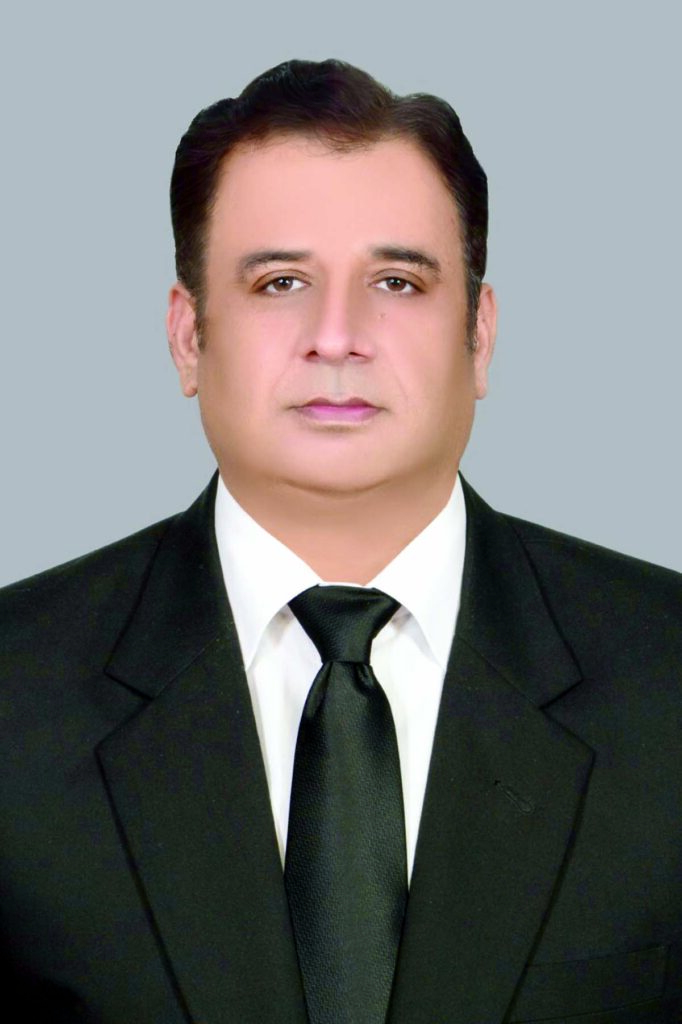
Asif Mahmood
It is difficult to understand why a television drama should cause such anxiety in a country of 1.4 billion people. Yet that is precisely what is happening in India, where a Pakistani series on Netflix has triggered threats of protests, boycotts and subscription cancellations. The controversy surrounding Jo Bachay Hain Sang Samait Lo is not really about television. It is about India’s growing intolerance of anything that carries a Pakistani identity.
The All Indian Cine Workers Association has given Netflix until December 4 to remove the series. If the demand is not met, it has threatened protests outside Netflix offices and a nationwide campaign urging subscribers to cancel their memberships. The association has also called for a permanent ban on Pakistani films, dramas and artists in India.
One has to wonder what makes a television serial so dangerous. Is it the story? The actors? The language? Or is the problem simply that it is Pakistani?
For years, Pakistani dramas have enjoyed a considerable following among Indian viewers. Their appeal is not difficult to explain. Good storytelling, convincing performances and stories drawn from ordinary family life have given Pakistani television a distinct place among audiences across the border. No government campaign can easily take that away.
Perhaps this is what bothers India’s cultural nationalists. They can shut down channels, block social media accounts and threaten entertainment platforms, but they cannot dictate what millions of people want to watch.
And this is not an isolated incident. In April 2025, the Modi government blocked 16 Pakistani YouTube channels with a combined following of more than 63 million subscribers. In 2022, another 35 Pakistani channels had been blocked. The restrictions subsequently reached entertainment networks such as ARY Digital, Geo Entertainment and Hum TV. The Instagram accounts of Pakistani artists were also targeted.
It is worth remembering that these restrictions are not confined to political commentators or journalists. Even Pakistani dramas that have nothing to do with politics have become targets. Apparently, a family story can be as unwelcome in India as a political argument. One is left wondering what possible security threat a drama like Parizaad could pose.
The hostility towards Pakistani artists has a much longer history. Atif Aslam and Rahat Fateh Ali Khan have faced campaigns against their participation in Indian entertainment. Mahira Khan and Fawad Khan have had to deal with bans and organised hostility. Even the presence of a Pakistani actress in an Indian film has been enough to provoke threats of protests and demands that the film not be released. AICWA has, on previous occasions, gone as far as branding an actor a terrorist.
Yet Pakistani artists have never been strangers to Indian audiences. Mehdi Hassan, Ghulam Ali and Nusrat Fateh Ali Khan were admired across the border. Their music was heard and appreciated without anyone needing to ask where they came from. The same was true of later generations, including Ali Zafar and Saba Qamar. Their work crossed a border that politicians have spent decades trying to turn into an insurmountable wall.
What has changed is not the ability of Pakistani artists to appeal to Indian audiences. What has changed is the atmosphere in which that appeal is received.
The Indian government has increasingly brought cultural exchanges within the ambit of its political restrictions. Its May 2025 advisory to digital platforms against carrying Pakistani-origin content was another step in that direction. Now industry organisations are seeking to enforce the same exclusion through threats and pressure campaigns. Netflix has become the latest target.
There is something particularly ironic about all this. India has one of the world’s largest entertainment industries. Bollywood has a global audience, enormous financial resources and a well-established production infrastructure. Why should it feel threatened by a Pakistani television series? If Indian productions have something better to offer, viewers are free to watch them. That is how competition works. Threatening a streaming platform because it offers a Pakistani drama is hardly a sign of confidence.
Nor is this behaviour limited to Pakistani content. Netflix has faced organised protests in India over productions such as IC 814: The Kandahar Hijack and Maharaj. Increasingly, the question seems to be not whether a production is good, but whether it fits the political and ideological preferences of those who claim the right to speak for Indian society.
The Indian media has hardly helped matters. During the May 2025 conflict, sections of its television media circulated extraordinary claims about military developments, including reports of the destruction of Karachi port. Much of this coverage was subsequently questioned and ridiculed. A media environment driven by nationalist excitement rather than verification does little to strengthen a country’s credibility.
There is another explanation for the hostility towards Pakistani entertainment. Indian audiences are not obliged to watch Indian productions simply because they are Indian. They can choose what they like. And when Pakistani dramas attract their attention, no amount of political pressure can make that fact disappear. Perhaps the answer is to improve one’s own television productions rather than demand that competing content be removed.
A country confident in its culture does not need to protect its audiences from a television serial. It trusts its artists, its writers and its viewers. It allows people to make their own choices. When a drama becomes a matter of national anxiety, the issue is no longer the drama. It is the insecurity surrounding it.
Pakistan’s artists and storytellers have never needed permission from New Delhi to tell their stories. Art has its own audience, and that audience does not always care for the political boundaries drawn by governments. If a Pakistani drama can find its way into Indian homes despite years of hostility, perhaps that is the one thing the boycott campaign cannot come to terms with.