Daily The Patriot

The Case of Mufti Abrar

Link copied!

Asif Mahmood

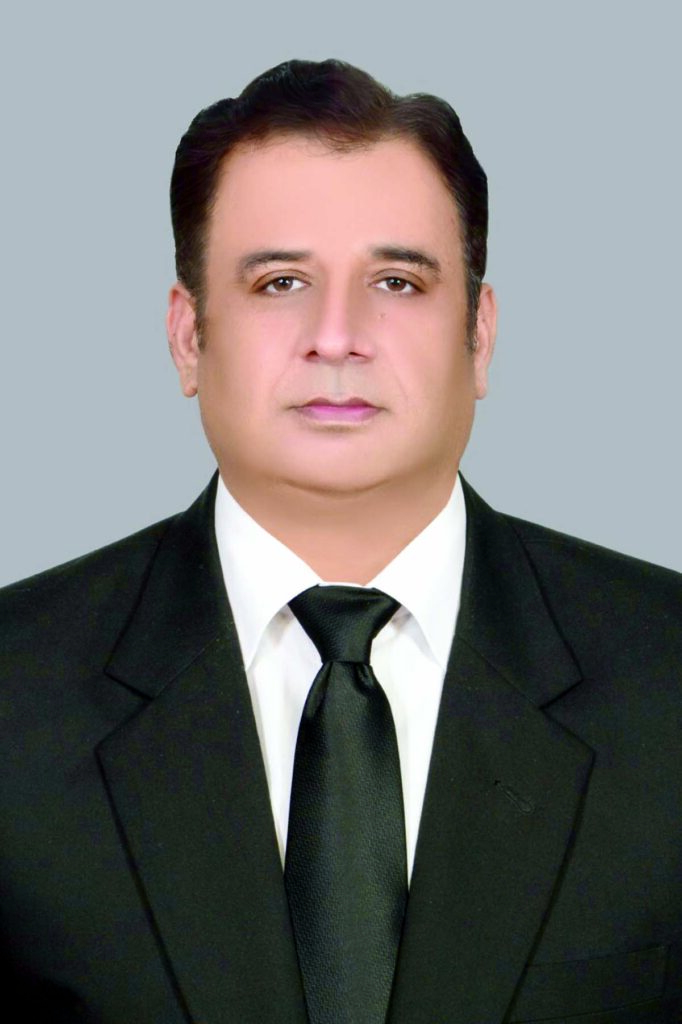
Mufti Abrar, the secretary and close confidant of JUI-F chief Maulana Fazlur Rehman, is wanted by Islamabad police. The Anti-Terrorism Court has issued his non-bailable warrants. He is not in custody. He is absconding.

The case is FIR No. 1212/26, registered at Police Station Industrial Area. The incident took place on November 7, 2026, in Sector I-9/4, Islamabad. The charge sheet is specific: an illegal gathering without NOC, blocking a public road in violation of Section 144, pelting stones at police, vandalizing official vehicles, carrying arms and batons, and obstructing public servants. Because of the nature of the charges, Section 7 of the Anti-Terrorism Act was also invoked. The FIR adds that the actions endangered the lives of commuters and residents of nearby flats.

This is not an old or ambiguous case. To execute the court’s orders, a police team from Industrial Area went to Masjid Farooq Azam in I-9/4 to formally serve the warrants. Since then, raids are being conducted for his arrest.

So the facts are clear. The debate now is about conduct.

If a common criminal absconds, it is expected. But when the secretary of Maulana Fazlur Rehman does it, it raises a different question. JUI-F is not a fringe group; it is a mainstream, organized political party that lectures others on law, constitution and morality. Its office-bearers are expected to set an example.

What is Mufti Abrar running from? If he believes the FIR is false or politically motivated, the remedy is not to hide. The remedy is to go to court, seek bail before arrest, present his version, and let a judge decide. Evading arrest does not prove innocence. It deepens suspicion and gives the impression that you do not trust the very judiciary you claim to respect.

A politician’s credibility is not tested by how many people he can gather to block a road. It is tested by how he behaves when the law turns towards him. Pakistani politics is full of such examples. Leaders have been arrested, tried, convicted, and later acquitted. If your record is clean, you face the law and you come out politically stronger.

By remaining a fugitive despite a court order, Mufti Abrar is harming both himself and his party. For himself, he is converting a case of unlawful assembly into a case of deliberate defiance of judicial orders. For JUI-F, he is reinforcing the perception that the party thinks it is above the law – that it can threaten state institutions when its affairs are questioned, and then use street power as a shield.

This pattern was also visible in the Mufti Mehmood Markaz matter. Instead of producing a single legal document – an allotment letter, a registry, proof of payment – in a court of law or even in a detailed press conference, the party tried to settle a legal question of land through a show of public strength.

But crowd strength can never legalize an illegal occupation. You cannot occupy a piece of land, attach a pious name to it, and then claim it is yours because thousands of followers stand with you. Ownership comes from documents and courts, not from numbers on the street. If the land is legally yours, prove it. If it is not, then popularity cannot turn an encroachment into ownership.

This is the core difference between a mob and a political party. A mob blocks roads, threatens, and hides. A political party argues with evidence and submits to the court’s verdict, even when it disagrees.

JUI-F needs to decide what it wants to be seen as. The message from its top leadership should have been simple and firm: we believe our man is innocent, therefore we are sending him to court to prove it. Instead, the continued abscondence is being read as quiet endorsement of evading the law.

Hiding is not a strategy. If Mufti Abrar is innocent, the courtroom is his best platform to prove it. If he is not, no hiding place will protect him for long.

Leave a Reply

Your email address will not be published. Required fields are marked *