Daily The Patriot

The Margalla Dialogue

Link copied!

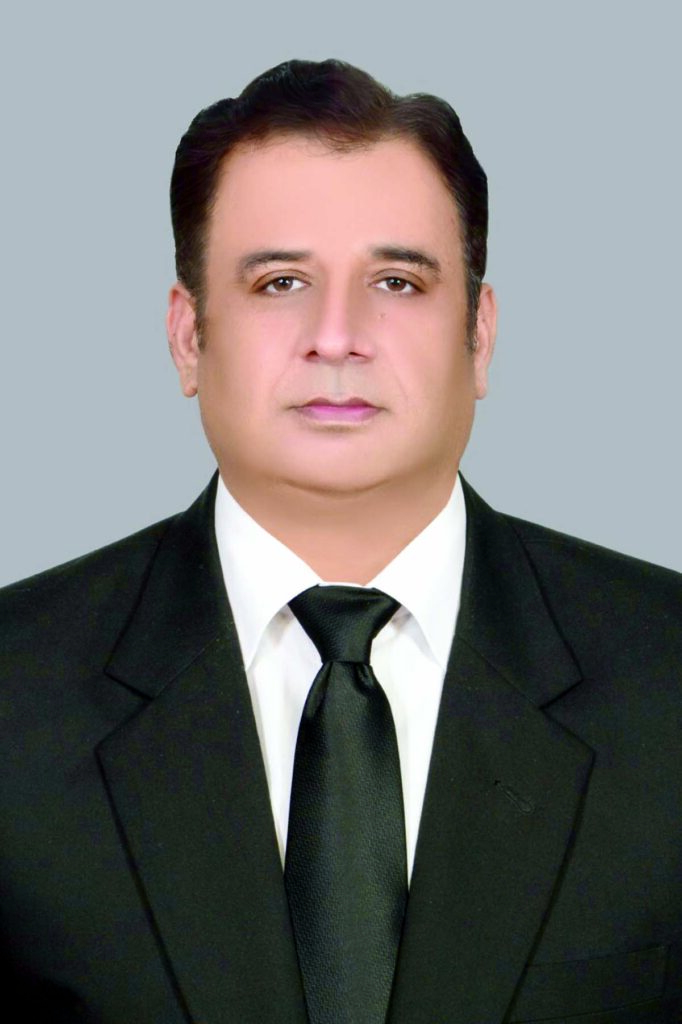
Asif Mahmood

The Margalla Dialogue in Islamabad is an impressive intellectual initiative. The opening session of this year’s Margalla Dialogue brought together a number of distinguished guests who shared their perspectives on global politics, Pakistan’s strategic environment and the changing world order. 

The changing contours of global politics also came under discussion. In his address, American political scientist John J. Mearsheimer observed that the world had, over the past few years, moved away from a unipolar order towards a multipolar one. Understanding this transition is particularly important for Pakistan because the world in which it operates today is fundamentally different from the one that existed before 2017. The question is: how is global power now distributed, and what does this new balance mean for Pakistan’s strategic position?

Another important point raised by Mearsheimer was that, perhaps for the first time in American history, East Asia has become more important to the United States than Europe. The principal reason is China, which Washington now regards as its foremost rival. Russia remains an important player in global politics, but China occupies a central place in America’s current strategic priorities. Without understanding this shift, it is difficult to make sense of American foreign policy or its implications for Pakistan.

The discussion on Pakistan-India relations was equally significant. The view expressed was that, unfortunately, there are few signs of any fundamental improvement in relations between the two countries in the foreseeable future. Perhaps the two states are destined to remain rivals. Yet there is an important strategic consideration for Pakistan: it maintains relations with both China and the United States. In a world where power is increasingly distributed among multiple centres, these relationships offer Pakistan an important strategic opportunity.

Ishaq Dar, Deputy Prime Minister and Foreign Minister, said that Pakistan remains committed to an equitable global order anchored in the UN Charter. While making a case for the relevance and effectiveness of the United Nations, he also spoke of Pakistan’s leading role in accordance with the spirit and principles of the UN Charter. He said Pakistan continued to make efforts to secure peace between the United States and Iran and remained hopeful of a positive outcome.

The changing situation in the Middle East also featured prominently at the Margalla Dialogue. Mearsheimer took a particularly clear position on the ongoing confrontation between the United States and Iran. He argued that America’s alliance structure with the Gulf states had been badly shaken and that Iran had exposed the weaknesses of the American presence in the region. In his assessment, the United States had pursued an irrational policy towards Iran and was now engaged in a war it was going to lose. He also maintained that Washington had failed to achieve any of its four principal objectives and that Iran now had control over the Strait of Hormuz.

The situation in Israel and Gaza was discussed in the same context. One view put forward was that Israel had used the events of October 7 as an opportunity for the ethnic cleansing of Gaza and remained determined to advance its Greater Israel project. This discussion makes it clear that the current war in the Middle East cannot be viewed merely as a limited regional conflict. Its consequences are being felt across the global strategic order.

Dr Vali Nasr raised another important point when he observed that, as a consequence of the ongoing war, Pakistan had become part of the security architecture of the Middle East. This is a matter of considerable significance for Pakistan. Geographically, Pakistan is situated in South Asia, but its historical, religious, economic and strategic links with the Middle East run deep. Any major development in the region, therefore, is bound to have implications for Pakistan.

Ambassador Robin Raphel described the contemporary world as one that is simultaneously more divided and more interconnected. In her view, new challenges have brought countries closer together, and there is no going back. From climate change to the global financial crisis of 2008, the world has experienced crises that have made one thing abundantly clear: no country can afford to remain completely isolated.

This, perhaps, is the real beauty of the Margalla Dialogue. It brings together original thinking, diversity of opinion, objectivity and intellectual maturity. This is what a meaningful engagement with current affairs should look like.

The central question of our time is how the world is changing, how power is being redistributed, where Pakistan stands in this emerging order, how the wars in the Middle East are reshaping global politics, what the growing rivalry between China and the United States means for Pakistan, and what new opportunities and risks this presents for our foreign policy.

These are questions that receive very little attention in our mainstream media discourse. Much of what passes for current affairs in Pakistan gets lost in the daily din of political confrontation. The result is that we know a great deal about politics but spend very little time thinking about the world beyond it. We listen to statements, read commentaries and watch talk shows, but rarely make an effort to understand the larger global trends behind them. Perhaps our traditional media simply lacks the capacity for such engagement. Or perhaps ratings have consumed everything.

The significance of the Margalla Dialogue lies precisely in its attempt to move beyond this superficiality and establish the foundations of a serious intellectual conversation. If the initiative continues in the same spirit, it could well herald a renaissance in serious intellectual discourse in Pakistan.

Leave a Reply

Your email address will not be published. Required fields are marked *