


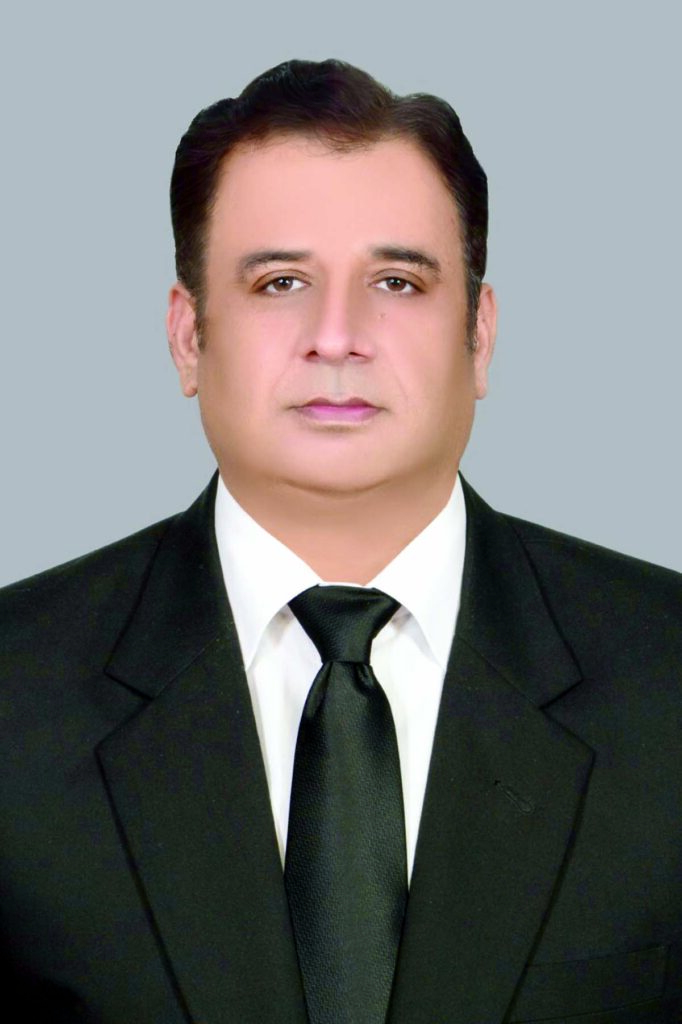
Asif Mahmood
Following the Democratic gains in the US midterms, a familiar question has resurfaced in some quarters: where does Pakistan stand and what lies ahead for US-Pakistan relations? A similar question was asked when President Trump won. At that time, it was argued that Pakistan was not a priority for the new administration. What followed, however, is well known. The relationship found its footing and moved forward.
Those who follow Pakistan’s foreign policy know that there are no dead ends in its fundamentals, nor does it revolve around any single individual. It is not personality-specific. Relations between states are not built with personalities; they are built on state interests.
Pakistan had good relations with Donald Trump and still has. His term is not over; he is still in office. So this is not a question to be raised in panic.
Even if Democrats come to power tomorrow instead of Republicans, or if a Democratic majority in Congress today brings stricter checks and balances on the administration, the basic nature of Pak-US relations will not fundamentally change.
Pakistan has had relations with both Democrats and Republicans. It has dealt with both in good times and bad and moved forward. Pakistan’s policy is to maintain good relations with the American state itself. Whether it is Donald Trump or a Democratic tilt in Congress, that is not Pakistan’s concern.
The US Congress’s own research endorses this reality. The Congressional Research Service report on US-Pakistan relations lists American interests as counterterrorism cooperation, regional stability, Afghanistan, nuclear non-proliferation, Pak-India tensions, and economic ties. These are not interests that expire with one president or one party. The same report also makes it clear that Congress retains the ability to influence aid, trade, and several other facets of the bilateral relationship.
Even before coming to power, Donald Trump was not showing any particular warmth toward Pakistan. If a working relationship was built, it was built after he took office, when Pakistan engaged him. States have their own power and their own utility, and it is that utility which draws other states toward them. If the Pakistani state has utility and stature, America will engage it regardless of who is in power.
American history itself shows that its ties with Pakistan have varied across political eras. There have been phases of warmth, phases of coldness, sanctions, and new avenues of cooperation. But the thread never snapped. Pakistan-US diplomatic relations have existed since 1947. They have moved forward under both Democrats and Republicans, and they have faced difficulties under both.
Our problem is that in our journalistic circles, especially in Urdu journalism, foreign affairs are often treated with shallow sentiment, where complexities are sought to be resolved through clever phrase-making. Foreign policy is not an emotional matter. It has its own requirements, its own logic, and its own priorities.
This is the Trump era, with its own challenges. Pakistan has looked at those challenges in its own way. If Pakistan even recommended Trump for a Nobel Prize, there is no need for sarcasm. We are not the ones who award the Nobel, nor is the Nobel such a sacred relic that the world would be shaken if we recommended someone. It was simply a diplomatic move. It should not be over-interpreted as a personal attachment. Foreign affairs have their own logic and their own compulsions. You have to untangle its knots to meet the challenge of your time.
Even now, Donald Trump himself says this midterm result was an expression of public opinion against the Iran war. So the question is, if unease against war is growing among the American public, where does Pakistan stand?
Pakistan stands among those trying to stop this war. It is an advocate of peace. In this region, Pakistan has been at the centre of efforts to end this war. Its role cannot be negated in the days to come. If one major interpretation of this election, even partially, is that the American people have rejected the policy of war and its economic consequences, then Pakistan’s importance is set to grow further. It has already played a fundamental role in trying to end this war and can do so again. Its utility has not diminished; it has increased.
Pakistan is a mature, responsible state. It has its own importance in this region, it is an advocate of peace, it has its own identity, and it is a country that moves forward with balance and moderation. And its importance is only growing with time.