


Experts discuss the global implications of US elections, possible US-Iran conflict, electoral reforms, parliamentary committees and political stability in Pakistan.
By Staff Reporter
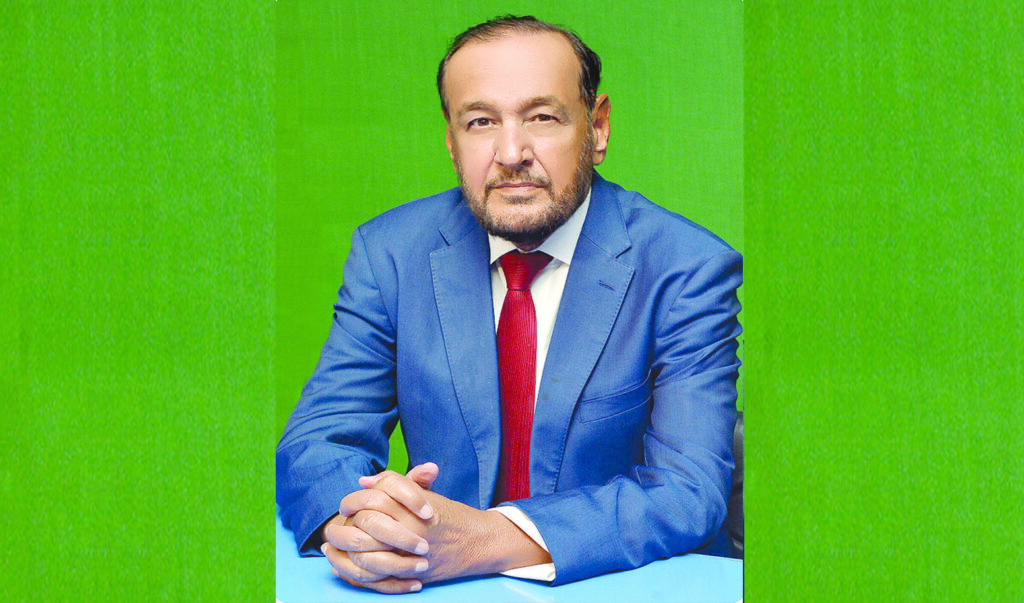
ISLAMABAD: Editor-in-Chief Pakistan Group of Newspapers and Chairman Roze News SK Niazi, while speaking in his renowned talk show Sachi Baat, said that the US midterm elections would have an impact on the entire world, noting that 60 million votes had been cast. He welcomed the establishment of parliamentary committees, describing it as a positive step, but stressed that practical measures were necessary to make them effective. The real assessment of their performance, he added, would depend on results rather than meetings and announcements. He also praised Mohsin Naqvi’s performance and said that efforts for improvement were noteworthy, but visible progress was equally important.
Former Ambassador Alam Brohi discussed the possible consequences of a war between the United States and Iran, saying its effects would extend beyond the region and could significantly change the international situation. He said Israel did not appear interested in reaching an understanding with Iran and was seeking to weaken its power, particularly by raising the possibility of targeting its nuclear programme. Iran’s emergence as a regional power, he noted, was an important factor in the current tensions, while the possibility of an Israeli attack and pressure for US involvement could further escalate the situation.
Brohi also highlighted Israel’s internal political difficulties, saying the government was facing challenges in maintaining its parliamentary majority. He said the Israeli prime minister was looking towards early elections, while political opponents were gaining strength. Failure by political parties to secure a majority could make government formation difficult, particularly without cooperation from Arab parties, potentially leading to fresh elections.
Discussing US foreign policy, Brohi said Washington had historically prioritised its national interests and used its influence and power in the affairs of other countries. He cautioned against expecting the United States to act primarily on the basis of human rights or to intervene against governments in response to external expectations. Pakistan, he stressed, should not rely on foreign interference in its internal affairs and must take serious decisions in its own national interest.
Tehreek-e-Insaf leader Azhar Siddique questioned the government’s performance and called for clear positions supported by facts. He raised questions about parliamentary committees, asking why PTI members had been prevented from participating and what practical results had emerged from their meetings. He said the purpose of such committees was to involve the opposition, but legislation was being passed without adequate public consultation. The government, he argued, should identify laws on which public consultation had taken place and explain the outcomes of committee discussions.
Siddique also questioned the effectiveness of electoral reforms, the powers and performance of the Election Commission, the controversy surrounding election symbols, and reservations over election results and seat distribution. Referring to the Election Act 2017 and Article 104, he asked what had been achieved through amendments to electoral laws and where the promised reforms had been implemented. He said transparency remained essential and that the flaws in the electoral system had yet to be addressed. He also questioned whether the government had provided any meaningful relief to the public despite its time in office.
On the rule of law, Siddique said Pakistan needed a system based on law rather than personal discretion, alleging that the country was witnessing selective application of the law. He maintained that political and state matters should be handled responsibly and that political leadership must focus on public concerns and national interests instead of political point-scoring.
Commenting on Pakistan’s relations with the United States and Israel, Siddique said their interests were closely connected and questioned claims about the PTI founder’s close ties with Washington. He called for clarification and facts regarding allegations surrounding government formation and the founder’s relationship with the United States.
Siddique said his last meeting with the PTI founder had taken place in 2024 and that he had not been able to meet him since. Describing the founder as a strong leader, he said he did not expect him to make a deal or leave the country. He stressed that the founder’s fundamental human rights must be protected regardless of political differences. He also raised concerns about the treatment of the founder’s sisters, adding that allegations against political leaders, including claims of anti-state statements, must be supported by evidence and addressed through lawful procedures.
PML-N MNA Ghazala Anjum said that the PTI had been invited several times to participate in dialogue but was not ready to engage. She maintained that representation in parliamentary committees should be determined according to the strength of political parties, arguing that the ruling party had more members while the opposition had fewer. She said the issue should be resolved through consultation and that PTI should attend meetings called by the Speaker and present its suggestions, said the government wanted to address problems seriously and that criticism should be accompanied by practical proposals. She urged PTI to suggest solutions rather than raise objections and said the government wanted electoral concerns to be resolved through consultation. She also defended the prime minister’s policies, saying there was nothing wrong with acknowledging positive measures.
On foreign policy, she said Pakistan sought to maintain balanced relations with all countries and bring different states together. She highlighted the importance of Pakistan’s role in relations with Iran and other countries, adding that maintaining balance in international relations required cooperation and engagement. She said it was easier to criticise than to bring everyone together.
Journalist Naeem Akhtar, speaking from Washington, DC, said there were clear differences between the political positions of Democrats and Republicans in the United States, with both parties shaping their stances according to their interests and policies. He said changes in the behaviour and policies of American political parties were becoming evident and that the current political situation could influence the election results.
Akhtar added that the elections could also serve as a referendum on the government’s performance, as government policies would have a direct impact on voters’ decisions. In view of the prevailing political circumstances, he said the possibility of new elections was also being discussed.