


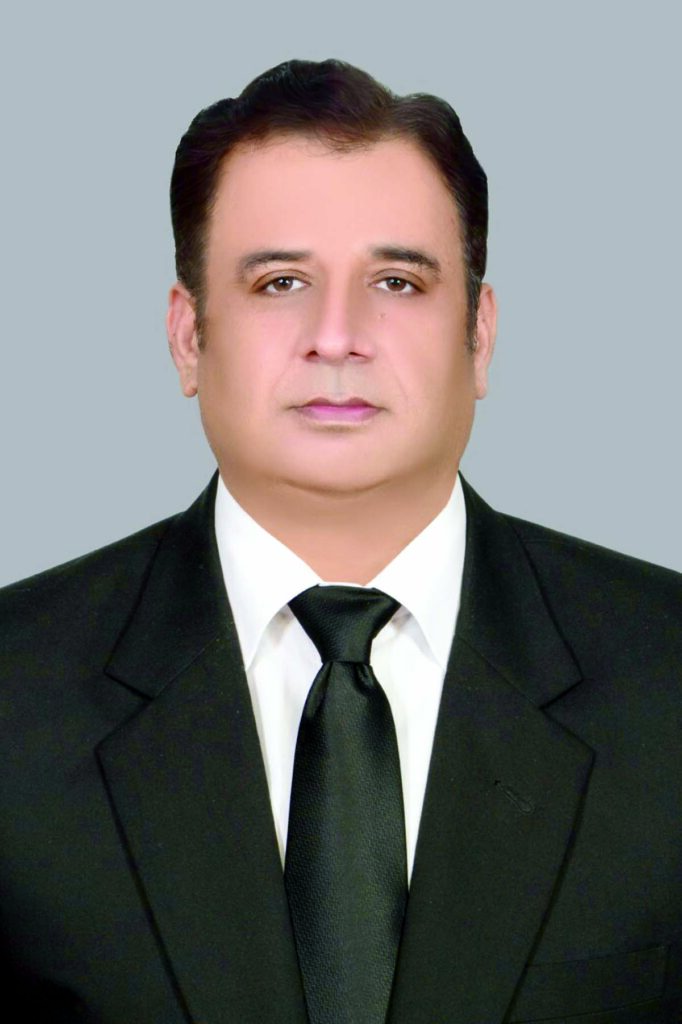
Asif Mahmood
We all know Captain Raja Muhammad Sarwar Shaheed, who was martyred while capturing the Pandu Hill and was awarded Pakistan’s first Nishan-e-Haider. But do you and I also know Lance Naik Yaqoob Masih, who laid down his life for the country right there on the same Pandu Top, fighting alongside his captain?
Do we know that dozens of bullets had pierced his body? That his arm had been shattered at the elbow, his abdomen was badly wounded and his chest was riddled with bullets? And yet, he did not let the green crescent-and-star flag in his hands fall to the ground. As a declaration of victory, he raised it on Pandu Top and, beneath its shade, gave his life for Pakistan.
M.M. Alam surely needs no introduction. Everyone knows him. And for us people of Sargodha, it is a different matter altogether. Our mothers have told us the stories of M.M. Alam in lullabies. But how many among us know a national hero like Wing Commander Marwan Leslie Middlecoat?
Wing Commander Marwan Leslie Middlecoat was posted in Karachi as a Flight Lieutenant during the 1965 war. When the enemy attacked Karachi, he shot down two Indian aircraft. Just as M.M. Alam had kept the skies of Sargodha safe from the enemy, Commander Middlecoat was declared by the people of Karachi to be the “Saviour of Karachi”. He was awarded the Sitara-e-Jurat twice.
Then came the 1971 war.
Commander Middlecoat had returned to Pakistan from Jordan only a day earlier. He could hardly have recovered from the fatigue of the journey when a mission came up. Commander Middlecoat volunteered.
After successfully carrying out the attack, Indian MiG aircraft intercepted him on his way back. Missiles were fired. One struck his aircraft. He jumped out with a parachute.
And from that day to this, there has been no word of him.
Middlecoat was among those Pakistani pilots who had taken part in operations against Israel during the Arab-Israeli war. That story cannot be told in this column. Suffice it to say that King Hussein of Jordan was an enormous admirer of Middlecoat.
So great was his admiration that King Hussein formally requested Pakistan that while Middlecoat’s body would, of course, be buried wrapped in the Pakistani flag, Jordan had one request: that the national flag of Jordan also be placed beneath the head of the commander.
“This will be our tribute to a great commander.”
But King Hussein’s wish could never be fulfilled, because Commander Middlecoat’s body was never found.
Now tell me: do you know Squadron Leader Peter Christy?
Search your heart. Then ask your family and friends around you: who was Peter Christy?
Most of us today would probably draw a blank.
And yet, he too was our national hero.
He fought in the 1965 war. When the 1971 war began, Peter Christy was working with PIA on deputation. He left everything and returned to the Pakistan Air Force.
The Base Commander at Karachi, Air Commodore Nazir Latif, was also a Christian.
He said there was only one way to stop the enemy: destroy the Jamnagar airbase.
“But whoever goes on this mission is not coming back. There is no return from this mission.”
He asked: “Who will go?”
Peter Christy replied:
“I have been waiting for this day. I will go.”
Peter Christy went.
And he never came back.
Another son of Pakistan had sacrificed his life for his homeland.
And do you and I know who Captain Mikhail Wilson and Second Lieutenant Daniel were?
Of course we don’t.
On the morning of December 13, they had just returned from a mission and were having breakfast when news arrived that the platoon of 31 Punjab had come under attack.
Daniel left his breakfast midway and rushed out to rescue his comrades who were surrounded by the enemy.
A burst of machine-gun fire tore into his chest.
Before sacrificing his life for his country, he left one final message on the operating table:
“Send the bullets removed from my chest to my mother.”
Captain Mikhail Wilson was posted in the Chhamb sector in 1971. His body was battered with wounds. But even as the wounded captain lay dying, his thoughts were not about himself.
Even in his final moments, he was worried about his country.
There is a long, long chronicle of the courage and sacrifice of the non-Muslim sons of Pakistan who gave their lives for this country.
How many brave young men sacrificed themselves for this homeland, and yet we do not know their names.
As a Pakistani, I carry this question in my palm like a burning coal:
Why don’t we know?
Why are they not mentioned in our textbooks?
Why did our writers not bring their stories to us?
Why did we allow these heroes to disappear from our collective memory?
And then there were those who did not die for their country. They lived on, their deeds shining and glowing as an enduring part of our national story.
There was Cecil Chaudhry.
There was Air Vice Marshal Eric G. Hall.
Once, when aircraft were in short supply, he gave an astonishing order: the C-130 was to be used as a bomber.
But he did not merely issue the order.
He went himself.
The C-130 had not been designed for bombing, and the mission was extraordinarily dangerous. He would not put someone else’s life at risk.
He put his own life in the palm of his hand, went on the mission himself, and returned successfully.
The list is long.
How much can one write in a single column?
It is like a necklace strung with countless pearls.
Whom should one mention?
Yet one question remains lodged in my heart like an arrow:
Have we, knowingly or unknowingly, committed a grave injustice to our own heroes?
Is there still a way to make amends for this neglect?