


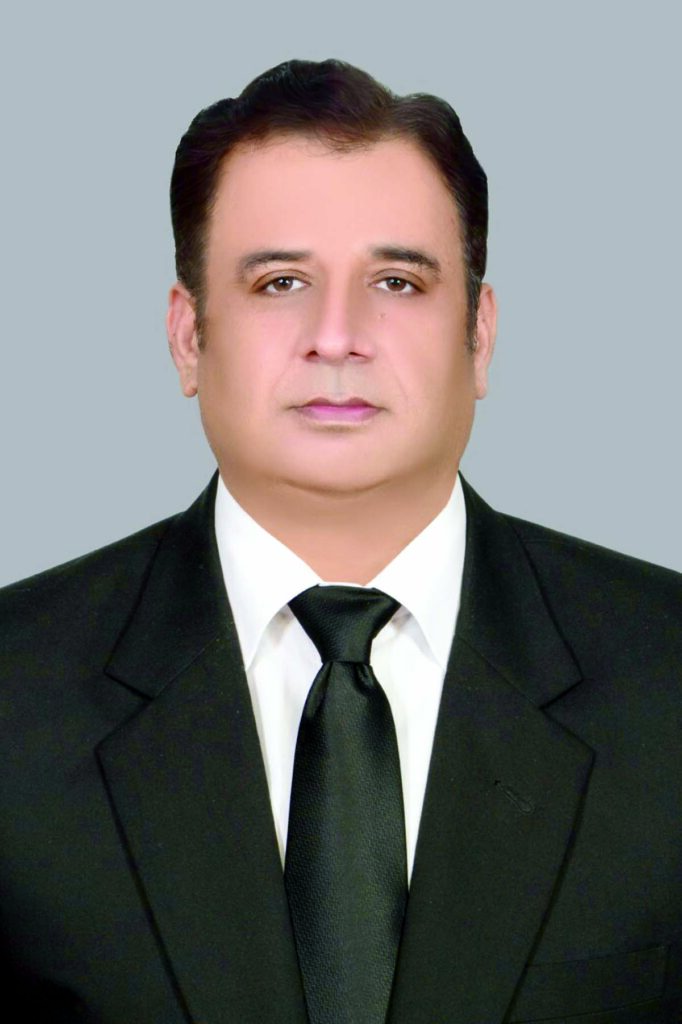
Asif Mahmood
We have become so accustomed to discussing Pakistan through the language of crisis and failure that, at times, we seem to forget another side of the story. Our weaknesses are real, and there is no point denying them. But a nation should not measure itself only by its disappointments. As we celebrate Independence, it is worth looking at what Pakistan has actually accomplished and asking whether we give these achievements the recognition they deserve.
The list is not short. In many respects, it is far more impressive than the narrative of failure that has become so familiar to us.
Consider our nuclear capability. Pakistan is the only nuclear-armed state in the Muslim world. Reaching that position required extraordinary political courage, scientific effort and national determination. It was not something that happened overnight, nor was it the product of one government or one individual.
Our political history is marked by fierce disagreements. Zulfikar Ali Bhutto, General Zia-ul-Haq, Ghulam Ishaq Khan and Nawaz Sharif belonged to very different political worlds and often stood on opposite sides of bitter political battles. Yet, on one fundamental question, there was remarkable continuity: Pakistan had to acquire the capacity to defend itself as a nuclear power.
That consensus tells us something important about ourselves. Even when political divisions become intense, Pakistanis can still come together when they recognise an objective as vital to the survival and security of the country.
Our strategic strength has also evolved beyond the nuclear sphere. The Ma’araka-e-Haq demonstrated that Pakistan possesses the technological and military capability to create a meaningful conventional deterrent as well. Modern warfare is no longer simply a contest of numbers. Technology, precision, intelligence, training and indigenous capabilities can fundamentally alter the balance.
Pakistan’s growing capacity in strategic technology and its expanding defence production are achievements that deserve much greater acknowledgement. A country that can develop and manufacture sophisticated defence systems within its own industrial and technological ecosystem cannot be dismissed as an insignificant state.
Our diplomatic standing is another area where Pakistan has demonstrated considerable potential. The recent defence understanding involving Pakistan, Saudi Arabia and Turkiye represents a significant diplomatic development and reflects a wider strategic convergence among important Muslim countries.
Pakistan’s earlier role in facilitating contacts between Iran and the United States was equally significant. It demonstrated that Pakistan’s diplomatic relevance is not restricted to South Asia. Its geographical position, relationships and strategic importance give it the potential to play a meaningful role in the wider Middle Eastern and Muslim world.
Perhaps one of our greatest achievements, however, is something we rarely celebrate: Pakistan survived.
The country confronted terrorism on a scale that could have destroyed the stability of many states. Terrorist movements have shattered countries elsewhere, leaving behind fractured societies and weakened institutions. Pakistan paid an extraordinarily heavy price, but its armed forces and people confronted the threat and ultimately broke the organisational strength of the forces seeking to destabilise the state.
Thousands sacrificed their lives. Families were destroyed. Entire communities lived through years of fear and uncertainty. But the Pakistani state endured. The challenge has not disappeared completely and isolated incidents continue to occur, but the larger battle against terrorism has been won.
Then there is Pakistan’s remarkable social and cultural diversity.
We are a federation of different languages, cultures, histories and regional identities. Such diversity can become a source of conflict in any country. Yet despite our many disagreements and difficult periods, these diverse communities continue to share a common political and constitutional framework.
The Constitution provides that framework. Bringing together a society with such varied identities under one constitutional arrangement is not a trivial achievement. The journey has certainly been difficult, and our constitutional history has not been without serious setbacks. But the fact remains that Pakistan has continued to function as a federation despite the enormous diversity within it.
There is another aspect of Pakistan that deserves greater attention: its ideological and constitutional character.
Pakistan defines itself as an Islamic republic, but it is not a theocracy. Its political system is based on representative institutions and Parliament, while the Constitution also places the legislative framework within the principles of the Qur’an and Sunnah. Whatever one’s political interpretation of this arrangement, it is a distinctive constitutional experiment and one of the defining features of Pakistan.
And then there is the Pakistan that exists beyond politics.
Our people have made their presence felt in sport, medicine, science, literature, education, business, culture and the arts. Pakistani men and women have achieved distinction at home and abroad in fields too numerous to count. If we began naming them individually, we would quickly run out of pages.
This is perhaps the most important point of all.
Pakistan is not an empty landscape waiting for someone to discover its potential. It is a society that has repeatedly produced exceptional individuals despite limited resources, difficult circumstances and institutional weaknesses. The talent exists. The ability exists. The ambition exists.
What we lack is not necessarily the capacity to produce greatness. What we often lack is the environment in which that capacity can consistently flourish.
So yes, Pakistan has problems, and many of them are serious. We should confront them honestly rather than hide behind slogans. But honesty also requires us to acknowledge what has gone right.
We have survived crises that could have broken us. We have developed capabilities that few imagined possible. We have produced remarkable people in almost every field. We have held together an extraordinarily diverse federation. And despite everything, the possibility of a much better Pakistan remains very much alive.
Perhaps that is the real reason for hope.