Daily The Patriot

Rights, Rhetoric, and Unrest in Azad Kashmir

Link copied!

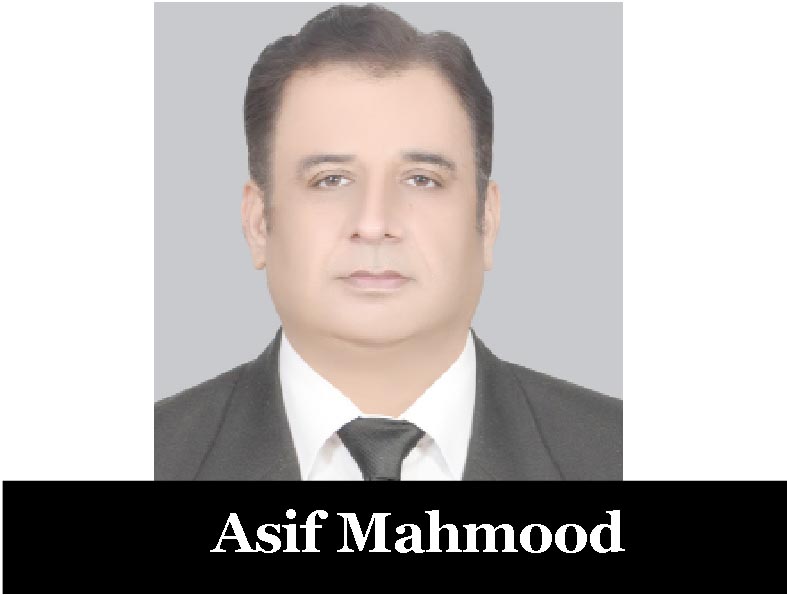
Asif Mahmood

Problems of governance exist across the developing world. Whenever a movement emerges on the basis of such problems, the first question that arises is whether these issues are the reason behind the movement or merely its excuse. In other words, is the movement genuinely driven by these grievances, or are they being used as a pretext for something else?

The narrative surrounding the recent movement in Azad Kashmir suggests that the issue is not one of reason but of excuse. The language being employed is not the language of a rights-based movement; it is the language of disruption and confrontation. No matter how real the grievances may be, efforts to address them are ordinarily pursued within a constitutional framework. Here, however, the matter appears to be something different. Certain elements seem determined to take on the Pakistani state and its institutions head-on. This does not appear to be a struggle for rights; it appears to be an attempt to create internal unrest.

After what was done to Arab societies in the name of the Arab Spring, it has become essential to examine the true objectives and likely consequences of any such movement before allowing emotions, anger, and grievances to turn people into its fuel. Arab societies, too, were swept up by movements launched in the name of rights and reform. The outcome is there for all to see.

Kashmir is a sensitive region. Efforts to create unrest there are never confined to domestic politics alone; they inevitably carry a strategic dimension. Success in turning people against the state in this region also gives India an opportunity to ask what Pakistan is doing in Azad Kashmir while claiming to champion the cause of Indian-administered Kashmir. The intensity and inflammatory rhetoric, with which this movement is being conducted, as well as the enthusiasm with which overseas actors are adding fuel to the fire, deserve careful scrutiny.

If one wishes to launch movements based on grievances through provocative rhetoric, then what exactly is so idyllic about Punjab? Punjab, too, could argue that if electricity costs three rupees per unit in Kashmir because of the Mangla Dam, how is it that flour is available in Kashmir at prices lower than those in Punjab itself, and why should that be the case?

Does Punjab suffer from a shortage of problems? Its economy depends heavily on agriculture, yet quality seed is difficult to obtain, water shortages persist, electricity is expensive, fertilizers are often unavailable, and when crops are harvested, farmers struggle to get fair prices. Middlemen routinely exploit them. Should Punjab, then, also take to the streets, abusing the state, its institutions, and its constituent units?

Where are there no problems? The entire country faces difficulties. Kashmir does too, and undoubtedly many of them. But when a movement for their resolution begins to drift toward disorder and internal instability, it becomes natural to ask why unrest seems to be encouraged precisely in those regions that hold strategic importance for Pakistan.

Pakistan faces two major issues.

The first is that a certain segment of society is perpetually in protest mode. Some people are simply predisposed to it; they seem to require constant drama to stay engaged. Others are victims of populism and play the revolutionary for ratings and attention. Some use every opportunity to settle political scores. Others are driven by ethnic nationalism and remain on the lookout for a chance to undermine the state. Nawabzada Nasrullah Khan once remarked in Punjabi: ( Aggey Bhabho Nachni utton Dholan Dey Ghamkar)  “The lady was already eager to dance, and then the drums began to beat.” Many such elements sit waiting for the drums to start so they can rush into the arena.

The second problem is the emergence of a mindset in which the state is always placed in the dock. Sheikh Mujib was supposedly blameless; only the state was at fault. Baloch militants were innocent; the state allegedly pushed them into a corner. So-and-so was right; the state was wrong. This way of thinking is fundamentally flawed. The state is not always wrong, nor is it some permanent villain.

Whether it is a rights movement or any other form of political agitation, not every demand can be accepted. In this case, too, the government maintains that certain demands cannot be met. The issue of refugee seats is tied to the broader cause of Kashmir’s freedom movement and the principle of self-determination. The quota for refugee students cannot simply be abolished. The taxation issue is also more complex than it is often portrayed. The government’s position is understandable: Azad Kashmir generates roughly Rs60 billion in revenue while its budget stands at around Rs300 billion. The federal government provides the remaining Rs240 billion. If taxes were eliminated altogether, Kashmir’s revenue would fall to around Rs15 billion.

Nor is it true that none of the demands have been accepted. A considerable number have already been addressed. Development work may not be ideal, but it is taking place.

Electricity is being provided at three rupees per unit. Flour is available at Punjab’s subsidized rates. Tariff adjustments have been implemented for consumers using up to five kilowatts. Surcharges have been waived, and consumers have been allowed to clear outstanding dues in 36 installments. The health card programme of the Government of Pakistan is available to Kashmiris as well. Outstanding electricity bills related to the Mangla Dam Raising Project have been written off. Work on optical fibre infrastructure is underway. A development scheme worth Rs5.5 billion for MRI machines has been approved. Another scheme worth nearly Rs2.75 billion for operation theatres and nurseries in THQ hospitals has also received approval. The National Highway Authority has begun feasibility work on two tunnels at Kohori and Chalpani. Tenders under an Rs824 million project for the construction of the Gulpur bridges are being evaluated. A Rs90 million project for water supply schemes across ten districts has been approved and tendered. A Rs10 billion plan for improving the electricity distribution system has been forwarded to the Planning Commission for approval. The Ministry of Water Resources has finalized the draft agreement for the Neelum-Jhelum Hydropower Project.

Certainly, there is room for further improvement, and if people wish to sit down and talk, they should. In any protest movement, some demands are accepted and others are negotiated.

 But if someone believes they can arrive like the armies of Genghis Khan and expect the state to stand before them with folded hands, that can neither happen nor should it be allowed to happen.

Leave a Reply

Your email address will not be published. Required fields are marked *

Rights, Rhetoric, and Unrest in Azad Kashmir

Link copied!

Asif Mahmood

Problems of governance exist across the developing world. Whenever a movement emerges on the basis of such problems, the first question that arises is whether these issues are the reason behind the movement or merely its excuse. In other words, is the movement genuinely driven by these grievances, or are they being used as a pretext for something else?

The narrative surrounding the recent movement in Azad Kashmir suggests that the issue is not one of reason but of excuse. The language being employed is not the language of a rights-based movement; it is the language of disruption and confrontation. No matter how real the grievances may be, efforts to address them are ordinarily pursued within a constitutional framework. Here, however, the matter appears to be something different. Certain elements seem determined to take on the Pakistani state and its institutions head-on. This does not appear to be a struggle for rights; it appears to be an attempt to create internal unrest.

After what was done to Arab societies in the name of the Arab Spring, it has become essential to examine the true objectives and likely consequences of any such movement before allowing emotions, anger, and grievances to turn people into its fuel. Arab societies, too, were swept up by movements launched in the name of rights and reform. The outcome is there for all to see.

Kashmir is a sensitive region. Efforts to create unrest there are never confined to domestic politics alone; they inevitably carry a strategic dimension. Success in turning people against the state in this region also gives India an opportunity to ask what Pakistan is doing in Azad Kashmir while claiming to champion the cause of Indian-administered Kashmir. The intensity and inflammatory rhetoric, with which this movement is being conducted, as well as the enthusiasm with which overseas actors are adding fuel to the fire, deserve careful scrutiny.

If one wishes to launch movements based on grievances through provocative rhetoric, then what exactly is so idyllic about Punjab? Punjab, too, could argue that if electricity costs three rupees per unit in Kashmir because of the Mangla Dam, how is it that flour is available in Kashmir at prices lower than those in Punjab itself, and why should that be the case?

Does Punjab suffer from a shortage of problems? Its economy depends heavily on agriculture, yet quality seed is difficult to obtain, water shortages persist, electricity is expensive, fertilizers are often unavailable, and when crops are harvested, farmers struggle to get fair prices. Middlemen routinely exploit them. Should Punjab, then, also take to the streets, abusing the state, its institutions, and its constituent units?

Where are there no problems? The entire country faces difficulties. Kashmir does too, and undoubtedly many of them. But when a movement for their resolution begins to drift toward disorder and internal instability, it becomes natural to ask why unrest seems to be encouraged precisely in those regions that hold strategic importance for Pakistan.

Pakistan faces two major issues.

The first is that a certain segment of society is perpetually in protest mode. Some people are simply predisposed to it; they seem to require constant drama to stay engaged. Others are victims of populism and play the revolutionary for ratings and attention. Some use every opportunity to settle political scores. Others are driven by ethnic nationalism and remain on the lookout for a chance to undermine the state. Nawabzada Nasrullah Khan once remarked in Punjabi: ( Aggey Bhabho Nachni utton Dholan Dey Ghamkar)  “The lady was already eager to dance, and then the drums began to beat.” Many such elements sit waiting for the drums to start so they can rush into the arena.

The second problem is the emergence of a mindset in which the state is always placed in the dock. Sheikh Mujib was supposedly blameless; only the state was at fault. Baloch militants were innocent; the state allegedly pushed them into a corner. So-and-so was right; the state was wrong. This way of thinking is fundamentally flawed. The state is not always wrong, nor is it some permanent villain.

Whether it is a rights movement or any other form of political agitation, not every demand can be accepted. In this case, too, the government maintains that certain demands cannot be met. The issue of refugee seats is tied to the broader cause of Kashmir’s freedom movement and the principle of self-determination. The quota for refugee students cannot simply be abolished. The taxation issue is also more complex than it is often portrayed. The government’s position is understandable: Azad Kashmir generates roughly Rs60 billion in revenue while its budget stands at around Rs300 billion. The federal government provides the remaining Rs240 billion. If taxes were eliminated altogether, Kashmir’s revenue would fall to around Rs15 billion.

Nor is it true that none of the demands have been accepted. A considerable number have already been addressed. Development work may not be ideal, but it is taking place.

Electricity is being provided at three rupees per unit. Flour is available at Punjab’s subsidized rates. Tariff adjustments have been implemented for consumers using up to five kilowatts. Surcharges have been waived, and consumers have been allowed to clear outstanding dues in 36 installments. The health card programme of the Government of Pakistan is available to Kashmiris as well. Outstanding electricity bills related to the Mangla Dam Raising Project have been written off. Work on optical fibre infrastructure is underway. A development scheme worth Rs5.5 billion for MRI machines has been approved. Another scheme worth nearly Rs2.75 billion for operation theatres and nurseries in THQ hospitals has also received approval. The National Highway Authority has begun feasibility work on two tunnels at Kohori and Chalpani. Tenders under an Rs824 million project for the construction of the Gulpur bridges are being evaluated. A Rs90 million project for water supply schemes across ten districts has been approved and tendered. A Rs10 billion plan for improving the electricity distribution system has been forwarded to the Planning Commission for approval. The Ministry of Water Resources has finalized the draft agreement for the Neelum-Jhelum Hydropower Project.

Certainly, there is room for further improvement, and if people wish to sit down and talk, they should. In any protest movement, some demands are accepted and others are negotiated.

 But if someone believes they can arrive like the armies of Genghis Khan and expect the state to stand before them with folded hands, that can neither happen nor should it be allowed to happen.

Leave a Reply

Your email address will not be published. Required fields are marked *