Daily The Patriot

Pakistan in Contemporary Geopolitics

Link copied!

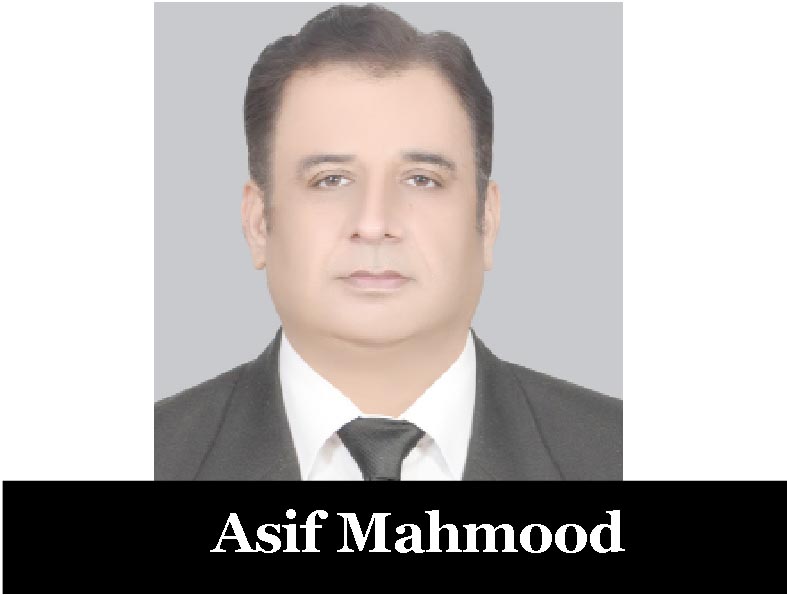
Asif Mahmood

Pakistan has done it. It has achieved what many thought lay beyond its reach, what others did not even dare to attempt. Moments like these do not arrive often in the life of a nation. They carry the quiet weight of answered prayers, as if the air itself begins to echo a deeper truth, reminding us of the verse from Qur’an that asks, which of your Lord’s blessings you will deny.

Nations, like seasons, move between light and shadow. Those of us who have lived through the harsher hours had long made peace with the idea that perhaps the sunlight would return for the next generation, if not for us. Yet history, in its own mysterious way, sometimes turns without herald. What seemed like a distant hope suddenly unfolds before your eyes, like spring arriving quietly in a barren wilderness.

It was only yesterday that Pakistan was spoken of in the language of isolation. Accusations travelled faster than facts, and every diplomatic exchange seemed burdened with suspicion. Today, the tone has changed. The same corridors now carry messages of acknowledgment, even admiration. It is as if the world, once reluctant, now cannot quite contain its astonishment. The messenger no longer brings a single note but arrives with a ledger full of surprises.

This was no ordinary crisis. The specter of a third world war loomed large. There was a real and present danger that tensions could spiral into a wider conflict between Iran and the Arab world, dragging an entire civilisation into internal ruin. The threat was not merely geopolitical; it was existential. And in that moment, when much of the world stood hesitant and institutions like United Nations appeared paralysed, Pakistan stepped forward with a sense of purpose that few anticipated. It assumed a responsibility that was not formally its own, yet one that history will now record in its name.

In the early hours, when the first round of negotiations concluded, there was noise and confusion. Reports rushed to declare failure. Yet beneath that surface, something else was taking shape. What appeared fragile was, in fact, quietly firming into success. Time has a way of vindicating what noise often obscures. Today, the outcome stands clear, and Pakistan stands composed among nations.

Consider, for a moment, the scale of what has unfolded. A confrontation initiated under the shadow of American power found its way, within days, to a ceasefire. That journey, from escalation to restraint, is rarely so swift. Pakistan’s role in preventing a broader Iran–Saudi conflict speaks to a diplomacy that is both calculated and courageous. 

The results are already visible. The Strait of Hormuz breathes easier, and global markets have steadied. Even voices from Washington, including Donald Trump, have acknowledged the effort in terms that would have seemed unlikely not long ago. Beyond the immediate theatre, there are indications that Pakistan’s quiet diplomacy has contributed to calming tensions in Lebanon as well. A country once described as peripheral now finds itself at the center of conversations that matter. For a moment in time, Islamabad carries an echo of Geneva, a place where outcomes are shaped, not merely observed.

For many Pakistanis, this marks the third great moment of collective pride in recent memory. The first came with the nuclear tests of 1998, when the country asserted its strategic autonomy. The second was during Operation Bunyan  Marsoos, when it demonstrated resolve against external pressure. And now, this moment, when Pakistan has not only safeguarded its own interests but contributed to preventing a wider human catastrophe.

This is an entirely new Pakistan. A Pakistan, that has been reborn in the aftermath of Operation Bunyan al Marsoos.  A confident and dignified Pakistan.  One,  that is not only a military power, but also a symbol of peace.

If this process of negotiations succeeds, two elements will be of fundamental importance in the emerging landscape.

The first is the economy. If sanctions on Iran are lifted, whether fully or even partially, Pakistan will be able to expand trade with Iran. The gas pipeline project can be completed, a highly viable route to Central Asia will open, and affordable fuel could become accessible through land routes. If these possibilities are pursued through barter trade rather than reliance on the dollar, their significance would multiply manifold.

The second issue is Kashmir. Perhaps Pakistan may even persuade Donald Trump that after helping bring so many conflicts to a halt, he should now turn his attention to resolving the Kashmir dispute. Humanity continues to suffer in Kashmir. The United Nations has been unable to make meaningful progress. It may well be that he alone has the influence to help bring it to a resolution, and in doing so, further strengthen his claim to the Nobel Peace Prize.

Leave a Reply

Your email address will not be published. Required fields are marked *

Pakistan in Contemporary Geopolitics

Link copied!

Asif Mahmood

Pakistan has done it. It has achieved what many thought lay beyond its reach, what others did not even dare to attempt. Moments like these do not arrive often in the life of a nation. They carry the quiet weight of answered prayers, as if the air itself begins to echo a deeper truth, reminding us of the verse from Qur’an that asks, which of your Lord’s blessings you will deny.

Nations, like seasons, move between light and shadow. Those of us who have lived through the harsher hours had long made peace with the idea that perhaps the sunlight would return for the next generation, if not for us. Yet history, in its own mysterious way, sometimes turns without herald. What seemed like a distant hope suddenly unfolds before your eyes, like spring arriving quietly in a barren wilderness.

It was only yesterday that Pakistan was spoken of in the language of isolation. Accusations travelled faster than facts, and every diplomatic exchange seemed burdened with suspicion. Today, the tone has changed. The same corridors now carry messages of acknowledgment, even admiration. It is as if the world, once reluctant, now cannot quite contain its astonishment. The messenger no longer brings a single note but arrives with a ledger full of surprises.

This was no ordinary crisis. The specter of a third world war loomed large. There was a real and present danger that tensions could spiral into a wider conflict between Iran and the Arab world, dragging an entire civilisation into internal ruin. The threat was not merely geopolitical; it was existential. And in that moment, when much of the world stood hesitant and institutions like United Nations appeared paralysed, Pakistan stepped forward with a sense of purpose that few anticipated. It assumed a responsibility that was not formally its own, yet one that history will now record in its name.

In the early hours, when the first round of negotiations concluded, there was noise and confusion. Reports rushed to declare failure. Yet beneath that surface, something else was taking shape. What appeared fragile was, in fact, quietly firming into success. Time has a way of vindicating what noise often obscures. Today, the outcome stands clear, and Pakistan stands composed among nations.

Consider, for a moment, the scale of what has unfolded. A confrontation initiated under the shadow of American power found its way, within days, to a ceasefire. That journey, from escalation to restraint, is rarely so swift. Pakistan’s role in preventing a broader Iran–Saudi conflict speaks to a diplomacy that is both calculated and courageous. 

The results are already visible. The Strait of Hormuz breathes easier, and global markets have steadied. Even voices from Washington, including Donald Trump, have acknowledged the effort in terms that would have seemed unlikely not long ago. Beyond the immediate theatre, there are indications that Pakistan’s quiet diplomacy has contributed to calming tensions in Lebanon as well. A country once described as peripheral now finds itself at the center of conversations that matter. For a moment in time, Islamabad carries an echo of Geneva, a place where outcomes are shaped, not merely observed.

For many Pakistanis, this marks the third great moment of collective pride in recent memory. The first came with the nuclear tests of 1998, when the country asserted its strategic autonomy. The second was during Operation Bunyan  Marsoos, when it demonstrated resolve against external pressure. And now, this moment, when Pakistan has not only safeguarded its own interests but contributed to preventing a wider human catastrophe.

This is an entirely new Pakistan. A Pakistan, that has been reborn in the aftermath of Operation Bunyan al Marsoos.  A confident and dignified Pakistan.  One,  that is not only a military power, but also a symbol of peace.

If this process of negotiations succeeds, two elements will be of fundamental importance in the emerging landscape.

The first is the economy. If sanctions on Iran are lifted, whether fully or even partially, Pakistan will be able to expand trade with Iran. The gas pipeline project can be completed, a highly viable route to Central Asia will open, and affordable fuel could become accessible through land routes. If these possibilities are pursued through barter trade rather than reliance on the dollar, their significance would multiply manifold.

The second issue is Kashmir. Perhaps Pakistan may even persuade Donald Trump that after helping bring so many conflicts to a halt, he should now turn his attention to resolving the Kashmir dispute. Humanity continues to suffer in Kashmir. The United Nations has been unable to make meaningful progress. It may well be that he alone has the influence to help bring it to a resolution, and in doing so, further strengthen his claim to the Nobel Peace Prize.

Leave a Reply

Your email address will not be published. Required fields are marked *