


TOKYO/PALM BEACH, Florida (:– Japan and Australia said on Monday they were not planning to send navy vessels to the Middle East to escort ships through the Strait of Hormuz, after US President Donald Trump called on allies to create a coalition to reopen the vital waterway.
With the US-Israeli war on Iran creating turmoil across the Middle East and shaking up global energy markets in its third week, Trump on Sunday insisted that nations relying heavily on oil from the Gulf have a responsibility to protect the strait through which 20% of the world’s energy transits.
Markets in Asia opened cautiously, with Brent crude rising more than 1% above $104.50 and regional share markets mostly weaker after Trump’s comments about enlisting other countries to help safeguard the strait.
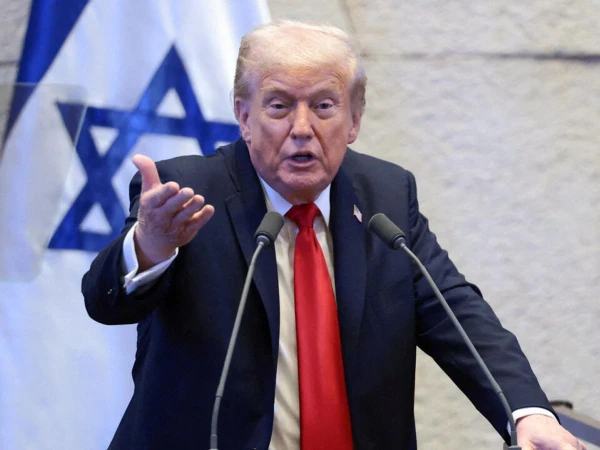
“I’m demanding that these countries come in and protect their own territory because it is their territory,” Trump told reporters aboard Air Force One on the way from Florida to Washington. “It’s the place from which they get their energy.”
Trump said his administration has already contacted seven countries, but did not identify the countries. In a weekend social media post he hoped China, France, Japan, South Korea, Britain and others would participate.
Though he declined to identify the seven governments that his administration has contacted, Trump said this weekend that he expected many countries would send warships to allow shipping through the Strait of Hormuz, a conduit for 20% of the world’s oil.
In an interview with the Financial Times on Sunday, Trump ratcheted up pressure on European allies to help protect the strait, warning that NATO faces a “very bad” future if its members fail to come to Washington’s aid.
Trump also said Washington is in contact with Iran but expressed doubt that Tehran is prepared for serious negotiations to end the conflict.
US officials responding to economic uncertainty over high oil prices predicted on Sunday that the war on Iran would end within weeks and that a drop in energy costs would follow, despite Iran’s assertion that it remains “stable and strong” and ready to defend itself.
Trump had threatened more strikes on Iran’s main oil export hub Kharg Island over the weekend and said he was not ready to reach a deal to end the war which has shut off the vital Strait of Hormuz.
The Trump administration plans to announce as early as this week that multiple countries have agreed to form a coalition to escort ships through the narrow waterway but they are still discussing whether those operations would begin before or after hostilities end, the Wall Street Journal reported, citing unnamed US officials.
Trump offered few specifics about the kind of assistance he wanted from other countries to open up the strait, except to say some have minesweepers and “a certain type of boat that could help us.”
Asian markets were in a wary mood on Monday as the Gulf hostilities kept oil prices elevated. Brent rose 0.1% to $103.27 a barrel, while US crude fell 0.7% to $97.99.
Japanese Prime Minister Sanae Takaichi said on Monday her country, constrained by its war-renouncing constitution, has no plan to dispatch naval vessels to escort ships in the Middle East.
“We have not made any decisions whatsoever about dispatching escort ships. We are continuing to examine what Japan can do independently and what can be done within the legal framework,” Takaichi told parliament.
Australia, another key Indo-Pacific ally to the US, said it had not been asked and will not send naval ships to assist in reopening the strait either.
“We know how incredibly important that is, but that’s not something that we’ve been asked or that we’re contributing to,” Catherine King, a member of Prime Minister Anthony Albanese’s cabinet, said in an interview with state broadcaster ABC.