


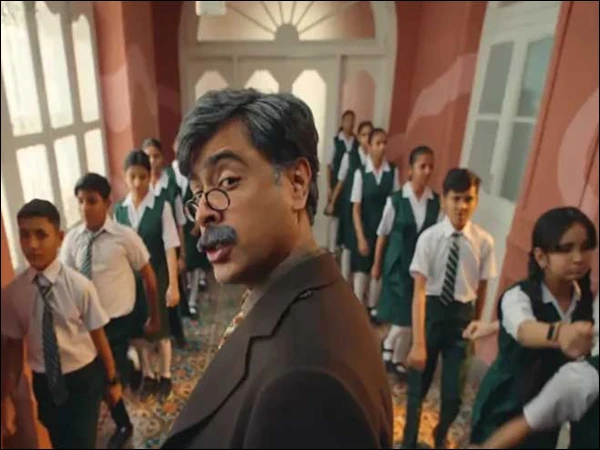
Pakistani singer and social activist Shehzad Rai has released a new song on the occasion of World Education Day, taking a dig at the country’s education system and the increasing pressure on children.
He has invited us to consider whether our educational environment is truly supporting the mental development of children or is silently burdening them with excessive expectations.
Shehzad Rai, along with students from schools run by his organization Zindagi Trust, released the song, titled ‘Layt Ho Gaye’. The music video begins with a slightly shocking but familiar scene where he is seen asking parents why they want to enroll their unborn child in school. When the parents are confused, Shehzad Rai appears on the screen and says, “Layt Ho Gaye.” And thus, the central message of the video becomes immediately clear.
Through a combination of humor and story, the song highlights the pressure that children face even before they go to school. The video raises a key point about the entrance exams and deadlines for expensive private schools, where parents are forced to submit their young children for interviews.
The plea of a little girl reflects the situation of wanting to be a child for a while before the burden of expectations.
The story moves on to the issue of language, where children speak different languages at home but struggle to adapt to the English environment at school. Shahzad Roy presents this contradiction as a sign of emotional stress, where scolding is heard in different languages but is rarely understood.
The video also criticizes the relentless pace of tuition culture, which instead of giving children time for relaxation and curiosity, traps them in an endless academic pressure. Children are seen going straight to extra evening classes after school, which shows their exhaustion.
Another section highlights the behavior of neglectful parents, where screens replace conversation and children are tried to be entertained rather than understood. At the end of the video, Shahzad Roy gives a clear message that families should view education as a process of growth and learning, rather than competition.