By Asif Mahmood
Trump’s Surprising Policy Turn on Pakistan by Brig. Gen. Mark Kimmitt, published in the Washington Post, is a must read for anyone trying to understand the shifting dynamics of South Asia and Washington’s evolving strategic calculus. The following points, drawn directly from that article, help explain why 2025 is being seen as a watershed year in Pakistan United States relations and how a long standing India first framework in Washington appears to be giving way to a markedly different approach.
According to the article, 2025 marks an unprecedented transformation in how Pakistan is perceived in Washington. A country long viewed through a narrow security lens and often treated as a reluctant or problematic partner is now being reimagined as a central pillar of United States policy in South Asia. This reversal is rare in American foreign policy, particularly when it involves a state that was, until recently, marginalised in favour of a preferred regional ally.
A decisive trigger for this policy shift was the brief but intense Pakistan India military confrontation in May. The article notes that Pakistan’s military performance during this episode caught the Trump administration off guard. The level of discipline, strategic focus and asymmetric capability displayed by Pakistani forces exceeded American expectations. This single event forced a reassessment in Washington and restored Pakistan’s credibility as a serious regional actor with real deterrent and operational capacity.
The Washington Post analysis contrasts this with India’s trajectory. For years, Washington invested heavily in an India centric strategy, promoting New Delhi through the Quad and other forums while expecting Islamabad to remain on the sidelines. However, India’s internal political direction, growing restrictions on civil liberties, uneven military performance and increasingly rigid diplomacy have undermined its image as a stabilising force. In this context, the assumption that India alone could anchor United States interests in South Asia began to look increasingly flawed.
The article further explains that the initial thaw in Pakistan United States relations did not begin publicly but through discreet counterterrorism exchanges. These quiet engagements provided Washington with tangible evidence of substantive cooperation. In March, President Trump’s unexpected public praise of Pakistan during a national address signalled that this behind the scenes reassessment had reached the highest political level.
Islamabad, according to the article, moved swiftly to capitalise on this opening. Limited cooperation was carefully leveraged into strategic credit, and engagement steadily deepened. What had long been a transactional relationship began to evolve into something more durable and strategic. The May crisis accelerated this process, effectively redrawing the strategic map for the Trump administration.
A significant portion of the article focuses on Pakistan’s military leadership and internal reforms. Pakistan’s ongoing military modernisation, the restructuring of its command framework and the activation of the Chief of Defence Forces role are presented as factors that enhanced its standing in Washington. Field Marshal Syed Asim Munir is singled out for particular attention, both for his role as Army Chief and for his emergence as a key figure in the new command architecture.
The Washington Post describes Asim Munir as a disciplined and enigmatic leader who has unexpectedly become a prominent figure within Trump’s inner strategic circle. High level engagements, including unprecedented access in Washington and extensive interaction with United States military leadership, are portrayed as symbols of how far the relationship has progressed. The contrast with India’s lukewarm response to ceasefire diplomacy, compared to Pakistan’s acceptance of mediation with gratitude, further reinforced American perceptions.
By early 2026, the article suggests, Pakistan is likely to be positioned close to the centre of Trump’s broader grand strategy. Its potential role as a discreet and credible channel to Iran, its relevance in the Gaza calculus and its growing importance as a regional stabiliser all feature prominently in this new assessment.
The central conclusion is unambiguous. The India first era in Washington appears to be over. What replaces it will depend heavily on the choices made in both Islamabad and New Delhi. But for now, Pakistan’s reemergence as a preferred strategic partner represents one of the most significant recalibrations of United States policy in South Asia in recent years.
This article is essential reading. It shows how the U.S. military and strategic elite are now viewing Pakistan, recognizing it as a credible and central partner in shaping regional security and policy.
Mark Kimmitt on Trump’s Pakistan Policy Shift: A Must Read
Published: December 23, 2025


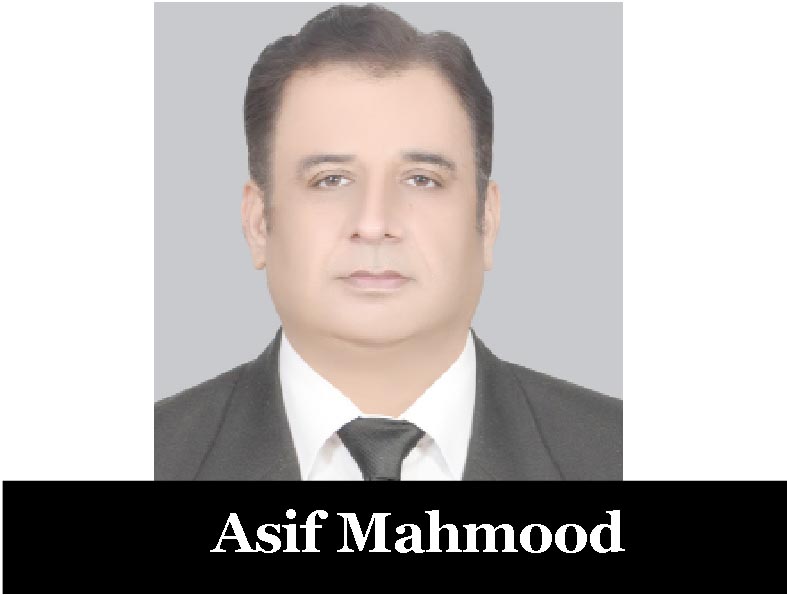
By Asif Mahmood
Trump’s Surprising Policy Turn on Pakistan by Brig. Gen. Mark Kimmitt, published in the Washington Post, is a must read for anyone trying to understand the shifting dynamics of South Asia and Washington’s evolving strategic calculus. The following points, drawn directly from that article, help explain why 2025 is being seen as a watershed year in Pakistan United States relations and how a long standing India first framework in Washington appears to be giving way to a markedly different approach.
According to the article, 2025 marks an unprecedented transformation in how Pakistan is perceived in Washington. A country long viewed through a narrow security lens and often treated as a reluctant or problematic partner is now being reimagined as a central pillar of United States policy in South Asia. This reversal is rare in American foreign policy, particularly when it involves a state that was, until recently, marginalised in favour of a preferred regional ally.
A decisive trigger for this policy shift was the brief but intense Pakistan India military confrontation in May. The article notes that Pakistan’s military performance during this episode caught the Trump administration off guard. The level of discipline, strategic focus and asymmetric capability displayed by Pakistani forces exceeded American expectations. This single event forced a reassessment in Washington and restored Pakistan’s credibility as a serious regional actor with real deterrent and operational capacity.
The Washington Post analysis contrasts this with India’s trajectory. For years, Washington invested heavily in an India centric strategy, promoting New Delhi through the Quad and other forums while expecting Islamabad to remain on the sidelines. However, India’s internal political direction, growing restrictions on civil liberties, uneven military performance and increasingly rigid diplomacy have undermined its image as a stabilising force. In this context, the assumption that India alone could anchor United States interests in South Asia began to look increasingly flawed.
The article further explains that the initial thaw in Pakistan United States relations did not begin publicly but through discreet counterterrorism exchanges. These quiet engagements provided Washington with tangible evidence of substantive cooperation. In March, President Trump’s unexpected public praise of Pakistan during a national address signalled that this behind the scenes reassessment had reached the highest political level.
Islamabad, according to the article, moved swiftly to capitalise on this opening. Limited cooperation was carefully leveraged into strategic credit, and engagement steadily deepened. What had long been a transactional relationship began to evolve into something more durable and strategic. The May crisis accelerated this process, effectively redrawing the strategic map for the Trump administration.
A significant portion of the article focuses on Pakistan’s military leadership and internal reforms. Pakistan’s ongoing military modernisation, the restructuring of its command framework and the activation of the Chief of Defence Forces role are presented as factors that enhanced its standing in Washington. Field Marshal Syed Asim Munir is singled out for particular attention, both for his role as Army Chief and for his emergence as a key figure in the new command architecture.
The Washington Post describes Asim Munir as a disciplined and enigmatic leader who has unexpectedly become a prominent figure within Trump’s inner strategic circle. High level engagements, including unprecedented access in Washington and extensive interaction with United States military leadership, are portrayed as symbols of how far the relationship has progressed. The contrast with India’s lukewarm response to ceasefire diplomacy, compared to Pakistan’s acceptance of mediation with gratitude, further reinforced American perceptions.
By early 2026, the article suggests, Pakistan is likely to be positioned close to the centre of Trump’s broader grand strategy. Its potential role as a discreet and credible channel to Iran, its relevance in the Gaza calculus and its growing importance as a regional stabiliser all feature prominently in this new assessment.
The central conclusion is unambiguous. The India first era in Washington appears to be over. What replaces it will depend heavily on the choices made in both Islamabad and New Delhi. But for now, Pakistan’s reemergence as a preferred strategic partner represents one of the most significant recalibrations of United States policy in South Asia in recent years.
This article is essential reading. It shows how the U.S. military and strategic elite are now viewing Pakistan, recognizing it as a credible and central partner in shaping regional security and policy.