Daily The Patriot

Response to Disinformation: Deconstructing the Russian Narrative

Link copied!

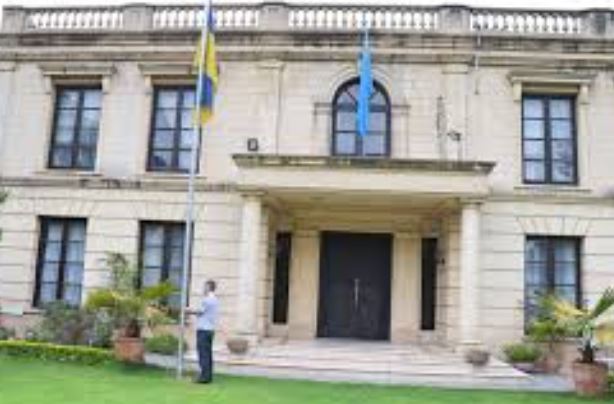
EMBASSY OF UKRAINE IN PAKISTAN

STATEMENT OF THE AMBASSADOR OF UKRAINE TO PAKISTAN

H.E. MARKIIAN CHUCHUK:

Response to Disinformation: Deconstructing the Russian Narrative

In response to the statement disseminated by the Embassy of the Russian Federation in Pakistan on behalf of the Ambassador of the Russian Federation on 11 December 2025, the Ambassador of Ukraine to the Islamic Republic of Pakistan, H.E. Markiian Chuchuk, finds it necessary to issue the following rebuttal.

The aforementioned Russian statement is an example of hybrid information warfare. It employs post-truth discourse rooted in hostility and hate speech.

It is not a diplomatic document, but rather a compilation of propaganda, disinformation, factual distortion, and legal nihilism, wrapped in pseudo-peaceful rhetoric and accompanied by thinly veiled threats of force.

Below are the key points substantiating this assessment.

1. Russian Aggression, Not a “Ukrainian Crisis”

We once again categorically reject attempts to describe Russia’s war of Agression  against Ukraine as a “conflict in Ukraine” or a “Ukrainian crisis.” These misleading  euphemisms are elements of Russian propaganda designed to blur the distinction between the aggressor and the victim, and to absolve the aggressor of responsibility for the crimes committed.

From the standpoint of international law, the events ongoing in Ukrainian-Russian relations since 2014 — including the illegal annexation of Crimea and the hybrid war in Donbas — which escalated into a full-scale invasion on 24 February 2022, qualify exclusively as an international armed conflict initiated by the Russian Federation.

Russia’s actions completely fall under the definition of an Act of Aggression pursuant to Article 1 of United Nations General Assembly Resolution 3314 (XXIX) of 14 December 1974.

Russia has flagrantly violated Article 2(4) of the UN Charter, peremptory norms of international law (jus cogens), and multiple bilateral treaties in force at the time of the aggression, including the 1997 Treaty on Friendship, Cooperation and Partnership, under which it committed to respect the sovereignty and territorial integrity of Ukraine.

Accordingly, in reality, there is not an “internal conflict” or a “crisis” in Ukraine, but an international armed conflict (war) and an act of aggression — the gravest crime against international peace and security.

Ukraine is conducting a lawful defensive war in the exercise of its inherent right to self-defence under Article 51 of the UN Charter, in response to Russia’s armed attack.

Russian propagandistic narratives and inadequate terminology such as “Special Military Operation” cannot alter the legal nature of this aggressive war.

2. Who Started the War

Contrary to false Russian claims that unnamed external forces pre-planned and deliberately provoked a “conflict in Ukraine,” reality is fundamentally different.

The international community has unequivocally established who unleashed this bloody war in Ukraine and named the aggressor, as evidenced by numerous international documents, including UN General Assembly resolutions that clearly condemn Russia’s actions as aggression and occupation. These include, inter alia:

* UNGA Resolution 68/262 (27 March 2014) — “Territorial integrity of Ukraine” reaffirmed Ukraine’s territorial integrity within its internationally recognized borders and condemned the illegal referendum in Crimea.

* UNGA Resolution ES-11/1 (2 March 2022) — “Aggression against Ukraine,” condemned the full-scale invasion and demanded the immediate, complete, and unconditional withdrawal of Russian forces.

* UNGA Resolution ES-11/5 (14 November 2022) — “Furtherance of Remedy and Reparation for Aggression against Ukraine,” laid the groundwork for an international compensation mechanism.

Therefore, any references to alleged external forces that supposedly instigated the war or the “Ukrainian crisis” are legally null and void, as the sole source of the war is the armed invasion of regular Russian forces into Ukraine.
Statements that ignore these legal facts and UN decisions cannot be considered credible.

3. Distorted  & Fabricated Interpretation of Diplomacy

The portrayal of diplomatic efforts to end Russian aggression as constructive on the part of the United States and allegedly unconstructive on the part of Europe does not correspond to reality and is based solely on the aggressor’s biased assessments rather than on facts.

There are indeed differences among states` regarding approaches to ending the war and ensuring peace. However, the indisputable fact that both the United States and Europe have imposed extensive sanctions on Russia as the aggressor state, demonstrates a shared and clear understanding among Western allies of the nature of this war.

I take this opportunity to express our profound gratitude to the United States, the European Union, and all our international partners for their crucial and multifaceted assistance to Ukraine in defense against Russian aggression, as well as for their unwavering commitment to facilitating a just and lasting peace in Ukraine.

4. Crimes Against Children and Crimes Against Humanity

Attempts to justify crimes against Ukrainian children constitute the most cynical portion of the Russian statement.

Russia’s aggression has had catastrophic consequences for children. In the beginning of full-scale of russian invasion, entire boarding schools, situated in temporarily occupied terriotories of Ukraine, were emptied, and children were loaded onto buses, disappearing without a trace under the guise of “evacuation.” Many children were separated from parents during “filtration” procedures. These acts constitute elements of genocide.

This is not merely physical abduction of children. Abducted children are subjected to re-education, re-indoctrination, militarization, and forced citizenship changes. That means a centralized campaign to erase their Ukrainian identity. These actions violate the Convention on the Prevention and Punishment of the Crime of Genocide and can be considered the largest state child abduction operation in history. This crime must be thoroughly investigated, and those responsible held accountable.

Key Facts and Figures:

* Scale of Displacement: Russian Children’s Rights Commissioner Maria Lvova-Belova publicly admitted to “settling” over 700,000 Ukrainian children in Russia.

* 17 March, 2023 the International Criminal Court (ICC) issued a life-long arrest warrant against Russian President Putin and Maria Lvova-Belova for alleged war crimes of unlawful deportation of children from occupied areas of Ukraine to Russia.

*  Official Reports: As of today, Ukraine has recorded 19,546 specific reports of unlawful deportation and forced transfer of Ukrainian children.

* Illegal Transfers: 4,390 Ukrainian orphans or children without parental care have been illegally transferred.

* Missing Children: 2,245 children are currently reported missing.

* At Risk: Approximately 1.5 million more children in occupied territories face the threat of forced displacement.

Russia refuses to provide any information about these children to Ukraine or international organizations, thus creating a serious verification challenge.

Russia’s claim that Ukraine “failed to provide lists” of abducted children is a manipulation; under the Geneva Conventions, the occupying power is obligated to report on the movement of civilians. Concealing this data is a war crime.

International Response:

* On 2 February, 2024 Ukraine and Canada launched the International Coalition for the Return of Ukrainian Children, joined by 41 countries.

* On 3 December 2025, the UN General Assembly adopted the resolution “Return of Ukrainian Children,” initiated by Ukraine together with Canada and the European Union, and co-sponsored by 48 UN member states. The resolution expresses deep concern about the fate of Ukrainian children separated from their families deported to Russia since 2014 – when Moscow annexed Crimea.

* The EU, US, Canada, and Ukraine have imposed sanctions on 152 individuals involved in these deportations.

So far, 1,892 children have been successfully returned from deportation, forced transfers, or temporarily occupied territories, as Russia is trying to obstruct this process in various ways. We will not stop until every child is returned.


5. Legal Nihilism

Justice is an integral component of a comprehensive, just, and lasting peace for Ukraine. The statement’s mockery of international mechanisms — such as the Register of Damage and the Tribunal — which the aggressor labels as “quasi-legal,” and the characterization of asset confiscation as “theft,” do not withstand legal scrutiny.

Under international law, a state that has committed an internationally wrongful act (aggression) is obliged to provide full reparation for the damage caused.

The establishment of the Register of Damage under the auspices of the Council of Europe is a fully legitimate mechanism for documenting such claims.

The freezing and potential confiscation of Russian sovereign assets constitute a lawful countermeasure in response to a gross violation of peremptory norms of international law (jus cogens). This is not “theft” , but enforcement of the aggressor’s obligation to provide reparations.

6. Attacks on the Legitimacy of Ukraine’s Authorities

Russia is the only state obsessed with the issue of legitimacy of the Ukrainian President. In the characteristically rude style inherent to Russian diplomacy, the statement once again attempts to delegitimize the Government of Ukraine in order to justify aggression, using terminology such as “usurpation of power” and “corrupt regime.”

For delay in elections in Ukraine Russia has to blaim itself.  Elections in Ukraine cannot be held precisely because of the war unleashed by Russia.

Pursuant to Article 108 of the Constitution of Ukraine and legislation on martial law, the President’s powers continue until a newly elected president assumes office following the termination of martial law.

There are no legal grounds to doubt the legitimacy of the President of Ukraine. Conducting elections during active hostilities is impossible for security reasons and cannot be carried out in compliance with democratic standards. Accordingly, claims of “usurpation” of power in Ukraine are legally null and void.

Moreover, President Volodymyr Zelenskyy has repeatedly and publicly confirmed Ukraine’s readiness to hold elections as soon as conditions permit.

Particularly notable in the statement is the resort to ad hominem attacks, personal insults and unsubstantiated extrajudicial accusations.

In the absence of court judgments, “sensational” Russian stories of allegedly “proven” corruption constitute tabloid propaganda. In reality, such claims represent a Russian propaganda narrative aimed at reducing international support to Ukraine, diverting global attention from the destruction of Ukrainian civilian infrastructure by Russian drones and missiles, and obscuring Russia’s own well-documented corruption problems.

In Ukraine, as in many democratic states, corruption is exposed and prosecuted. As for what happens to anti-corruption whistleblowers in Russia, one may ask the widow of Alexei Navalny.

7. Nuclear Blackmail and Threats of Use of Force

The statement contains direct threats of the use of force by Russia against Europe, including references to the nuclear-powered missile “Burevestnik” and the nuclear underwater drone “Poseidon.”

Such threats constitute a grave violation of international law and the UN Charter. It bears emphasizing that this is a statement on behalf of the Ambassador of the Russian Federation, not by a propagandist from “Russia Today.” Such rhetoric at a official level demonstrates Russia’s declared readiness and determination to resort to weapons of mass destruction against its opponents.


8. Neo-Colonial Narrative Targeting the Global South

Russia is effectively waging a colonial war in the twenty-first century aimed at territorial expansion through the attempted annexation of a neighboring state’s land. The use of anti-colonial rhetoric to conceal its own imperial aggression represents the height of hypocrisy.

Attempts to drag other states into Russia’s orbit through “anti-Western” solidarity rhethorics ignore the fact that the use of armed force against a sovereign state and the dismantling of the international legal order — actions undertaken by Russia — will most severely affect many countries of the Global South by depriving them of international legal protection of their own sovereignty in the face of threats from stronger aggressive regimes.

Interpreting neutrality of Pakistan as support for Russia’s aggressive war against Ukraine is a gross manipulation and does not correspond to reality.

In particular, Pakistan has consistently supported and continues to support the principles of territorial integrity and sovereignty of all states, including Ukraine, and has never supported and does not support international armed aggression.

I take this opportunity to express my profound gratitude to the Government of Pakistan and to all our Pakistani friends for their public and private support of Ukraine’s sovereignty and territorial integrity, as well as for their commitment to establishing a just and lasting peace in Ukraine.

General Conclusion

The statement disseminated by the Embassy of the Russian Federation in Pakistan on behalf of the Ambassador of the Russian Federation to Pakistan on 11 December 2025 constitutes a legally untenable and unsubstantiated collection of propagandistic clichés.

It demonstrates the aggressive intentions of the Russian Federation and the absence of any genuine willingness to pursue a peaceful settlement in Ukraine based on international law and the UN Charter.

Ukraine remains committed to negotiations and a just and lasting peace based on international law and the UN Charter.

Leave a Reply

Your email address will not be published. Required fields are marked *

Response to Disinformation: Deconstructing the Russian Narrative

Link copied!

EMBASSY OF UKRAINE IN PAKISTAN

STATEMENT OF THE AMBASSADOR OF UKRAINE TO PAKISTAN

H.E. MARKIIAN CHUCHUK:

Response to Disinformation: Deconstructing the Russian Narrative

In response to the statement disseminated by the Embassy of the Russian Federation in Pakistan on behalf of the Ambassador of the Russian Federation on 11 December 2025, the Ambassador of Ukraine to the Islamic Republic of Pakistan, H.E. Markiian Chuchuk, finds it necessary to issue the following rebuttal.

The aforementioned Russian statement is an example of hybrid information warfare. It employs post-truth discourse rooted in hostility and hate speech.

It is not a diplomatic document, but rather a compilation of propaganda, disinformation, factual distortion, and legal nihilism, wrapped in pseudo-peaceful rhetoric and accompanied by thinly veiled threats of force.

Below are the key points substantiating this assessment.

1. Russian Aggression, Not a “Ukrainian Crisis”

We once again categorically reject attempts to describe Russia’s war of Agression  against Ukraine as a “conflict in Ukraine” or a “Ukrainian crisis.” These misleading  euphemisms are elements of Russian propaganda designed to blur the distinction between the aggressor and the victim, and to absolve the aggressor of responsibility for the crimes committed.

From the standpoint of international law, the events ongoing in Ukrainian-Russian relations since 2014 — including the illegal annexation of Crimea and the hybrid war in Donbas — which escalated into a full-scale invasion on 24 February 2022, qualify exclusively as an international armed conflict initiated by the Russian Federation.

Russia’s actions completely fall under the definition of an Act of Aggression pursuant to Article 1 of United Nations General Assembly Resolution 3314 (XXIX) of 14 December 1974.

Russia has flagrantly violated Article 2(4) of the UN Charter, peremptory norms of international law (jus cogens), and multiple bilateral treaties in force at the time of the aggression, including the 1997 Treaty on Friendship, Cooperation and Partnership, under which it committed to respect the sovereignty and territorial integrity of Ukraine.

Accordingly, in reality, there is not an “internal conflict” or a “crisis” in Ukraine, but an international armed conflict (war) and an act of aggression — the gravest crime against international peace and security.

Ukraine is conducting a lawful defensive war in the exercise of its inherent right to self-defence under Article 51 of the UN Charter, in response to Russia’s armed attack.

Russian propagandistic narratives and inadequate terminology such as “Special Military Operation” cannot alter the legal nature of this aggressive war.

2. Who Started the War

Contrary to false Russian claims that unnamed external forces pre-planned and deliberately provoked a “conflict in Ukraine,” reality is fundamentally different.

The international community has unequivocally established who unleashed this bloody war in Ukraine and named the aggressor, as evidenced by numerous international documents, including UN General Assembly resolutions that clearly condemn Russia’s actions as aggression and occupation. These include, inter alia:

* UNGA Resolution 68/262 (27 March 2014) — “Territorial integrity of Ukraine” reaffirmed Ukraine’s territorial integrity within its internationally recognized borders and condemned the illegal referendum in Crimea.

* UNGA Resolution ES-11/1 (2 March 2022) — “Aggression against Ukraine,” condemned the full-scale invasion and demanded the immediate, complete, and unconditional withdrawal of Russian forces.

* UNGA Resolution ES-11/5 (14 November 2022) — “Furtherance of Remedy and Reparation for Aggression against Ukraine,” laid the groundwork for an international compensation mechanism.

Therefore, any references to alleged external forces that supposedly instigated the war or the “Ukrainian crisis” are legally null and void, as the sole source of the war is the armed invasion of regular Russian forces into Ukraine.
Statements that ignore these legal facts and UN decisions cannot be considered credible.

3. Distorted  & Fabricated Interpretation of Diplomacy

The portrayal of diplomatic efforts to end Russian aggression as constructive on the part of the United States and allegedly unconstructive on the part of Europe does not correspond to reality and is based solely on the aggressor’s biased assessments rather than on facts.

There are indeed differences among states` regarding approaches to ending the war and ensuring peace. However, the indisputable fact that both the United States and Europe have imposed extensive sanctions on Russia as the aggressor state, demonstrates a shared and clear understanding among Western allies of the nature of this war.

I take this opportunity to express our profound gratitude to the United States, the European Union, and all our international partners for their crucial and multifaceted assistance to Ukraine in defense against Russian aggression, as well as for their unwavering commitment to facilitating a just and lasting peace in Ukraine.

4. Crimes Against Children and Crimes Against Humanity

Attempts to justify crimes against Ukrainian children constitute the most cynical portion of the Russian statement.

Russia’s aggression has had catastrophic consequences for children. In the beginning of full-scale of russian invasion, entire boarding schools, situated in temporarily occupied terriotories of Ukraine, were emptied, and children were loaded onto buses, disappearing without a trace under the guise of “evacuation.” Many children were separated from parents during “filtration” procedures. These acts constitute elements of genocide.

This is not merely physical abduction of children. Abducted children are subjected to re-education, re-indoctrination, militarization, and forced citizenship changes. That means a centralized campaign to erase their Ukrainian identity. These actions violate the Convention on the Prevention and Punishment of the Crime of Genocide and can be considered the largest state child abduction operation in history. This crime must be thoroughly investigated, and those responsible held accountable.

Key Facts and Figures:

* Scale of Displacement: Russian Children’s Rights Commissioner Maria Lvova-Belova publicly admitted to “settling” over 700,000 Ukrainian children in Russia.

* 17 March, 2023 the International Criminal Court (ICC) issued a life-long arrest warrant against Russian President Putin and Maria Lvova-Belova for alleged war crimes of unlawful deportation of children from occupied areas of Ukraine to Russia.

*  Official Reports: As of today, Ukraine has recorded 19,546 specific reports of unlawful deportation and forced transfer of Ukrainian children.

* Illegal Transfers: 4,390 Ukrainian orphans or children without parental care have been illegally transferred.

* Missing Children: 2,245 children are currently reported missing.

* At Risk: Approximately 1.5 million more children in occupied territories face the threat of forced displacement.

Russia refuses to provide any information about these children to Ukraine or international organizations, thus creating a serious verification challenge.

Russia’s claim that Ukraine “failed to provide lists” of abducted children is a manipulation; under the Geneva Conventions, the occupying power is obligated to report on the movement of civilians. Concealing this data is a war crime.

International Response:

* On 2 February, 2024 Ukraine and Canada launched the International Coalition for the Return of Ukrainian Children, joined by 41 countries.

* On 3 December 2025, the UN General Assembly adopted the resolution “Return of Ukrainian Children,” initiated by Ukraine together with Canada and the European Union, and co-sponsored by 48 UN member states. The resolution expresses deep concern about the fate of Ukrainian children separated from their families deported to Russia since 2014 – when Moscow annexed Crimea.

* The EU, US, Canada, and Ukraine have imposed sanctions on 152 individuals involved in these deportations.

So far, 1,892 children have been successfully returned from deportation, forced transfers, or temporarily occupied territories, as Russia is trying to obstruct this process in various ways. We will not stop until every child is returned.


5. Legal Nihilism

Justice is an integral component of a comprehensive, just, and lasting peace for Ukraine. The statement’s mockery of international mechanisms — such as the Register of Damage and the Tribunal — which the aggressor labels as “quasi-legal,” and the characterization of asset confiscation as “theft,” do not withstand legal scrutiny.

Under international law, a state that has committed an internationally wrongful act (aggression) is obliged to provide full reparation for the damage caused.

The establishment of the Register of Damage under the auspices of the Council of Europe is a fully legitimate mechanism for documenting such claims.

The freezing and potential confiscation of Russian sovereign assets constitute a lawful countermeasure in response to a gross violation of peremptory norms of international law (jus cogens). This is not “theft” , but enforcement of the aggressor’s obligation to provide reparations.

6. Attacks on the Legitimacy of Ukraine’s Authorities

Russia is the only state obsessed with the issue of legitimacy of the Ukrainian President. In the characteristically rude style inherent to Russian diplomacy, the statement once again attempts to delegitimize the Government of Ukraine in order to justify aggression, using terminology such as “usurpation of power” and “corrupt regime.”

For delay in elections in Ukraine Russia has to blaim itself.  Elections in Ukraine cannot be held precisely because of the war unleashed by Russia.

Pursuant to Article 108 of the Constitution of Ukraine and legislation on martial law, the President’s powers continue until a newly elected president assumes office following the termination of martial law.

There are no legal grounds to doubt the legitimacy of the President of Ukraine. Conducting elections during active hostilities is impossible for security reasons and cannot be carried out in compliance with democratic standards. Accordingly, claims of “usurpation” of power in Ukraine are legally null and void.

Moreover, President Volodymyr Zelenskyy has repeatedly and publicly confirmed Ukraine’s readiness to hold elections as soon as conditions permit.

Particularly notable in the statement is the resort to ad hominem attacks, personal insults and unsubstantiated extrajudicial accusations.

In the absence of court judgments, “sensational” Russian stories of allegedly “proven” corruption constitute tabloid propaganda. In reality, such claims represent a Russian propaganda narrative aimed at reducing international support to Ukraine, diverting global attention from the destruction of Ukrainian civilian infrastructure by Russian drones and missiles, and obscuring Russia’s own well-documented corruption problems.

In Ukraine, as in many democratic states, corruption is exposed and prosecuted. As for what happens to anti-corruption whistleblowers in Russia, one may ask the widow of Alexei Navalny.

7. Nuclear Blackmail and Threats of Use of Force

The statement contains direct threats of the use of force by Russia against Europe, including references to the nuclear-powered missile “Burevestnik” and the nuclear underwater drone “Poseidon.”

Such threats constitute a grave violation of international law and the UN Charter. It bears emphasizing that this is a statement on behalf of the Ambassador of the Russian Federation, not by a propagandist from “Russia Today.” Such rhetoric at a official level demonstrates Russia’s declared readiness and determination to resort to weapons of mass destruction against its opponents.


8. Neo-Colonial Narrative Targeting the Global South

Russia is effectively waging a colonial war in the twenty-first century aimed at territorial expansion through the attempted annexation of a neighboring state’s land. The use of anti-colonial rhetoric to conceal its own imperial aggression represents the height of hypocrisy.

Attempts to drag other states into Russia’s orbit through “anti-Western” solidarity rhethorics ignore the fact that the use of armed force against a sovereign state and the dismantling of the international legal order — actions undertaken by Russia — will most severely affect many countries of the Global South by depriving them of international legal protection of their own sovereignty in the face of threats from stronger aggressive regimes.

Interpreting neutrality of Pakistan as support for Russia’s aggressive war against Ukraine is a gross manipulation and does not correspond to reality.

In particular, Pakistan has consistently supported and continues to support the principles of territorial integrity and sovereignty of all states, including Ukraine, and has never supported and does not support international armed aggression.

I take this opportunity to express my profound gratitude to the Government of Pakistan and to all our Pakistani friends for their public and private support of Ukraine’s sovereignty and territorial integrity, as well as for their commitment to establishing a just and lasting peace in Ukraine.

General Conclusion

The statement disseminated by the Embassy of the Russian Federation in Pakistan on behalf of the Ambassador of the Russian Federation to Pakistan on 11 December 2025 constitutes a legally untenable and unsubstantiated collection of propagandistic clichés.

It demonstrates the aggressive intentions of the Russian Federation and the absence of any genuine willingness to pursue a peaceful settlement in Ukraine based on international law and the UN Charter.

Ukraine remains committed to negotiations and a just and lasting peace based on international law and the UN Charter.

Leave a Reply

Your email address will not be published. Required fields are marked *