Daily The Patriot

NCPS 2025: Reading Beyond the Noise

Link copied!

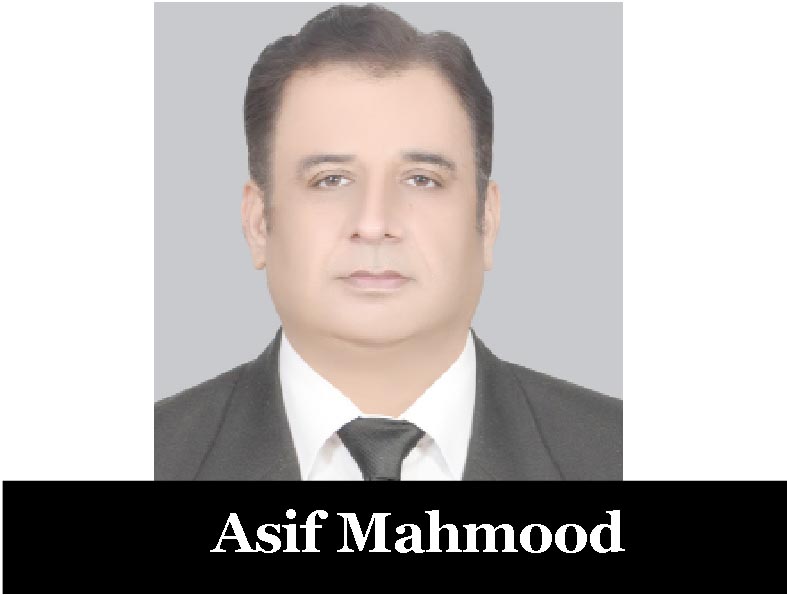
Asif Mahmood

The latest NCPS 2025 report has triggered an avalanche of commentary, much of it focused on selective angles. Yet buried within the data are several insights that reflect real progress, institutional maturity and a changing public mood in Pakistan. These encouraging elements remain largely overlooked, so it is worth drawing attention to them with clarity and perspective. At the same time it is important to remember that Pakistan is not standing still. This country continues to grow through its resilience, its improving governance structure, its young and energetic population and its remarkable ability to absorb shocks and still move forward. The overall direction of national reform, economic consolidation and institutional strengthening tells a story far more hopeful than the usual pessimistic discourse.

To begin with, this year’s survey stands on a stronger empirical foundation. With 4000 respondents across 20 districts, balanced across gender and urban and rural lines, the findings reflect a truly national pulse rather than isolated anecdotes. For policymakers, this broader canvas offers a more dependable understanding of how ordinary Pakistanis interact with public institutions in their daily routines.

Equally crucial is what the NCPS does not claim to be. It is not an audit of corruption, it does not certify wrongdoing and it does not measure factual corruption levels. Its mandate is simply to capture public sentiment. For this reason, linking NCPS results to Pakistan’s position on the global Corruption Perceptions Index is factually incorrect. The CPI ranking remains unaffected because the NCPS is a domestic exercise and does not feed into international methodologies.

One of the most telling findings is that 66 percent of respondents did not encounter a bribery situation during the past year. This single statistic punctures the exaggerated claims often seen on digital platforms and shows that the experience of corruption is neither uniform nor universal. Alongside this, nearly six out of ten Pakistanis acknowledge that the state’s economic management through the IMF program and the exit from the FATF Grey List has contributed to stabilization. The public may be critical, but it also recognizes difficult decisions.

Institutional perceptions are shifting in meaningful ways. A six percent improvement in views about the police suggests that reforms in discipline, behaviour and service delivery are being noticed on the ground. Positive trends in education services, land and property administration, local government and taxation point to the same direction. Incremental reforms are gradually reshaping how citizens experience the state.

The public’s reform priorities are also clear. People want tighter accountability, reduced discretionary powers and stronger information access laws. This is not cynicism. It is civic maturity. Importantly, 78 percent of respondents want oversight institutions such as NAB and FIA to be held accountable themselves. Citizens want them strengthened through transparency rather than weakened through controversy.

Sector specific expectations are sharply defined. In the health sector, people demand stricter controls on pharmaceutical commissions, clearer rules for private practice and more responsive regulatory oversight. In politics, an overwhelming majority favours regulating or banning business funding of political parties. More than half call for the removal of political branding from government advertising.

Perhaps the most promising insight is the public’s willingness to come forward if given protection. Forty two percent of respondents say they would report corruption provided secure and anonymous whistleblower systems exist. This reflects a citizenry ready to support the state if credible safeguards are available.

Taken together, NCPS 2025 offers a picture very different from the one circulating in sensational headlines. It reveals a country where reforms are registering, expectations are becoming more sophisticated and public engagement is deepening. Instead of feeding pessimism, the report highlights Pakistan’s steady march toward more transparent, responsible and responsive governance.

ReplyForwardAdd reaction

Leave a Reply

Your email address will not be published. Required fields are marked *

NCPS 2025: Reading Beyond the Noise

Link copied!

Asif Mahmood

The latest NCPS 2025 report has triggered an avalanche of commentary, much of it focused on selective angles. Yet buried within the data are several insights that reflect real progress, institutional maturity and a changing public mood in Pakistan. These encouraging elements remain largely overlooked, so it is worth drawing attention to them with clarity and perspective. At the same time it is important to remember that Pakistan is not standing still. This country continues to grow through its resilience, its improving governance structure, its young and energetic population and its remarkable ability to absorb shocks and still move forward. The overall direction of national reform, economic consolidation and institutional strengthening tells a story far more hopeful than the usual pessimistic discourse.

To begin with, this year’s survey stands on a stronger empirical foundation. With 4000 respondents across 20 districts, balanced across gender and urban and rural lines, the findings reflect a truly national pulse rather than isolated anecdotes. For policymakers, this broader canvas offers a more dependable understanding of how ordinary Pakistanis interact with public institutions in their daily routines.

Equally crucial is what the NCPS does not claim to be. It is not an audit of corruption, it does not certify wrongdoing and it does not measure factual corruption levels. Its mandate is simply to capture public sentiment. For this reason, linking NCPS results to Pakistan’s position on the global Corruption Perceptions Index is factually incorrect. The CPI ranking remains unaffected because the NCPS is a domestic exercise and does not feed into international methodologies.

One of the most telling findings is that 66 percent of respondents did not encounter a bribery situation during the past year. This single statistic punctures the exaggerated claims often seen on digital platforms and shows that the experience of corruption is neither uniform nor universal. Alongside this, nearly six out of ten Pakistanis acknowledge that the state’s economic management through the IMF program and the exit from the FATF Grey List has contributed to stabilization. The public may be critical, but it also recognizes difficult decisions.

Institutional perceptions are shifting in meaningful ways. A six percent improvement in views about the police suggests that reforms in discipline, behaviour and service delivery are being noticed on the ground. Positive trends in education services, land and property administration, local government and taxation point to the same direction. Incremental reforms are gradually reshaping how citizens experience the state.

The public’s reform priorities are also clear. People want tighter accountability, reduced discretionary powers and stronger information access laws. This is not cynicism. It is civic maturity. Importantly, 78 percent of respondents want oversight institutions such as NAB and FIA to be held accountable themselves. Citizens want them strengthened through transparency rather than weakened through controversy.

Sector specific expectations are sharply defined. In the health sector, people demand stricter controls on pharmaceutical commissions, clearer rules for private practice and more responsive regulatory oversight. In politics, an overwhelming majority favours regulating or banning business funding of political parties. More than half call for the removal of political branding from government advertising.

Perhaps the most promising insight is the public’s willingness to come forward if given protection. Forty two percent of respondents say they would report corruption provided secure and anonymous whistleblower systems exist. This reflects a citizenry ready to support the state if credible safeguards are available.

Taken together, NCPS 2025 offers a picture very different from the one circulating in sensational headlines. It reveals a country where reforms are registering, expectations are becoming more sophisticated and public engagement is deepening. Instead of feeding pessimism, the report highlights Pakistan’s steady march toward more transparent, responsible and responsive governance.

ReplyForwardAdd reaction

Leave a Reply

Your email address will not be published. Required fields are marked *